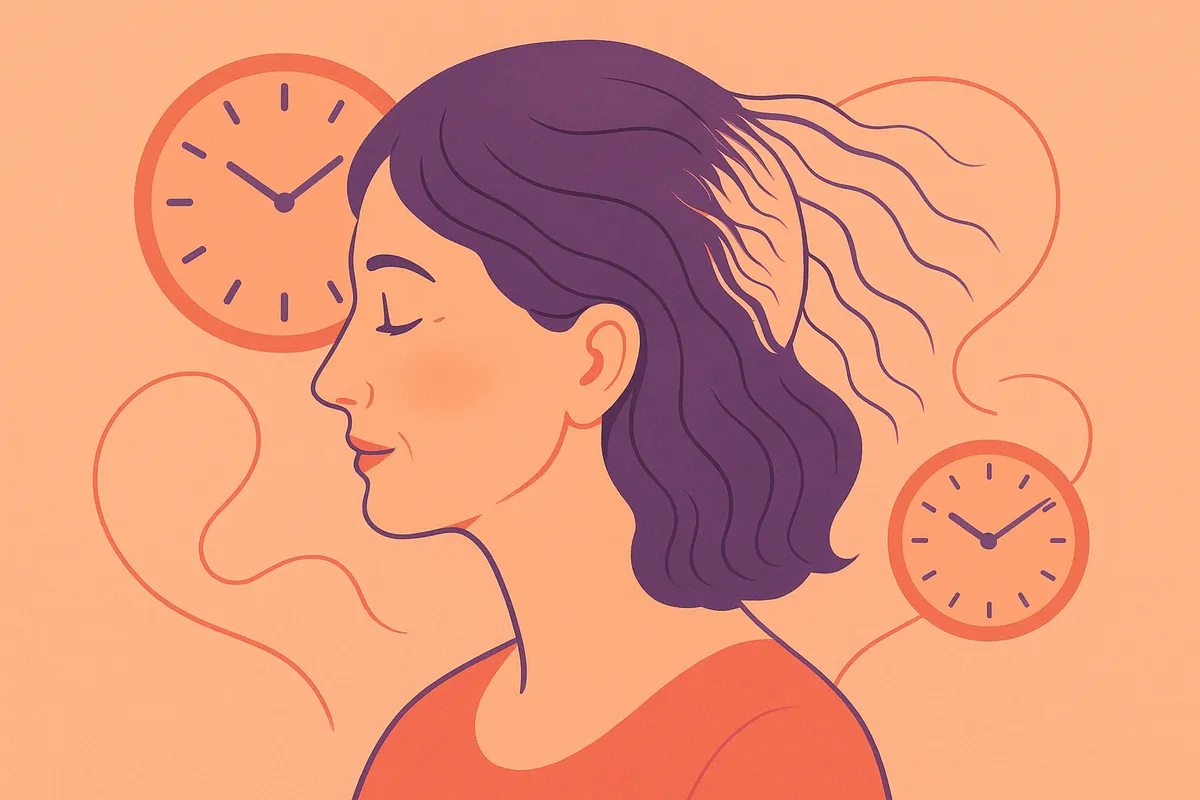

Hair thinning is one of the most visible and emotionally impactful signs of aging. By age 50, approximately 50% of women notice significant hair thinning. But not all age-related hair changes are inevitable — some are modifiable with the right approach.
Here's what's normal, what's not, and when intervention makes a real difference.
Key Takeaways
- Hair thinning affects ~50% of women by age 50 — it's extremely common
- Gradual thinning over years is normal aging; rapid thinning over weeks is not
- Menopause accelerates thinning due to declining estrogen and relative androgen increase
- Iron, vitamin D, and B12 deficiencies become more common with age and compound hair thinning
- Minoxidil 5% is FDA-approved for female pattern hair loss and available over the counter
What Happens to Hair as We Age
The Biological Changes
- Follicle miniaturization: Hair follicles shrink with age, producing thinner, shorter hairs
- Slower growth rate: Hair growth rate decreases approximately 0.3% per year after age 30
- Reduced melanin: Less pigment production → gray and white hair
- Shorter anagen phase: The growth phase shortens, meaning hair doesn't grow as long before shedding
- Decreased sebum production: Scalp produces less oil, leading to drier hair and scalp
Hormonal Shifts
- Menopause: Declining estrogen and progesterone reduce the protective effects on hair follicles. Relative increase in androgens can cause female pattern hair loss
- Thyroid changes: Hypothyroidism becomes more common with age and directly causes hair thinning
- Insulin resistance: Associated with androgenetic alopecia in both sexes
Normal vs. Concerning
| Normal Aging | Worth Investigating |
|---|---|
| Gradual thinning over years | Rapid thinning over weeks/months |
| Overall finer texture | Patchy loss or bald spots |
| Slight widening of part line | Dramatically wider part |
| Some hair at temples receding | Significant recession with scalp visible |
| Slower growth rate | Growth seems to have stopped |
What You Can Do
Nutrition (Foundation)
Age-related absorption changes make certain deficiencies more common:
- Iron: Check ferritin annually — low-normal levels (30-50 ng/mL) that were fine at 30 may be inadequate at 55
- Vitamin D: Skin produces less with age. Most adults 50+ need supplementation
- B12: Absorption decreases with age due to lower stomach acid. Consider sublingual B12
- Protein: Aim for 1.0-1.2g per kg body weight — higher than the younger adult recommendation
Supplements That May Help
- Collagen peptides (2.5-5g daily) — supports hair structure and skin elasticity
- Vitamin D (2,000-4,000 IU daily) — commonly deficient in older adults
- Iron (only if ferritin <40 ng/mL) — don't supplement without testing
- Omega-3s — anti-inflammatory support for scalp health
Medical Treatments
- Minoxidil 5% — FDA-approved for female pattern hair loss; topical, available OTC
- Spironolactone — anti-androgen, prescription only, effective for hormonal thinning
- Low-level laser therapy — some evidence for stimulating follicles
- PRP (platelet-rich plasma) — emerging treatment, promising but expensive
Lifestyle
- Manage stress — chronic stress accelerates hair aging
- Regular exercise — improves circulation to scalp
- Gentle hair care — reduce heat styling, avoid tight hairstyles
- Quality sleep — hair growth hormone is released during deep sleep