Iron Deficiency and Nail Health: The Connection You Might Be Missing
Iron deficiency is the #1 nutritional cause of nail changes — from brittleness to spoon-shaped nails. Learn the signs, the ferritin levels that matter, and how to fix it.
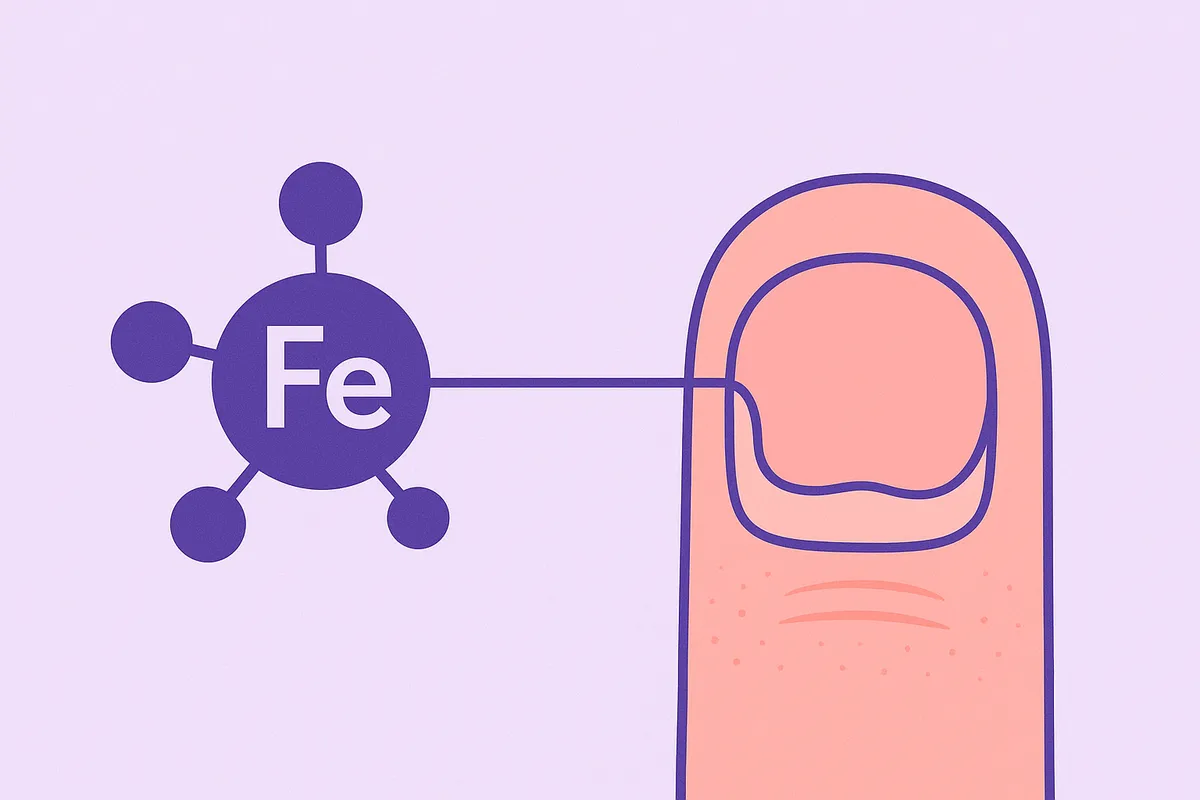
Of all the nutrients that affect your nails, iron may be the most important — and the most commonly overlooked. Iron deficiency is the world's most prevalent nutritional deficiency, affecting an estimated 1.2 billion people globally. And your nails are often one of the first places it shows up.
If your nails are brittle, ridged, pale, or developing an unusual concave shape, iron deficiency could be the cause. Here's what to look for, why it happens, and how to fix it.
Key Takeaways
Iron deficiency is the #1 nutritional cause of hair loss and nail changes — affecting 1.2 billion people worldwide
Your ferritin level matters more than your CBC — nail and hair changes begin at ferritin <30 ng/mL, well before anemia shows up
Koilonychia (spoon-shaped nails) is the hallmark sign, but brittleness, ridging, and pale nail beds appear earlier
Iron bisglycinate absorbs 2-3x better than ferrous sulfate with far fewer GI side effects
Always test before supplementing — excess iron is toxic and can cause organ damage
How Iron Affects Your Nails
Iron plays several critical roles in nail health:
Oxygen delivery: Iron is the core component of hemoglobin, which carries oxygen from your lungs to every tissue in your body — including the nail matrix, where new nail cells are produced
Enzymatic function: Iron is a cofactor in enzymes involved in keratin synthesis and cell division
Energy metabolism: The rapidly dividing cells of the nail matrix require significant ATP production, which depends on iron-containing enzymes in the electron transport chain
When iron stores are depleted, your nail matrix doesn't get enough oxygen or enzymatic support to produce strong, healthy nail plate cells. The result: visible nail changes that progressively worsen as the deficiency deepens.
Nail Signs of Iron Deficiency
Koilonychia (Spoon Nails)
The most distinctive sign. Nails become thin, soft, and concave — literally scooping upward like a spoon. In severe cases, a drop of water placed on the nail surface won't roll off. Studies show that 5-20% of people with iron deficiency anemia develop koilonychia.
Pale Nail Beds
Healthy nail beds are pink because of the blood supply beneath. When hemoglobin is low, nail beds appear pale or white — a finding called Terry's nails when severe.
Brittle, Breaking Nails
Iron-deficient nails become thin and fragile, prone to cracking, splitting, and peeling at the edges. This can precede more dramatic changes like koilonychia.
Longitudinal Ridging
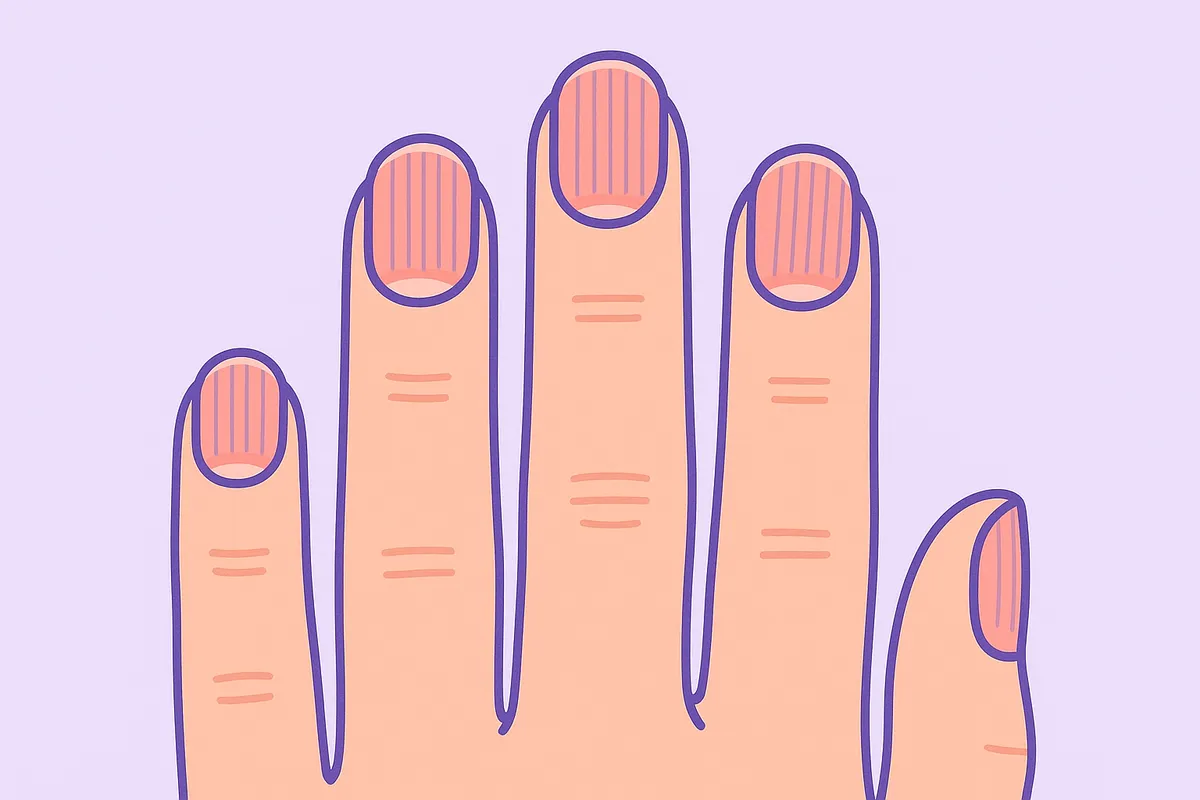
Vertical ridges running from cuticle to tip can be an early sign of iron deficiency, though they also occur with aging.
Beau's Lines
Horizontal grooves that indicate a period of disrupted nail growth — which can occur during acute iron deficiency or the illness that caused it.
Slow Growth
Nail growth rate slows when the matrix cells don't receive adequate oxygen and nutrients.
Who's at Risk
Iron deficiency doesn't affect everyone equally:
Premenopausal women — menstrual blood loss is the #1 cause; heavy periods dramatically increase risk
Pregnant women — blood volume increases 40-50%, demanding significantly more iron
Vegans and vegetarians — plant-based iron (non-heme) has lower bioavailability than meat-based (heme) iron
Endurance athletes — "sports anemia" from foot-strike hemolysis and GI losses
People with GI conditions — celiac disease, IBD, gastric bypass surgery impair iron absorption
Frequent blood donors — each donation removes ~250mg of iron
Wondering if a deficiency is affecting your nails?
Take our 2-minute Nail Health Quiz for a personalized assessment and supplement recommendations.
This is crucial: you can have iron-depleted nails with a "normal" CBC. Standard blood tests measure hemoglobin and hematocrit, which only drop in established anemia. But nail and hair changes begin much earlier — when iron stores (measured by ferritin) are depleted.
Ferritin Level
Status
Nail/Hair Impact
>70 ng/mL
Optimal
Healthy nail growth supported
40-70 ng/mL
Adequate
Usually sufficient
20-40 ng/mL
Low-normal
Hair shedding may begin; subtle nail changes
<20 ng/mL
Depleted
Brittle nails, ridging, possible koilonychia
<12 ng/mL
Deficient
Significant nail changes; anemia likely developing
Always ask for a ferritin test — not just CBC. Many doctors consider ferritin "normal" at 12+ ng/mL, but research shows that hair and nail health requires levels above 30-40 ng/mL.
How to Treat Iron Deficiency for Nail Health
Step 1: Confirm the Deficiency
Get blood work: ferritin, serum iron, TIBC (total iron binding capacity), and CBC. Don't supplement iron without testing — excess iron is toxic.
Step 2: Identify the Cause
Iron deficiency is a symptom, not a diagnosis. Work with your doctor to determine why you're deficient:
Heavy menstrual periods
GI blood loss
Inadequate dietary intake
Malabsorption (celiac, IBD)
Step 3: Choose the Right Supplement
Iron bisglycinate is the preferred form:
2-3x better absorbed than ferrous sulfate
Significantly fewer GI side effects (nausea, constipation)
Can be taken with food without major absorption loss
Typical dose: 25-50mg elemental iron daily (or as directed by your provider)
Absorption tips:
Take with vitamin C (100-200mg) to boost absorption by 2-3x
Avoid taking with calcium, coffee, or tea (they inhibit absorption)
Take on an empty stomach if tolerated; with food if not
Alternate-day dosing may be equally effective with fewer side effects
Step 4: Monitor and Wait
Recheck ferritin in 8-12 weeks
Nail improvement is slow — expect 3-6 months for fingernails, 6-12 months for toenails
Continue supplementation until ferritin reaches 50+ ng/mL
Don't stop just because you "feel better" — replenishing stores takes months
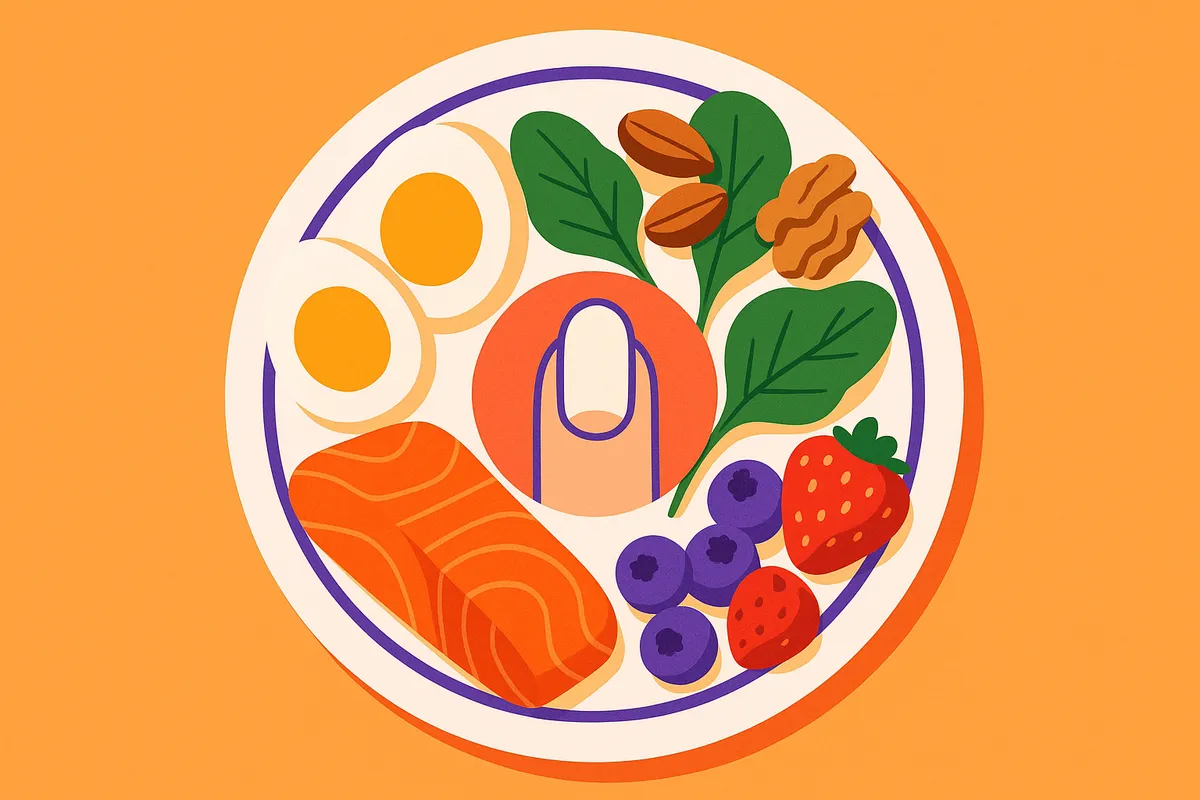
Iron-Rich Foods for Nail Health
Food
Iron (per serving)
Type
Oysters (3 oz)
8mg
Heme
Beef liver (3 oz)
5mg
Heme
Lean beef (3 oz)
2.6mg
Heme
Lentils (1 cup)
6.6mg
Non-heme
Spinach, cooked (1 cup)
6.4mg
Non-heme
Fortified cereal (1 serving)
8-18mg
Non-heme
Dark chocolate (1 oz)
3.4mg
Non-heme
Heme iron (from animal sources) is absorbed 2-3x more efficiently than non-heme iron. Vegetarians should pair iron-rich foods with vitamin C and avoid coffee/tea at meals.
When to See a Doctor
Nail changes are progressing despite dietary improvements
You have symptoms beyond nails: fatigue, shortness of breath, dizziness, pale skin
You have heavy menstrual periods or GI symptoms
You're pregnant or planning pregnancy
Your ferritin is below 20 ng/mL
This article is for educational purposes only. Iron supplementation should be guided by blood work and medical supervision. Excess iron can be harmful.
Frequently Asked Questions
What ferritin level do I need for healthy hair and nails?
Most dermatologists recommend ferritin above 40 ng/mL for optimal hair growth, with 70+ ng/mL being ideal. Standard lab ranges show 12+ ng/mL as "normal," but hair shedding and nail changes can begin at levels below 30 ng/mL — well within the "normal" range. Always ask for the specific number, not just whether it's "normal."
Why does my doctor say my iron is "normal" but I'm still losing hair?
Because standard CBC tests measure hemoglobin, which only drops in established anemia. Iron stores (ferritin) deplete long before hemoglobin falls. You can have a perfectly normal CBC with a ferritin of 15 ng/mL — technically "normal" but well below the threshold for healthy hair and nails. Ask specifically for a ferritin test.
Iron bisglycinate vs ferrous sulfate — which is better?
Iron bisglycinate absorbs 2-3x better and causes significantly fewer side effects (nausea, constipation, stomach upset). It's also effective when taken with food, unlike ferrous sulfate which absorbs best on an empty stomach. The trade-off: bisglycinate costs more ($15-$25/month vs $5-$10 for ferrous sulfate). For most people, the improved tolerability is worth the price difference.
Can too much iron be dangerous?
Yes — iron is one of the few nutrients where excess is genuinely toxic. Iron overload (hemochromatosis) causes liver damage, heart problems, and joint pain. This is why you should never supplement iron without blood work confirmation of deficiency. People with hereditary hemochromatosis (1 in 200-300 of Northern European descent) are especially at risk.
The Bottom Line: Iron deficiency is the most common and most treatable nutritional cause of nail and hair problems. Get a ferritin test (not just CBC), aim for levels above 40 ng/mL, choose iron bisglycinate for best absorption and tolerability, and pair with vitamin C. Don't guess — test. And don't stop supplementing until stores are fully replenished.
This article was medically reviewed for accuracy and completeness. Last updated: January 2026.
Disclaimer:This article is for informational purposes only and does not constitute medical advice. Always consult with a qualified healthcare provider before starting any supplement regimen.
Written by Rachel Kim & reviewed by Dr. James Whitfield
Not sure which supplement is right for you?
Take our 2-minute Vitamin Finder quiz and get personalized recommendations based on your profile.