Biotin and Acne: The Truth About Breakouts from Supplements
Can biotin supplements cause acne? We examine the evidence behind the biotin-breakout connection, how vitamin B5 competition may play a role, and what to do if biotin is triggering your skin issues.
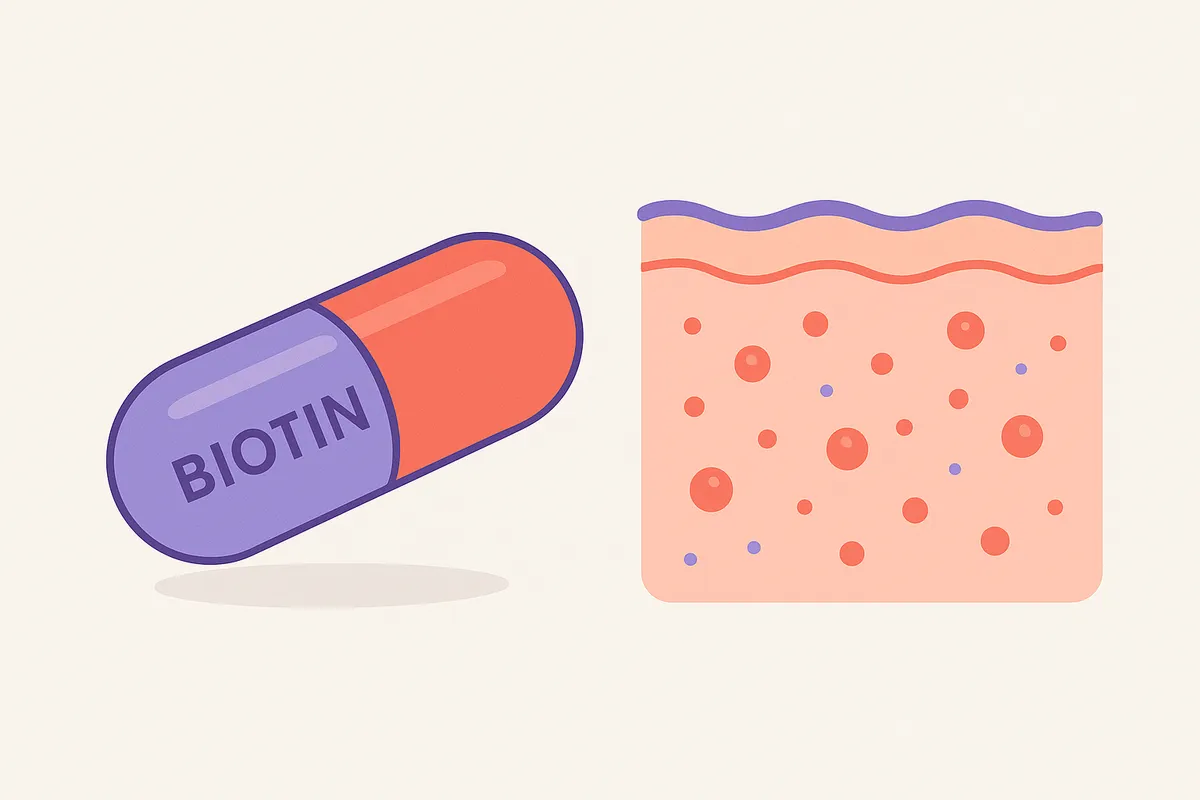
If you've ever started taking biotin for your hair or nails and noticed new breakouts appearing on your chin, jawline, or forehead — you're not imagining it. The biotin-acne connection is one of the most discussed (and debated) topics in the supplement world.
But here's the nuance most articles miss: biotin itself isn't directly comedogenic. The mechanism is more subtle, and understanding it can help you get the nail and hair benefits without the skin consequences.
Key Takeaways
Up to 30% of people taking high-dose biotin (5,000+ mcg) report skin breakouts
The likely mechanism is competition with vitamin B5 for absorption, not biotin directly causing acne
The evidence-based dose for nails is 2,500 mcg — lower than most supplements sell
High-dose biotin interferes with lab tests (troponin, thyroid) — the FDA has issued a safety warning
Alternatives like collagen peptides offer nail benefits without the acne risk
Who Should Read This
If you're taking biotin and experiencing new breakouts, if you're considering biotin but have acne-prone skin, or if you've heard conflicting advice about biotin and want the evidence-based answer — this article is for you.
The Biotin-Acne Connection: What We Know
Let's start with what the research actually shows. There are no large-scale randomized controlled trials proving that biotin directly causes acne. However, the clinical and anecdotal evidence is substantial enough that dermatologists routinely warn patients about it.
The most commonly cited estimates suggest that up to 30% of people taking high-dose biotin (5,000-10,000 mcg) experience some form of skin changes within 2 to 6 weeks of starting supplementation. These changes most commonly appear on the chin, jawline, and forehead — areas associated with hormonal acne patterns.
The Vitamin B5 Competition Theory
The leading hypothesis involves a competition between biotin (B7) and pantothenic acid (B5) for absorption. Both vitamins share the same intestinal transporter — the sodium-dependent multivitamin transporter (SMVT).
When you flood your system with high-dose biotin, it may outcompete B5 for absorption [2]. This matters because B5 is critical for:
Coenzyme A synthesis — which regulates fatty acid metabolism in sebaceous glands
Epidermal barrier function — maintaining skin's moisture balance
Keratinocyte differentiation — how skin cells mature and shed
When B5 levels drop, sebum production can increase, pore-clogging accelerates, and the conditions for acne improve. A 1995 study in Medical Hypotheses proposed that pantothenic acid deficiency is a direct pathogenic factor in acne vulgaris [2], lending support to this mechanism.
Wondering if a deficiency is affecting your nails?
Take our 2-minute Nail Health Quiz for a personalized assessment and supplement recommendations.
The recommended daily intake of biotin is only 30 mcg (micrograms). Most hair and nail supplements contain 5,000 to 10,000 mcg — that's 166x to 333x the recommended amount.
At these supraphysiologic doses, the competition with B5 becomes more pronounced. The higher the dose, the greater the potential for skin side effects.
Biotin Dose
Times Above RDA
Acne Risk
30 mcg (food/multivitamin)
1x
None
300-1,000 mcg
10-33x
Very low
2,500 mcg
83x
Low to moderate
5,000 mcg
166x
Moderate
10,000 mcg
333x
Higher
How to Take Biotin Without Breaking Out
If you want biotin's nail benefits without the acne risk, here are evidence-based strategies:
Start low: Try 1,000-2,500 mcg instead of jumping to 5,000+. The clinical trial showing 91% improvement in brittle nails used 2,500 mcg — not 10,000.
Add B5: Take a B-complex or standalone pantothenic acid (250-500mg) to offset the competition. This maintains B5 levels even when biotin intake is high.
Give it time: Introduce biotin slowly over 2-3 weeks and monitor your skin. If breakouts appear, reduce the dose before discontinuing entirely.
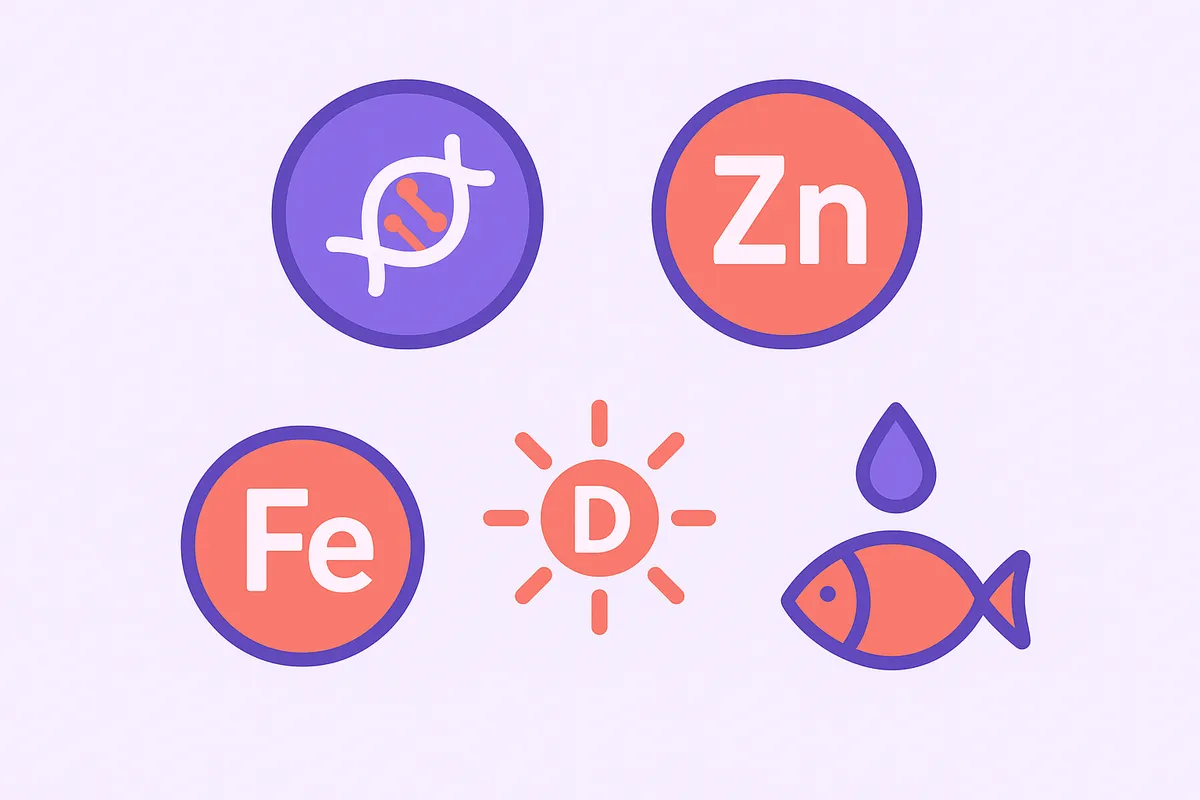
Consider alternatives: Collagen peptides and zinc offer nail benefits without the acne risk. A 2017 clinical trial found collagen peptides reduced nail breakage by 42% with no reported skin side effects.
The Lab Test Warning You Need to Know
This is critical and undersold: high-dose biotin interferes with common lab tests [3, 4]. The FDA has issued a safety communication after a patient death linked to falsely low troponin results in a biotin-supplementing patient.
TSH and thyroid panels — can mimic hyperthyroidism (falsely low TSH, falsely high T3/T4)
Vitamin D — falsely elevated
Ferritin — falsely decreased
hCG — pregnancy hormone, falsely low (critical for pregnancy monitoring)
PSA — prostate cancer marker
Important: Always tell your doctor you're taking biotin before any blood work. Most labs recommend stopping biotin 48-72 hours before testing. This applies to any dose above 1,000 mcg.
When Biotin Makes Sense (and When It Doesn't)
Good candidates for biotin:
Confirmed biotin deficiency (rare but real — more common in smokers, pregnant women, and those on anticonvulsants)
Brittle nail syndrome unresponsive to other treatments
People who aren't acne-prone and have no history of hormonal breakouts
You're on medications that interact with biotin-dependent enzymes
You get frequent blood work (lab interference concern)
You're pregnant (lab test accuracy is critical during pregnancy)
Frequently Asked Questions
How long does biotin acne take to clear up after stopping?
Most people see improvement within 2-4 weeks of discontinuing biotin. Since the mechanism involves B5 depletion, levels normalize relatively quickly once biotin intake decreases. However, existing breakouts may take the normal acne healing timeline (4-8 weeks) to fully resolve.
Can I take biotin if I already use acne medication?
Consult your dermatologist. If you're on tretinoin, antibiotics, or isotretinoin for acne, adding a supplement that may worsen breakouts could counteract your treatment. If your dermatologist approves, start with a low dose (1,000 mcg) and monitor closely.
Does biotin in food cause acne?
No. The amount of biotin in food (eggs, nuts, liver) is far too low to cause the B5 competition effect. One egg contains about 10 mcg of biotin — you'd need to eat 500 eggs to match a single 5,000 mcg supplement.
Are "acne-safe" biotin formulas real?
Some products combine biotin with B5 or use lower doses. The B5 addition may help offset the competition mechanism, but no "acne-safe" biotin product has been validated in clinical trials. Your best bet is choosing a lower dose (2,500 mcg) and adding a separate B-complex.
The Bottom Line: Biotin can cause acne in some people, likely through B5 competition rather than a direct effect. The solution isn't to avoid biotin entirely — it's to use an evidence-based dose (2,500 mcg, not 10,000), consider adding B5, and explore alternatives like collagen peptides if you're acne-prone. And always stop biotin 48-72 hours before blood work.
This article was medically reviewed for accuracy and completeness. Last updated: January 2026.
Disclaimer:This article is for informational purposes only and does not constitute medical advice. Always consult with a qualified healthcare provider before starting any supplement regimen.
Written by Rachel Kim & reviewed by Dr. James Whitfield
Not sure which supplement is right for you?
Take our 2-minute Vitamin Finder quiz and get personalized recommendations based on your profile.