Biotin Dosage Guide: How Much to Take for Hair and Nails
Biotin supplements range from 30 to 10,000 mcg. Learn the evidence-based dose for brittle nails, why megadoses aren't better, and critical safety warnings about lab test interference.
Biotin is the most popular supplement for hair and nails — and also the most confusing. Doses range from 30 mcg in multivitamins to 10,000 mcg in standalone products. That's a 333-fold difference. So what's the right amount?
This guide breaks down the evidence for each dosage level, who actually benefits from supplementation, and how to take biotin safely.
Key Takeaways
The evidence-based dose for brittle nails is 2,500 mcg (2.5 mg) — not 10,000 mcg
Higher doses don't produce better results but do increase acne and lab test interference risks
Biotin only helps if you're deficient — true deficiency is rare in healthy adults
The FDA warns that high-dose biotin causes false results in cardiac, thyroid, and pregnancy tests
Stop biotin 48-72 hours before any blood work — always tell your doctor you're taking it
Understanding Biotin Doses
First, let's clarify the units — this trips up a lot of people:
mcg = micrograms (one-millionth of a gram)
mg = milligrams (one-thousandth of a gram)
1 mg = 1,000 mcg
When supplements say "5mg biotin," that's 5,000 mcg
The Official Recommendation
The Institute of Medicine's Adequate Intake (AI) for biotin:
Age Group
AI
Adults 19+
30 mcg/day
Pregnant women
30 mcg/day
Breastfeeding
35 mcg/day
Most people easily meet this through diet. Biotin is found in eggs, liver, nuts, seeds, salmon, sweet potatoes, and many other foods.
What the Clinical Evidence Supports
For Brittle Nails (2,500 mcg / 2.5 mg)
This is the most well-studied dose for nail health. A clinical trial found that 2.5mg daily led to 91% improvement in nail firmness after an average of 5.5 months. A separate study confirmed a 25% increase in nail plate thickness at this dose.
Verdict: 2,500 mcg is the evidence-based dose for brittle nails.
For Hair (2,500-5,000 mcg)
Here's the uncomfortable truth: there is no proven efficacy of biotin supplementation for hair growth in healthy individuals. The studies showing benefit were in people with documented biotin deficiency, which is rare.
However, marginal biotin deficiency may be more common than previously thought — especially in pregnant women, smokers, and people taking certain medications (anticonvulsants, antibiotics).
Megadoses (10,000 mcg / 10 mg)
No additional benefit has been demonstrated at this level compared to 2,500 mcg. Higher doses increase the risk of lab test interference and potential acne breakouts without clear incremental benefit.
Wondering if a deficiency is affecting your nails?
Take our 2-minute Nail Health Quiz for a personalized assessment and supplement recommendations.
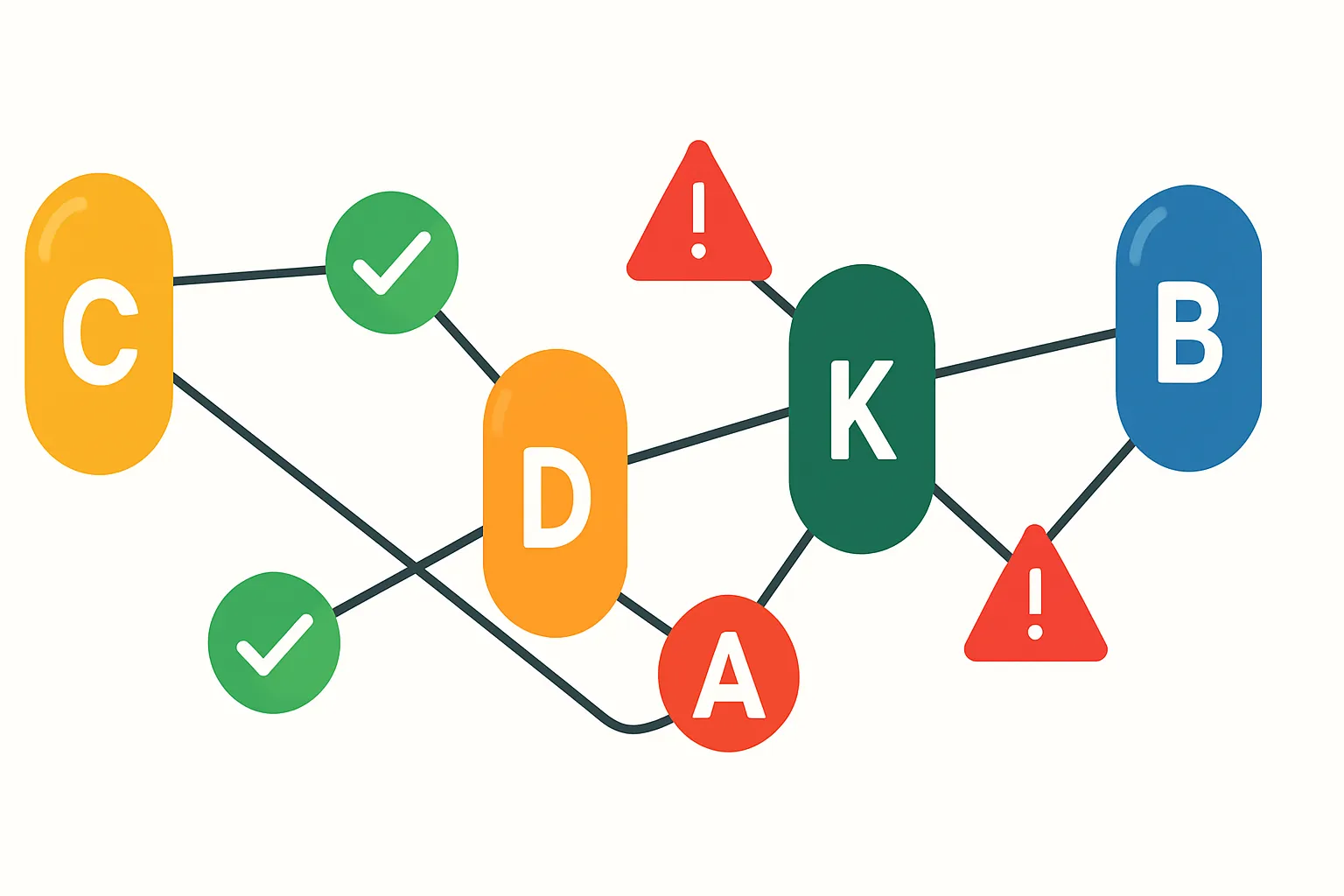
This is the most important safety issue. The FDA has warned that high-dose biotin can cause clinically significant false results in lab tests including:
Troponin — used to diagnose heart attacks (falsely low)
TSH and thyroid hormones — can mimic hyperthyroidism
Vitamin D — falsely elevated
hCG — pregnancy test hormone (falsely low)
PSA — prostate cancer marker
Rule: Stop biotin 48-72 hours before any blood work. Always tell your doctor you're taking it.
Acne Risk
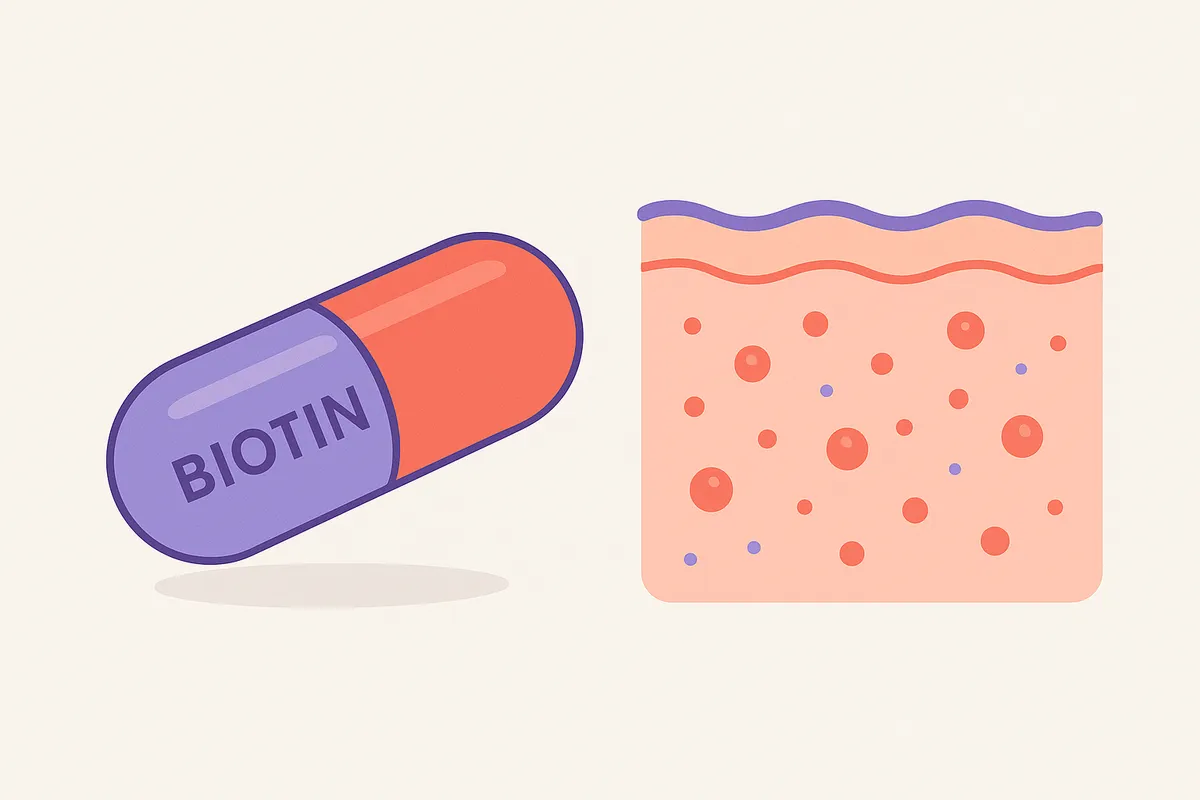
Up to 30% of people taking high-dose biotin report skin breakouts, likely due to competition with vitamin B5 for absorption. Starting at a lower dose (1,000-2,500 mcg) and taking a B-complex may reduce this risk.
No Established Upper Limit
The Institute of Medicine has not set an upper limit for biotin because toxicity hasn't been observed. However, "no established upper limit" is not the same as "safe at any dose" — it simply means the data is insufficient.
How to Take Biotin
Timing: Any time of day; biotin is water-soluble and doesn't require food for absorption
Consistency: Daily, without skipping — biotin is not stored long-term
Duration: Minimum 3-6 months to evaluate nail effects (one full nail growth cycle)
Combination: Consider a B-complex instead of standalone biotin to maintain B-vitamin balance
This article is for educational purposes only. Consult a healthcare provider before starting biotin supplementation.
Frequently Asked Questions
Is 10,000 mcg biotin safe?
It's not toxic, but it's unnecessary and risky. No clinical trial has shown 10,000 mcg works better than 2,500 mcg for nails or hair. The higher dose increases acne risk (up to 30% of users) and causes dangerous false results on cardiac troponin, thyroid, and pregnancy lab tests. Stick to 2,500 mcg unless your doctor prescribes otherwise.
Should I take biotin with food?
Biotin is water-soluble and doesn't require food for absorption — you can take it any time. If you experience nausea, taking it with a meal helps. Consistency matters more than timing: take it daily without skipping, since biotin isn't stored long-term in the body.
Can biotin cause acne?
Yes — up to 30% of people taking high-dose biotin report breakouts. The mechanism: biotin competes with vitamin B5 (pantothenic acid) for absorption, and B5 is critical for skin barrier function. If you experience acne, try reducing to 1,000-2,500 mcg, add a B-complex supplement to maintain B5 levels, or switch to collagen peptides.
How long does biotin take to work for nails?
The clinical trial showing 91% improvement in brittle nails used 2,500 mcg daily for an average of 5.5 months. Fingernails grow ~3.5mm/month, so one full growth cycle is 4-6 months. Don't evaluate results before completing at least one full cycle.
The Bottom Line: The evidence-based biotin dose for brittle nails is 2,500 mcg daily for 6+ months. Higher doses don't work better and increase risks. Always stop biotin 48-72 hours before blood work, watch for acne, and remember: biotin only helps if you're actually deficient. Get tested first.
This article was medically reviewed for accuracy and completeness. Last updated: January 2026.
Disclaimer:This article is for informational purposes only and does not constitute medical advice. Always consult with a qualified healthcare provider before starting any supplement regimen.
Written by Rachel Kim & reviewed by Dr. James Whitfield
Not sure which supplement is right for you?
Take our 2-minute Vitamin Finder quiz and get personalized recommendations based on your profile.