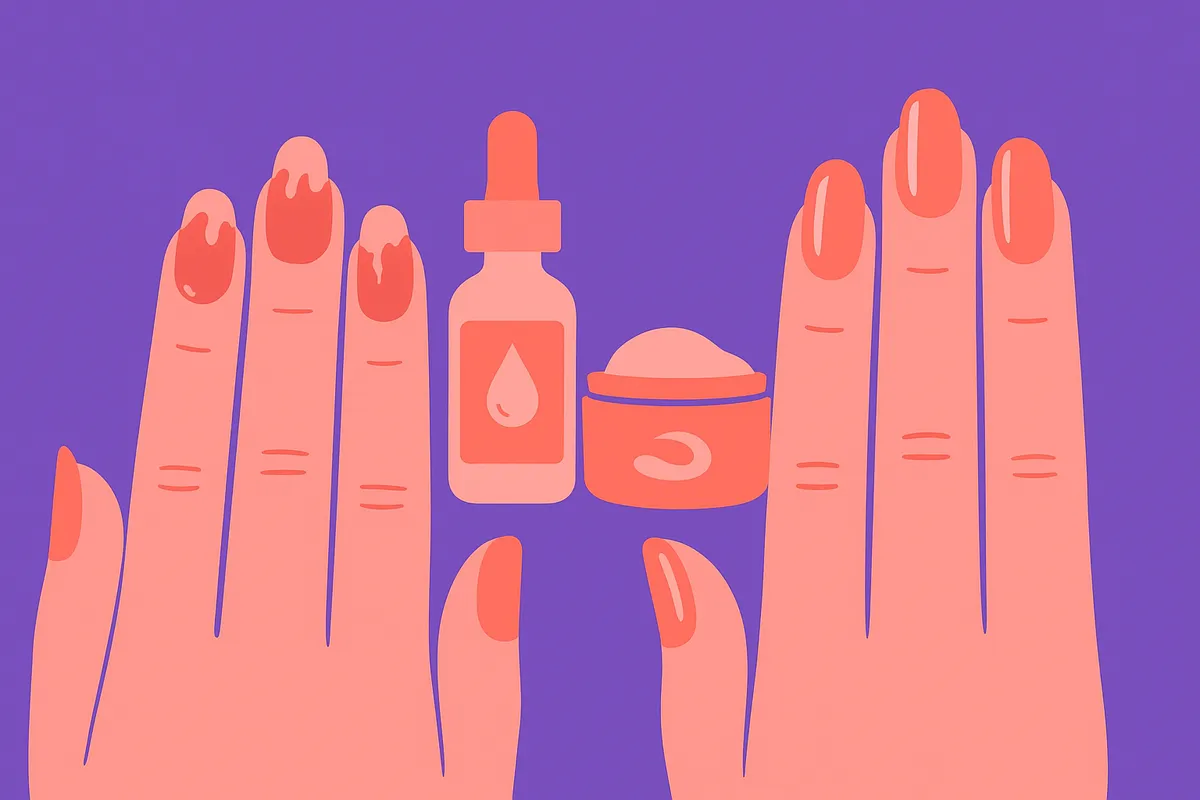


Post-Acrylic Nail Recovery: How to Repair Damaged Nails
Conditions

Post-Acrylic Nail Recovery: How to Repair Damaged Nails

Thin, peeling nails after removing acrylics or gels? Follow this phase-by-phase recovery plan with timeline, supplements, and care tips to restore your natural nails.

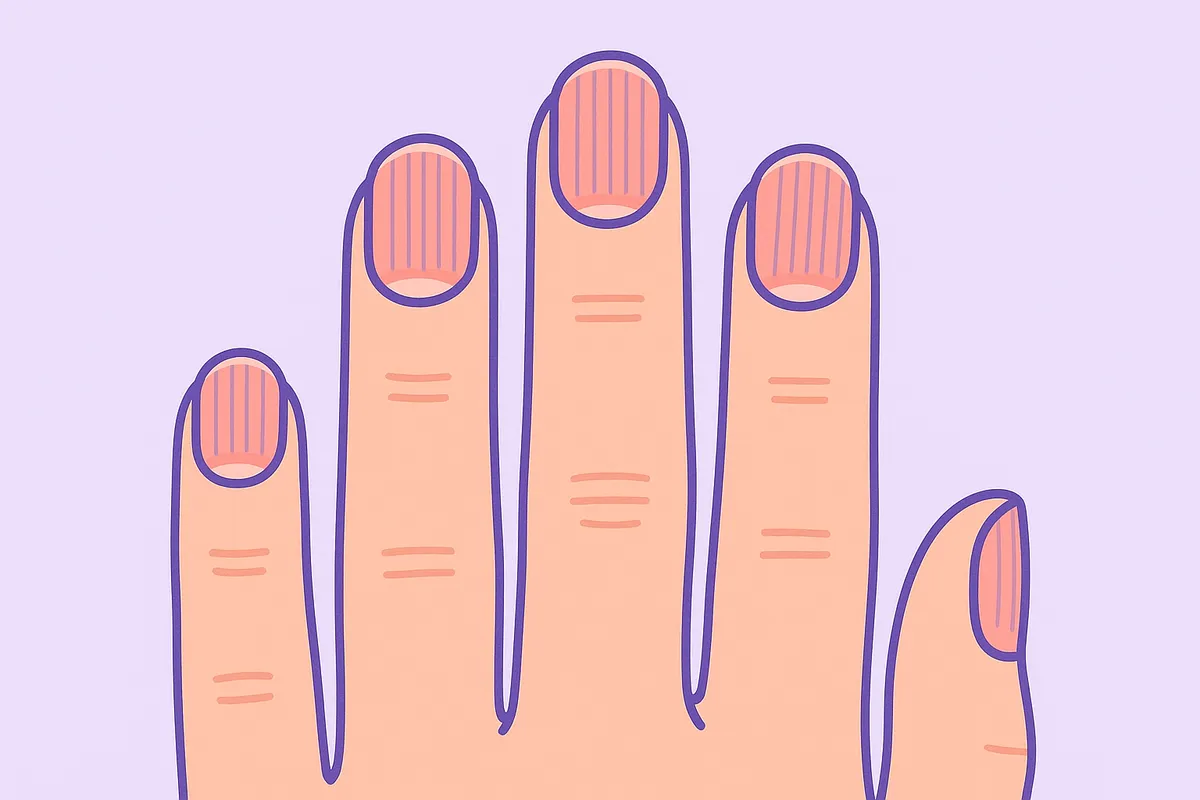
You finally removed your acrylics or gels — and what's underneath is not pretty. Thin, peeling, bendy nails that break at the slightest touch. Maybe even white patches or a rough, ridged texture.

You're not alone. Acrylic and gel manicures create a cycle of damage that makes your natural nails progressively weaker. But with the right approach, full recovery is absolutely possible. Here's how.

Key Takeaways

  • Full nail recovery after acrylics takes 4-6 months — one complete growth cycle from base to tip
  • The first 2 weeks are critical: keep nails short, hydrate aggressively with cuticle oil, and protect from chemicals
  • Biotin (2,500 mcg) and collagen peptides (2.5-5g daily) may accelerate recovery of brittle post-acrylic nails
  • Never peel off remaining product — you'll tear nail layers and extend recovery time by months
  • Glass files (one direction only) are gentler than emery boards on damaged nails

Why Acrylics and Gels Damage Your Nails

The Buffing Problem

Before applying acrylics or gel, technicians rough up the nail surface to help the product adhere. This removes the top layers of the nail plate — the hardest, most protective layers.

Chemical Exposure

Acrylic monomers and UV-cured gel polymers sit directly on your nail plate for weeks. The chemicals can dehydrate the nail, and the seal prevents normal moisture exchange.

The Removal Process

Soaking in acetone dissolves acrylic — but it also strips natural oils and moisture from your nails. Improper removal (peeling, prying) physically tears off layers of the nail plate.

UV Exposure

UV lamps used to cure gel polish expose your fingers to UV radiation. While the risk is debated, repeated exposure to the nail area is a consideration.

The Recovery Timeline

  • Week 1-2: Nails are at their weakest. Focus on protection and hydration
  • Week 2-4: You'll start to see new nail growth at the cuticle — this is healthy nail
  • Month 2-3: Significant improvement in strength. Old damaged nail is growing out
  • Month 4-6: Most of the damaged nail has grown out. Near-complete recovery
  • Month 6+: Fully renewed nails from base to tip

Step-by-Step Recovery Plan

Phase 1: Immediate Care (Weeks 1-4)

Keep nails short. Trim to just above the fingertip. Short nails are less likely to catch, bend, and break.

Hydrate aggressively.

  • Apply cuticle oil 2-3 times daily (jojoba oil is ideal — closest to natural nail oil)
  • Use a thick hand cream after every handwashing
  • At bedtime: heavy cream + cotton gloves

Protect.

  • Wear gloves for dishwashing, cleaning, and any chemical exposure
  • Apply a nail strengthener with calcium or keratin as a protective coat
  • Avoid nail polish for the first 2 weeks to let nails breathe

Phase 2: Rebuilding (Weeks 4-12)

Gentle strengtheners. Look for products with:

  • Keratin — supports nail protein structure
  • Calcium — adds temporary hardness
  • Hyaluronic acid — helps nails retain moisture

File correctly. Use a glass file (gentler than emery boards). File in one direction only — sawing weakens the nail edge.

Supplements that may help:

  • Biotin (2,500 mcg daily) — evidence for improving brittle nails
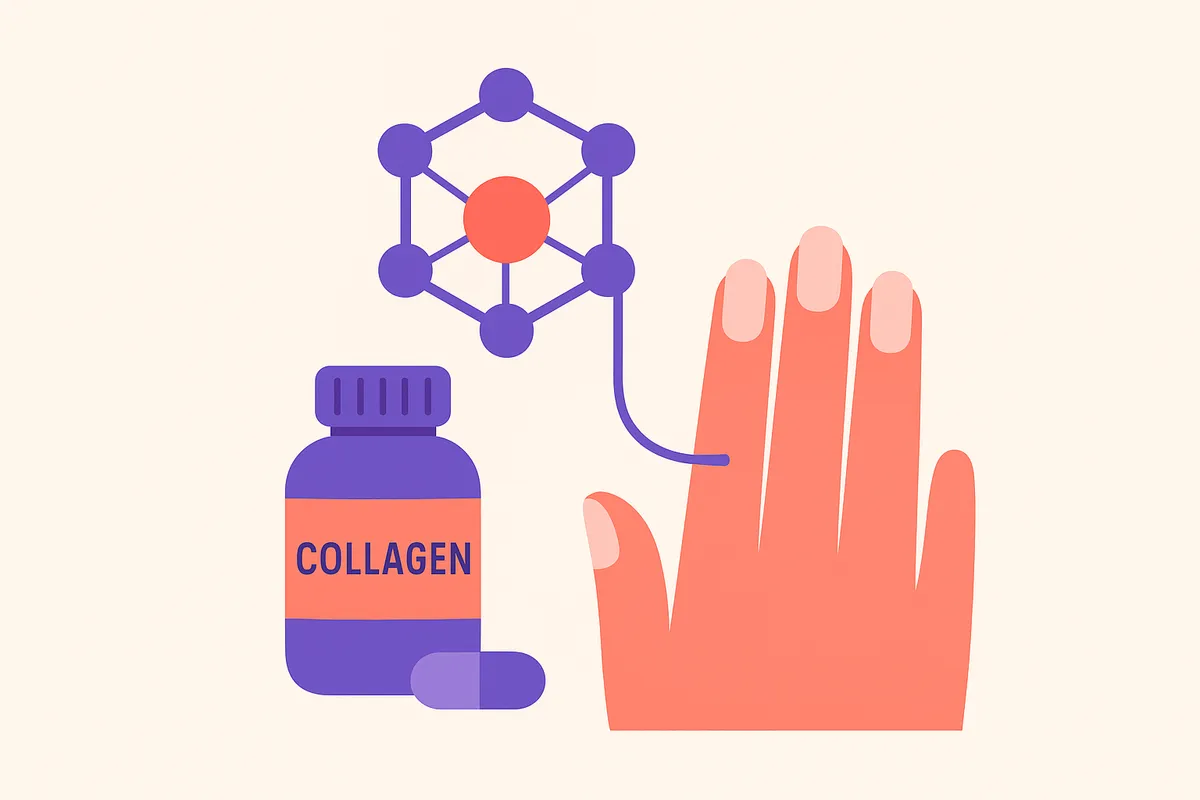
  • Collagen peptides (2.5-5g daily) — supports nail growth and reduces breakage
  • Iron (if deficient) — low ferritin is a common cause of weak nails

Phase 3: Maintenance (Month 3+)

  • Continue cuticle oil daily (make it a habit)
  • Gradually return to polish if desired — use a good base coat
  • If returning to gel/acrylic, give nails at least 2-week breaks between sets
  • Consider dip powder or regular polish as less damaging alternatives

Wondering if a deficiency is affecting your nails?

Take our 2-minute Nail Health Quiz for a personalized assessment and supplement recommendations.

Take the Quiz

What NOT to Do During Recovery

  • Don't peel off remaining product — you'll tear nail layers with it
  • Don't buff aggressively — your nails are already thinned
  • Don't use nail glue for breaks — it further dries the nail
  • Don't immediately get new acrylics — let nails fully recover first
  • Don't use acetone remover — use non-acetone for any polish removal

When to See a Dermatologist

  • Nails are separating from the nail bed (onycholysis)
  • Green, yellow, or dark discoloration (possible infection)
  • Pain, swelling, or pus around the nail
  • No improvement after 3 months of consistent care
  • White superficial patches that don't grow out (may be fungal)

Prevention for Future Manicures

If you go back to gels or acrylics:

  • Choose a reputable salon with proper sanitation
  • Ask for gentle filing (not heavy buffing)
  • Never let a tech pry off product — always soak
  • Take 2-week breaks every 2-3 months
  • Use SPF hand cream or UV-protective gloves during curing

This article is for educational purposes only. See a dermatologist for persistent nail damage or signs of infection.

Frequently Asked Questions

How long does it take for nails to recover after acrylics? Full recovery takes 4-6 months — the time for a completely new nail to grow from the matrix to the tip. You'll see healthy new growth at the cuticle within 2-4 weeks, but the damaged portion needs to grow out completely. Toenails take even longer (12-18 months). Don't get discouraged by slow progress — it's biology, not a product failure.

Can I get gel or dip powder while my nails recover? Not for at least 2-3 months after removing acrylics. Your nail plate needs time to regain thickness and strength. Regular polish with a good base coat is fine after 2 weeks. When you do return to gels or acrylics, take 2-week breaks every 2-3 months and choose a salon that uses gentle filing, not heavy buffing.

Should I use nail hardeners during recovery? Yes, but choose carefully. Calcium or keratin-based strengtheners provide a protective coating without harsh chemicals. Avoid formaldehyde-based hardeners — they can make nails even more brittle over time. Apply as a thin protective layer during Phase 1 and 2 of recovery.

What's the best cuticle oil for post-acrylic nails? Jojoba oil is ideal because it most closely mimics the natural oils of the nail plate. Apply 2-3 times daily, especially at bedtime. Vitamin E oil and argan oil are also effective. The key is consistency — any quality oil applied multiple times daily will outperform an expensive oil applied once a week.

The Bottom Line: Post-acrylic nail recovery requires patience and protection. Keep nails short, hydrate aggressively with cuticle oil, avoid re-applying acrylics for at least 2-3 months, and give your nails a full growth cycle (4-6 months) to fully renew. Supplements like biotin and collagen may support the process, but consistent care matters more than any product.


This article was medically reviewed for accuracy and completeness. Last updated: January 2026.

Sources & References

  1. Brittle nails: response to daily biotin supplementation — Cutis (1993)
  2. Oral supplementation with specific bioactive collagen peptides improves nail growth — Journal of Cosmetic Dermatology (2017)
  3. Vitamins and minerals: their role in nail health and disease — Journal of Drugs in Dermatology (2007)
  4. Nail as a window of systemic diseases — Indian Dermatology Online Journal (2015)

Disclaimer:This article is for informational purposes only and does not constitute medical advice. Always consult with a qualified healthcare provider before starting any supplement regimen.

Written by Elena Vasquez & reviewed by Dr. Priya Sharma

Not sure which supplement is right for you?

Take our 2-minute Vitamin Finder quiz and get personalized recommendations based on your profile.

Take the Quiz →