


Your nails are surprisingly good communicators. Changes in color, texture, shape, and growth rate can signal everything from minor nutritional gaps to serious health conditions.
This checklist covers 15 nail signs worth paying attention to — what each one might mean, and when to take action.
Key Takeaways
- Your nails reflect your internal health — 15 specific signs can indicate nutritional deficiencies or medical conditions
- Dark streaks (melanonychia) and clubbing require immediate medical evaluation — they can signal melanoma or cardiopulmonary disease
- Vertical ridges are almost always normal aging — horizontal ridges (Beau's lines) indicate a disruption 2-3 months prior
- Spoon-shaped nails (koilonychia) are a hallmark of iron deficiency anemia — get ferritin tested
- When in doubt, photograph your nails monthly and compare — objective tracking beats subjective worry
Healthy Nail Baseline
Before looking for problems, know what healthy nails look like:
- Color: Pink nail bed with white free edge
- Surface: Smooth, possibly with faint vertical ridges (normal with age)
- Shape: Slightly curved, consistent across fingers
- Texture: Firm but slightly flexible
- Growth: ~3.5mm per month for fingernails
- Cuticles: Intact, not inflamed
The 15 Signs Checklist
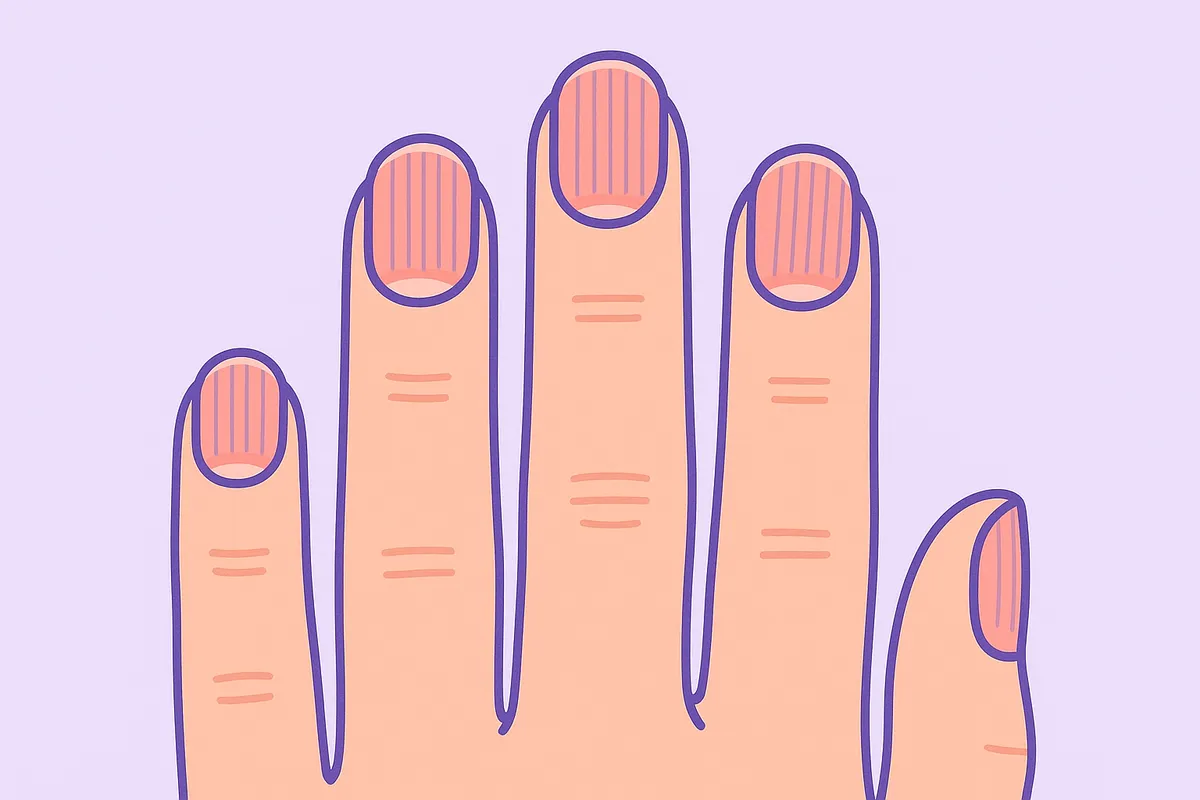
1. Vertical Ridges
What it looks like: Fine lines running from cuticle to tip Usually means: Normal aging (most common), dehydration, mild nutrient depletion Action: Moisturize cuticles daily. If severe or sudden onset, check iron and zinc
2. Horizontal Ridges (Beau's Lines)
What it looks like: Grooves running across the nail Usually means: Temporary growth disruption — illness, surgery, severe stress, medication Action: Identify the timing (count backward 2-3 months from groove position). Self-resolving. See doctor if on all nails
3. White Spots (Leukonychia)
What it looks like: Small white dots or patches Usually means: Minor trauma to nail matrix (most common), zinc deficiency Action: Usually harmless and grows out. If widespread, check zinc levels
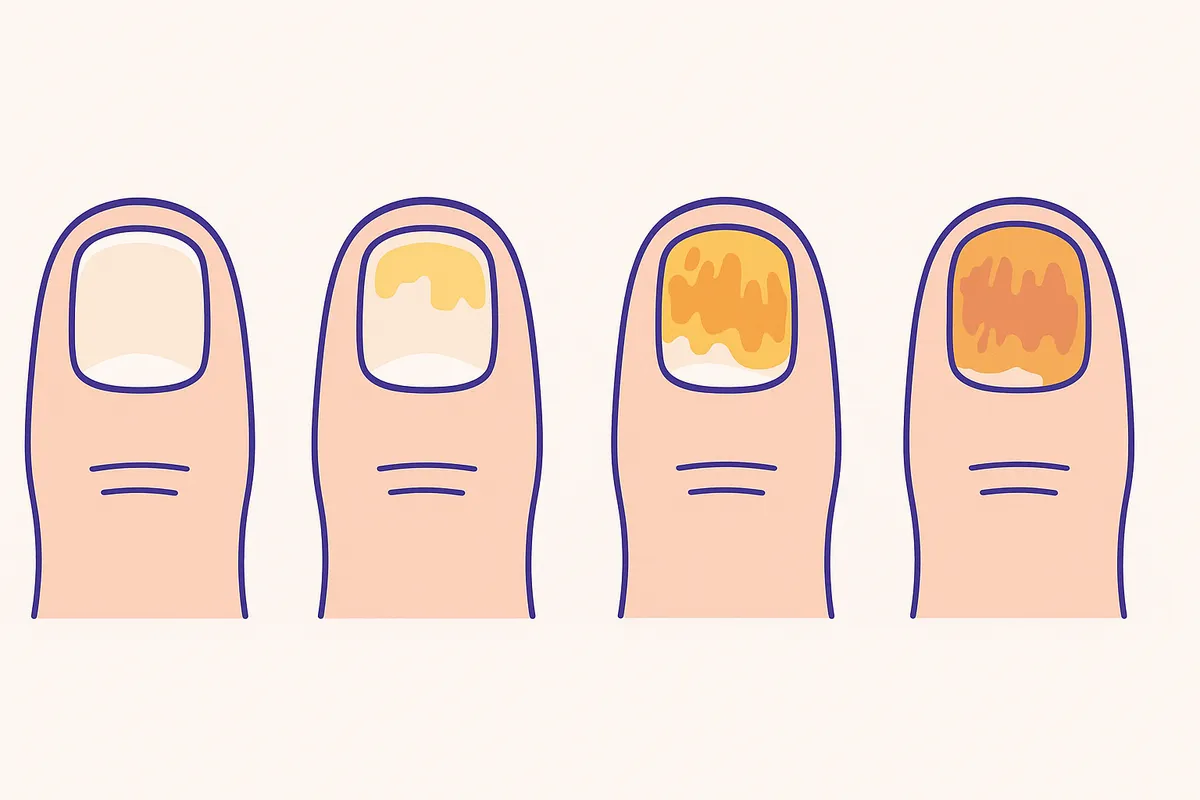
4. Yellow Nails
What it looks like: Entire nail has yellow tinge Usually means: Nail fungus (most common), nail polish staining, rarely lymphedema or respiratory disease Action: If no polish cause, evaluate for fungal infection
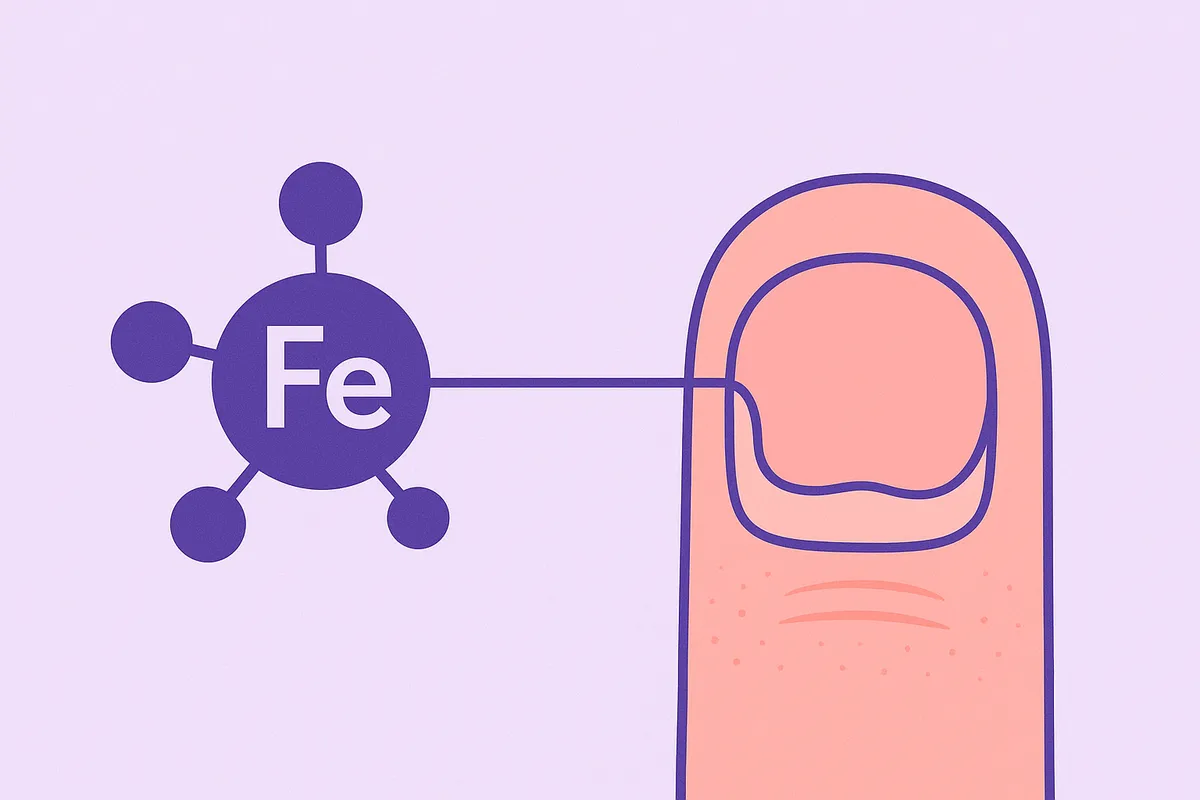
5. Spoon Nails (Koilonychia)
What it looks like: Nails curve upward, concave enough to hold a water drop Usually means: Iron deficiency anemia Action: Get ferritin and CBC checked. This is a clear medical sign
6. Brittle, Splitting Nails
What it looks like: Nails break easily, peel in layers, split at tips Usually means: Dehydration, chemical exposure, biotin or iron deficiency Action: Hydrate + protect first. If persistent, check ferritin and consider biotin 2,500mcg
7. Dark Lines (Melanonychia)
What it looks like: Brown or black streak running lengthwise Usually means: Normal pigmentation in darker skin tones, nail matrix mole, or rarely subungual melanoma Action: See a dermatologist. New dark lines in adults should always be evaluated
8. Nail Pitting
What it looks like: Small dents or depressions in the nail surface Usually means: Psoriasis (most common), alopecia areata, eczema Action: See a dermatologist, especially if accompanied by skin or scalp changes
9. Clubbing
What it looks like: Fingertips enlarge and nails curve around them Usually means: Can indicate lung disease, heart disease, or inflammatory bowel disease Action: See a doctor promptly. This is a significant clinical finding
10. Nail Separation (Onycholysis)
What it looks like: Nail lifts from the nail bed, creating a white or yellowish gap Usually means: Fungal infection, psoriasis, thyroid disease, trauma Action: Don't force the nail back down. See a doctor for diagnosis
11. Pale Nail Beds
What it looks like: Nail beds look white instead of pink Usually means: Anemia, malnutrition, heart failure, liver disease Action: Get blood work — CBC, metabolic panel. Can indicate systemic illness
12. Blue Nail Beds
What it looks like: Bluish tint to nail beds Usually means: Poor circulation, low oxygen (cyanosis), Raynaud's phenomenon Action: If persistent, see a doctor to evaluate cardiovascular and respiratory function
13. Green Nails
What it looks like: Green discoloration, usually one or two nails Usually means: Pseudomonas bacterial infection (often under artificial nails) Action: Remove artificial nails, see doctor for possible antibiotic treatment
14. Thickened Nails
What it looks like: Nails are unusually thick and hard to cut Usually means: Fungal infection (most common), psoriasis, peripheral vascular disease Action: See a podiatrist or dermatologist for proper diagnosis and treatment
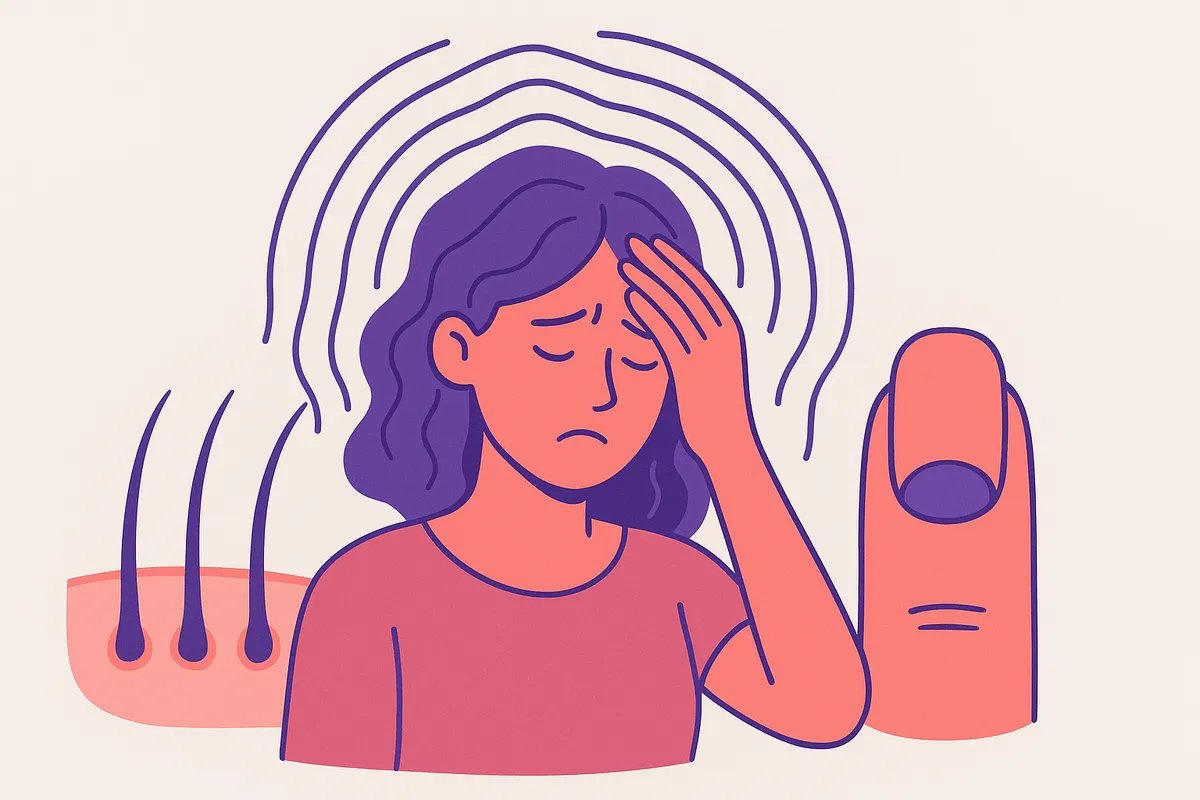
15. Nail Falling Off (Onychomadesis)
What it looks like: Entire nail separates and falls off from the base Usually means: Severe Beau's line progression, hand-foot-and-mouth disease, severe illness, drug reaction Action: See a doctor. The nail should regrow if the matrix isn't permanently damaged
When to See a Doctor: The Short List
Go sooner rather than later for:
- Any new dark streak (rule out melanoma)
- Clubbing (cardiac/pulmonary evaluation)
- Nail changes + systemic symptoms (fatigue, weight changes, breathing difficulties)
- Rapidly worsening changes in multiple nails
- Pain, pus, or infection signs
This article is for educational purposes only. Nail changes can indicate serious health conditions. See a healthcare provider for evaluation.