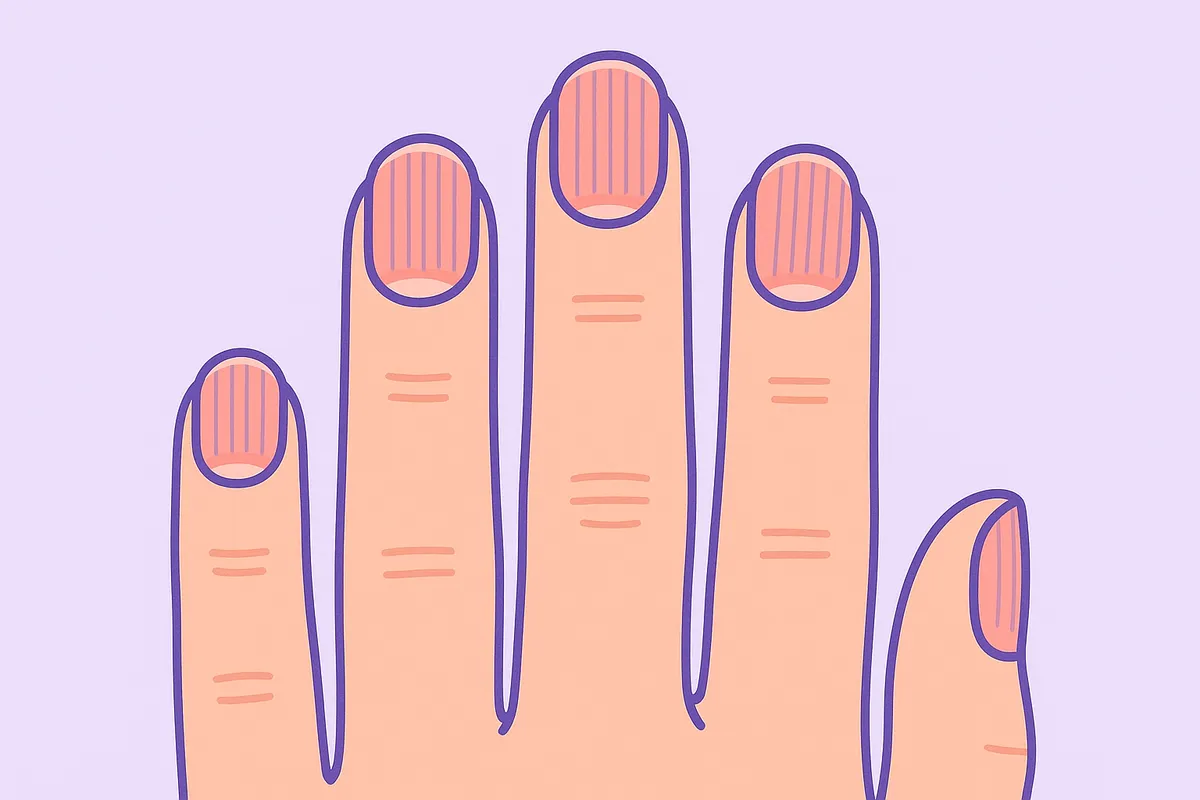
You glance down at your fingernails and notice thin lines running from cuticle to tip. Or maybe there's a deep groove cutting horizontally across one or more nails. Either way, the question is the same: should you worry?
Nail ridges are one of the most common nail changes people notice — and one of the most frequently Googled. The good news is that most ridges are completely harmless. But in some cases, they can be an early signal that your body is missing something important.
In this article, we'll break down the two types of nail ridges, what causes each one, which nutrient deficiencies show up in your nails, and when it's time to see a dermatologist.
Key Takeaways
- Vertical ridges are usually a normal sign of aging — not a health concern
- Horizontal ridges (Beau's lines) signal a temporary disruption in nail growth and deserve attention
- Iron, zinc, and biotin deficiencies can all cause or worsen nail ridging
- Nail changes take 3-6 months to improve because nails grow slowly (~3.5mm/month)
- See a doctor if ridges appear suddenly on all nails, or are accompanied by dark streaks or pain
Who Should Read This
This article is for you if you've noticed new lines or grooves on your nails, if your nails have become more brittle or ridged over time, or if you're wondering whether nail changes might point to a nutritional gap. Whether you're a woman in your 30s noticing changes for the first time or someone in your 50s dealing with increasingly prominent ridging, this guide covers what you need to know.
What Are Nail Ridges?
Nail ridges are raised lines or grooves on the surface of your nail plate — the hard, visible part of your nail. They come in two distinct types:
Vertical ridges (longitudinal ridges or onychorrhexis) run from the base of your nail to the tip. They're by far the more common type and affect an estimated 85% of adults over 50.
Horizontal ridges (Beau's lines) run side to side across the nail. They form when something temporarily interrupts nail growth at the matrix — the hidden tissue beneath your cuticle where new nail cells are produced.
Understanding which type you have is the first step in determining whether your ridges are a cosmetic concern or a health signal worth investigating.
Vertical Ridges: Causes and What They Mean
If you have faint lines running lengthwise down your nails, you're in good company. Vertical ridges are extremely common and, in most cases, entirely benign. Here are the most frequent causes:
Normal Aging
This is the number one cause. As we age, the nail matrix gradually loses its ability to produce perfectly smooth nail plate cells. Research published in Gerontology confirms that longitudinal ridging becomes increasingly prevalent after age 40 and is considered a normal part of the aging process [9]. Think of it like fine wrinkles on your skin — it's a natural change that doesn't indicate disease.
Dehydration and Environmental Damage
Repeated cycles of wetting and drying — from handwashing, dishwashing, or chemical exposure — can damage the intercellular cement that holds nail plate cells together. This leads to superficial ridging and brittleness. Nail technicians, healthcare workers, and people who frequently use hand sanitizer are particularly susceptible. Wearing gloves during wet work and applying cuticle oil after handwashing are simple preventive measures.
Nutrient Deficiencies
This is where it gets important. Several micronutrient deficiencies can cause or worsen vertical ridging:
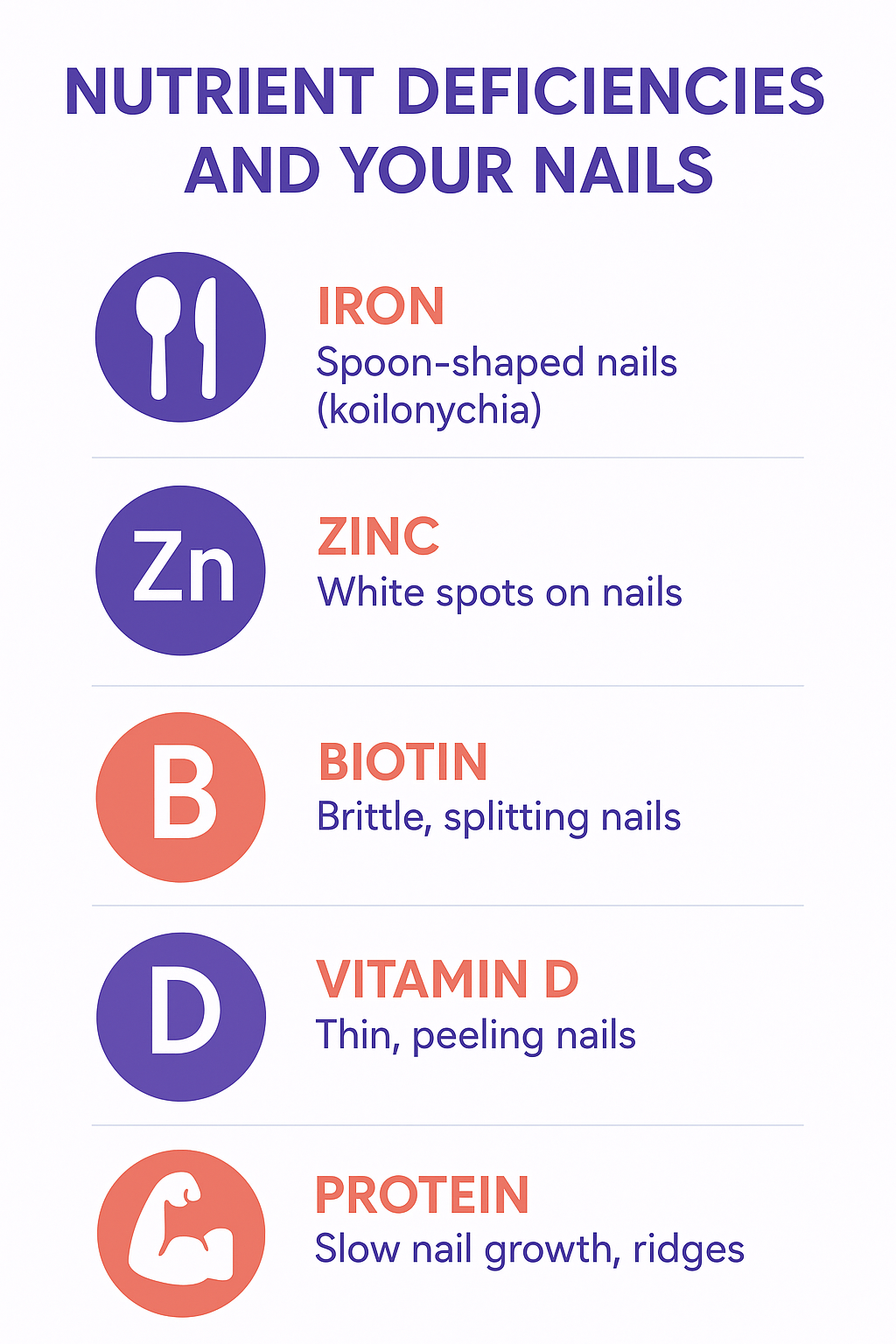
- Iron deficiency is one of the most well-documented causes of nail changes, potentially leading to ridging, brittleness, and in severe cases, koilonychia — spoon-shaped nails that curve upward [5, 6]. Women with heavy menstrual periods are at highest risk.
- Zinc deficiency can manifest as white spots (leukonychia), Beau's lines, and brittle nails with ridging. Vegetarians and vegans are at higher risk due to lower bioavailability of plant-based zinc.
- Biotin (vitamin B7) deficiency is associated with brittle, splitting nails, though true deficiency is uncommon in people eating a varied diet [3].
- Vitamin D deficiency affects keratinocyte differentiation in the nail matrix and is associated with thinning, peeling nails, particularly in northern latitudes during winter months.
Other Causes
Thyroid disease (especially hypothyroidism) can cause nails to become thick, brittle, and ridged. Skin conditions including eczema, psoriasis, and lichen planus can all affect the nail matrix and produce longitudinal ridging. Alopecia areata — an autoimmune hair loss condition — frequently involves nail changes including ridging, pitting, and brittleness.
Horizontal Ridges (Beau's Lines): When to Pay Attention
Horizontal ridges are a different story. Unlike vertical ridges, they almost always indicate that something disrupted your nail growth at a specific point in time.
A 2023 systematic review in Skin Appendage Disorders found that Beau's lines result from a transient decrease in mitotic activity of keratinocytes in the proximal nail matrix [8]. In other words, your nail factory briefly shut down.
Common triggers include:
- Severe illness with high fever — pneumonia, COVID-19, measles, or any serious infection. Post-COVID Beau's lines became widely recognized during the pandemic.
- Major physical trauma — injury to the nail matrix or finger, including jamming a finger in a door
- Chemotherapy or medications — drugs that affect rapidly dividing cells can disrupt nail growth
- Nutritional crisis — sudden, severe caloric or protein restriction (crash diets are a common trigger)
- Extreme psychological stress — major life events, grief, or acute anxiety episodes
- Surgery or hospitalization — the physical stress of major procedures
The reassuring part: Beau's lines are self-limiting. Once the underlying trigger resolves, the groove grows out with the nail — typically within 6 to 9 months for fingernails. You can estimate when the disruption occurred by measuring the groove's distance from the cuticle (nails grow ~3.5mm per month).
When it matters: If horizontal ridges appear on all of your nails simultaneously, this suggests a systemic event (illness, medication, or severe deficiency) rather than local trauma. That's worth discussing with your doctor.
The Nutrient Connection: Deficiencies That Show Up in Your Nails
Your nails are built from keratin — a structural protein that depends on a steady supply of amino acids, vitamins, and minerals. When supply runs short, your nails are often among the first tissues to show it.
A comprehensive review in the Journal of Drugs in Dermatology confirmed that multiple micronutrient deficiencies can produce measurable nail changes [4]:
| Deficiency |
What You Might See |
What to Test |
| Iron |
Spoon nails (koilonychia), pale nail beds, brittleness |
Serum ferritin, CBC |
| Zinc |
White spots, horizontal ridges, slow growth |
Serum zinc |
| Biotin (B7) |
Brittle nails, splitting, peeling layers |
Clinical assessment (no reliable blood test) |
| Vitamin D |
Thin, peeling nails; often co-occurs with hair changes |
25-hydroxyvitamin D |
| Protein |
Slow growth, horizontal ridges (Muehrcke's lines) |
Serum albumin |
Not every ridge means you have a deficiency. But if you notice nail changes alongside other symptoms — fatigue, hair shedding, brain fog, or frequent infections — it's worth running basic labs with your provider.
How to Treat and Prevent Nail Ridges
The approach depends on the cause:
Address Any Underlying Deficiency
If blood work reveals low iron, zinc, or vitamin D, correcting the deficiency through diet or supplementation will typically improve nail quality over time. Keep in mind that nails grow slowly — fingernails at about 3.5mm per month — so visible improvement takes 3 to 6 months. Don't give up on a treatment just because you don't see results in a few weeks.
Practice Gentle Nail Care
- Moisturize your cuticles daily with a nail oil or thick cream (look for jojoba, vitamin E, or shea butter)
- Avoid harsh chemicals — wear gloves for dishwashing and cleaning
- File in one direction rather than sawing back and forth, which can worsen splitting
- Skip the buffer on ridged nails — aggressive buffing thins the nail plate further
- Use a protective base coat if you want to visually smooth ridges without damaging the nail
Protect and Hydrate
Drink adequate water — while dehydration alone rarely causes ridging, it can worsen existing brittleness. Apply cuticle oil after every handwashing. In winter or dry climates, a bedroom humidifier helps maintain nail moisture.
Be Patient
Fingernails take approximately 6 months to grow from matrix to tip. Toenails take 12 to 18 months. Whatever intervention you choose, give it at least one full nail growth cycle before evaluating results.
Supplements That May Support Nail Health
Several supplements have clinical evidence supporting their use for brittle or ridged nails. It's important to note that supplementation is most effective when addressing an actual deficiency — taking megadoses when you're already sufficient is unlikely to help and may cause side effects.
Biotin (Vitamin B7): The most-studied supplement for nail health. In a clinical trial published in Cutis, 91% of participants taking 2.5mg of biotin daily showed firmer, harder nails after an average of 5.5 months [1]. An earlier study using scanning electron microscopy confirmed a 25% increase in nail plate thickness with biotin supplementation [2]. The recommended dose is 2,500 mcg daily.
Collagen Peptides: A 2017 study in the Journal of Cosmetic Dermatology found that participants taking 2.5g of bioactive collagen peptides daily experienced a 42% reduction in nail breakage frequency and a 12% increase in nail growth rate over 24 weeks. Benefits persisted even 4 weeks after stopping supplementation.
Zinc: If your zinc levels are low, supplementation at 15-30mg daily (zinc picolinate or bisglycinate for best absorption) may improve nail quality. Don't supplement above 40mg without medical supervision — excess zinc depletes copper.
Iron: Only supplement if your ferritin is below 40 ng/mL (confirmed by blood work). Iron bisglycinate is the preferred form due to better absorption and fewer gastrointestinal side effects.
The supplement information in this article is for educational purposes only. It does not constitute medical advice. Always consult with a qualified healthcare provider before starting any supplement regimen, especially if you are pregnant, nursing, or taking medications.
When to See a Doctor: Red Flags
Most nail ridges don't require medical attention. However, schedule an appointment with a dermatologist if you notice:
- Horizontal ridges on all nails simultaneously — suggests a systemic cause that needs evaluation
- Dark streaks running lengthwise (melanonychia) — while often benign in people with darker skin tones, new dark streaks in adults should always be assessed to rule out subungual melanoma, a rare but serious form of skin cancer
- Nail separating from the nail bed (onycholysis) — can indicate fungal infection, psoriasis, or thyroid disease
- Sudden change in nail color — yellow, green, or black discoloration warrants evaluation
- Pain, swelling, or discharge around the nail fold — may indicate infection
- Combination of symptoms — nail ridges + significant hair shedding + persistent fatigue is a classic triad suggesting thyroid dysfunction or iron deficiency that warrants blood work
Your nails are a visible window into your overall health. While a few vertical ridges are simply part of getting older, paying attention to changes — and acting on the signals that matter — is one of the simplest forms of preventive self-care.
Frequently Asked Questions
Are vertical ridges on nails a sign of vitamin deficiency?
They can be, but not always. Vertical ridges are most commonly a normal sign of aging. However, if ridges are accompanied by brittleness, splitting, or other nail changes, deficiencies in iron, zinc, or biotin may be contributing. Blood work (ferritin, zinc, and vitamin D) can help identify whether a nutritional gap is a factor.
Do nail ridges go away on their own?
Vertical ridges from aging are permanent but harmless. Ridges caused by nutrient deficiencies typically improve within 3-6 months once the deficiency is corrected. Horizontal ridges (Beau's lines) always grow out on their own as the nail grows — usually within 6-9 months for fingernails.
Can nail polish or gel manicures cause ridges?
Not directly, but they can worsen existing ridging. Frequent gel removal with acetone dehydrates the nail plate, and buffing before gel application thins the nail surface. If you have ridges, using a ridge-filling base coat with regular polish is gentler than gel.
What vitamin is best for nail ridges?
There's no single "best" vitamin — it depends on what's causing your ridges. If you're deficient in iron, iron supplementation is most effective. For general brittle nail support, biotin at 2,500 mcg daily has the most clinical evidence. Collagen peptides (2.5g daily) are a good alternative without the acne risk of high-dose biotin.
The Bottom Line: Most nail ridges are harmless and caused by aging. If your ridges are new, worsening, or accompanied by other symptoms (hair loss, fatigue, brittleness), get blood work to check ferritin, zinc, and vitamin D. Fix any deficiencies, practice gentle nail care, and give it at least one full growth cycle (6 months) to see improvement.
This article was medically reviewed for accuracy and completeness. Last updated: January 2026.