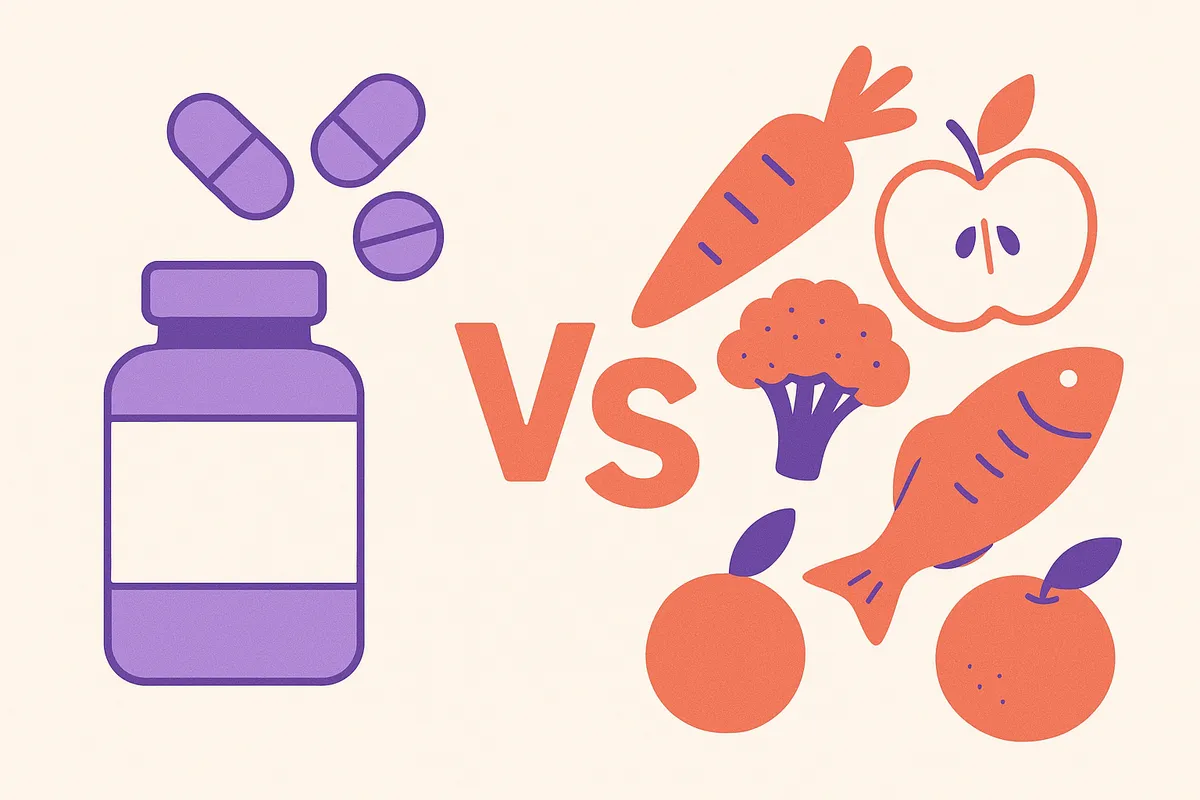


"Can't I just eat better instead of taking supplements?" It's one of the most common questions in nutrition — and the answer is more nuanced than either supplement companies or food purists want to admit.
Here's the evidence-based breakdown of when food is enough, when supplements make sense, and why the answer depends entirely on your individual situation.
Key Takeaways
- Your body absorbs nutrients from food more efficiently than from most supplements
- Heme iron (meat) is absorbed at 15-35% vs 2-20% for supplement iron
- Supplements are necessary for documented deficiencies, restrictive diets, pregnancy, and age-related absorption changes
- Vitamin D and B12 are the two nutrients hardest to get from food alone
- The best strategy: food as foundation + targeted supplements for confirmed gaps
The Case for Food First
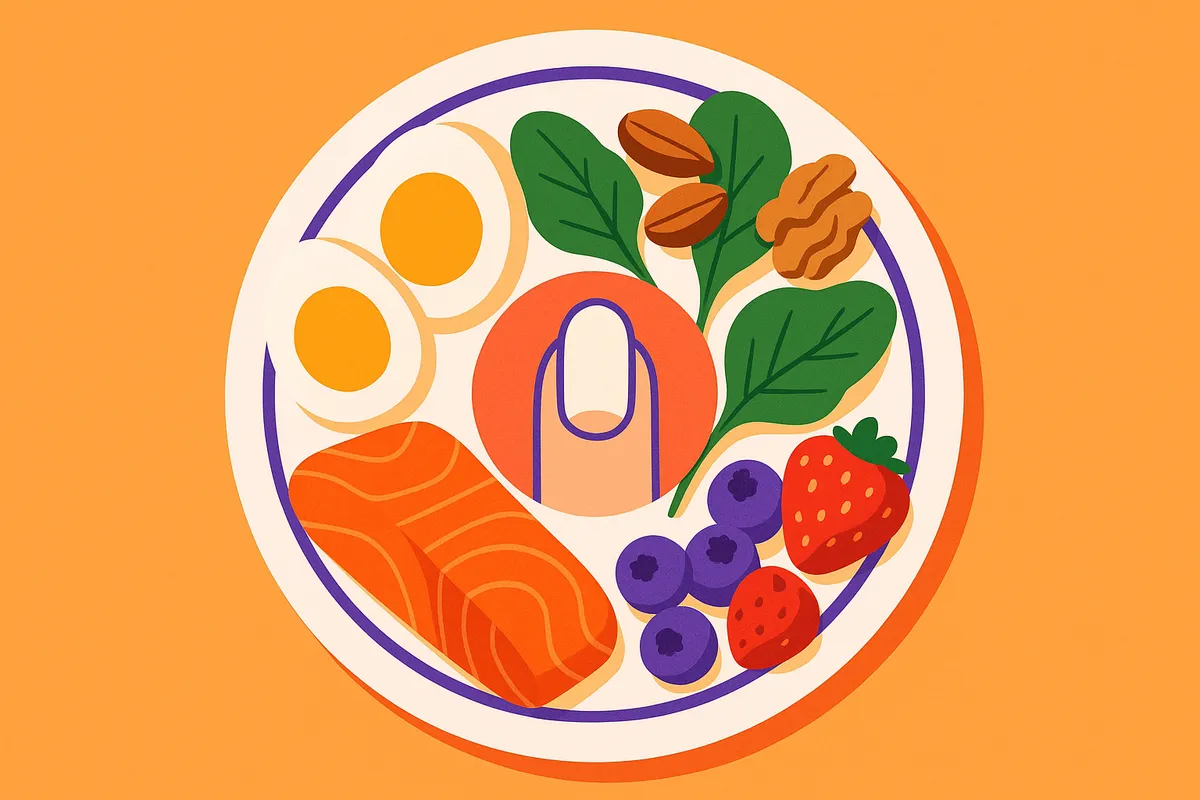
Your body is designed to extract nutrients from food, not isolated compounds in capsules. Whole foods provide:
Nutrient Synergy
Nutrients in food come packaged with cofactors that enhance absorption. Vitamin C in an orange comes with bioflavonoids. Iron in beef comes with B12 and heme compounds. These synergies are impossible to replicate in a pill.
Bioavailability Advantage
Many nutrients are better absorbed from food. Heme iron from meat is absorbed at 15-35%, versus 2-20% for non-heme iron from supplements. Folate from food is better utilized than synthetic folic acid in many people (particularly those with MTHFR variants).
No Overdose Risk
It's virtually impossible to overdose on vitamins from food. Your body regulates absorption from food sources in ways it can't with concentrated supplements.
Additional Benefits
Food provides fiber, phytochemicals, antioxidants, and thousands of bioactive compounds that supplements don't contain. These contribute to overall health in ways we're still discovering.
When Supplements Are Necessary
Despite food's advantages, there are clear situations where supplements are the right choice:
Documented Deficiency
If blood work shows low ferritin, vitamin D, B12, or zinc, correcting through diet alone may be too slow or impossible depending on the severity. A woman with ferritin of 8 ng/mL needs supplementation — she can't eat enough spinach to fix that in a reasonable timeframe.
Restrictive Diets
- Vegans: B12 supplementation is non-negotiable (B12 is only found in animal products). Iron, zinc, and omega-3 DHA may also be needed
- Celiac/IBD: Malabsorption means dietary intake may not translate to adequate blood levels
- Calorie restriction: Diets under 1,500 calories rarely provide all needed micronutrients
Pregnancy and Postpartum
Prenatal vitamins aren't optional — they provide folate levels (600-800 mcg) that are difficult to achieve through diet alone. Iron needs during pregnancy increase to 27mg/day. Postpartum women may need additional iron, vitamin D, and omega-3.
Age-Related Changes
After 50, stomach acid production decreases, reducing B12 absorption from food. Vitamin D synthesis in skin decreases with age. Supplementation becomes more relevant.
Specific Nutrients: Food vs. Supplement
| Nutrient | Food First? | When to Supplement |
|---|---|---|
| Iron | Yes — heme iron from meat is ideal | Ferritin <30 ng/mL; heavy periods; vegan |
| Zinc | Yes — oysters, beef, pumpkin seeds | Confirmed deficiency; restrictive diet |
| Biotin | Yes — eggs, nuts, liver | Only with documented deficiency (rare) |
| Vitamin D | Difficult — limited food sources | Most people in northern latitudes need D3 |
| Collagen | Partial — bone broth provides some | For nail benefits, specific peptides are better studied |
| Omega-3 | Yes — fatty fish 2-3x/week | If you don't eat fish; plant-based diet |
| B12 | Yes (if eating animal products) | Mandatory for vegans; recommended 50+ |