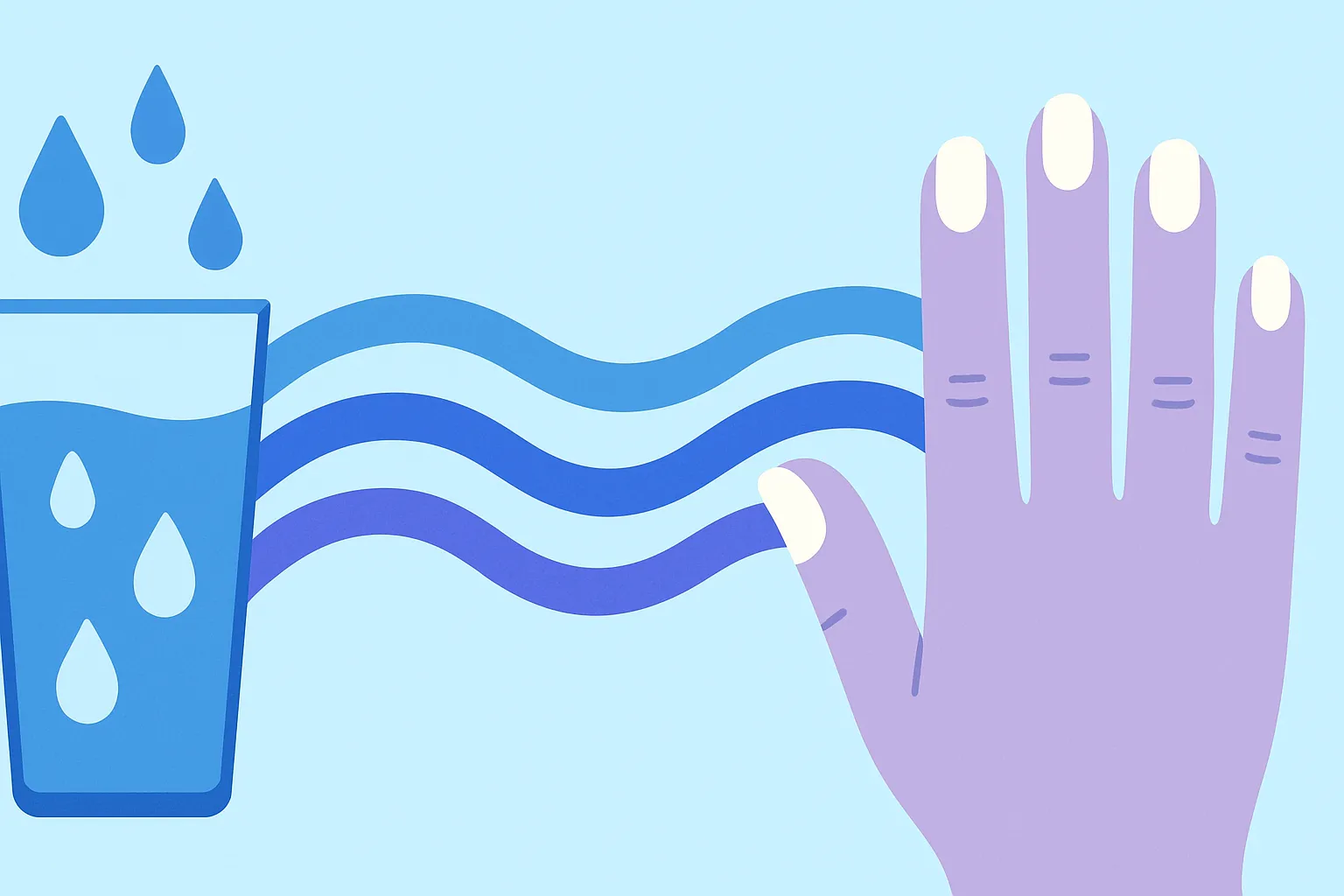
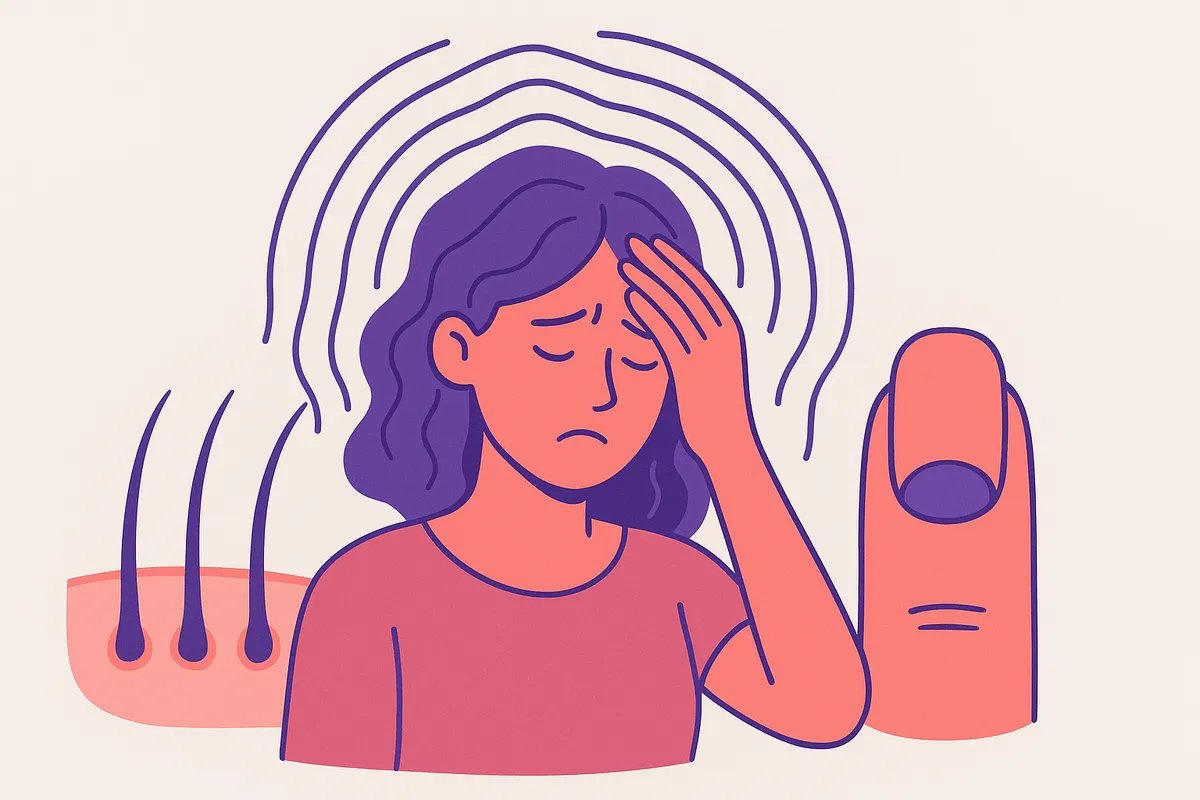
Nails contain 18% water, and dehydration does affect them. But the relationship between water intake and nail health is more nuanced than "just drink more." Here's what actually matters.
"Drink more water for better nails" is advice you'll hear from every beauty blog. But is there actually any science behind it? The answer is more nuanced than a simple yes or no.
Key Takeaways
Nails contain ~18% water — chronic dehydration makes them brittle, ridged, and slow-growing
If you're already well-hydrated, drinking more water won't make nails stronger — there's no linear "more = better" relationship
External hydration (cuticle oil) has more immediate impact on nail quality than drinking extra water
The wetting-drying cycle (dishwashing, frequent handwashing) actually HARMS nails by weakening intercellular bonds
Pale yellow urine is the best hydration indicator — the "8 glasses" rule has no scientific basis
What Dehydration Does to Your Nails
Your nails contain approximately 18% water. When this drops significantly, nails become:
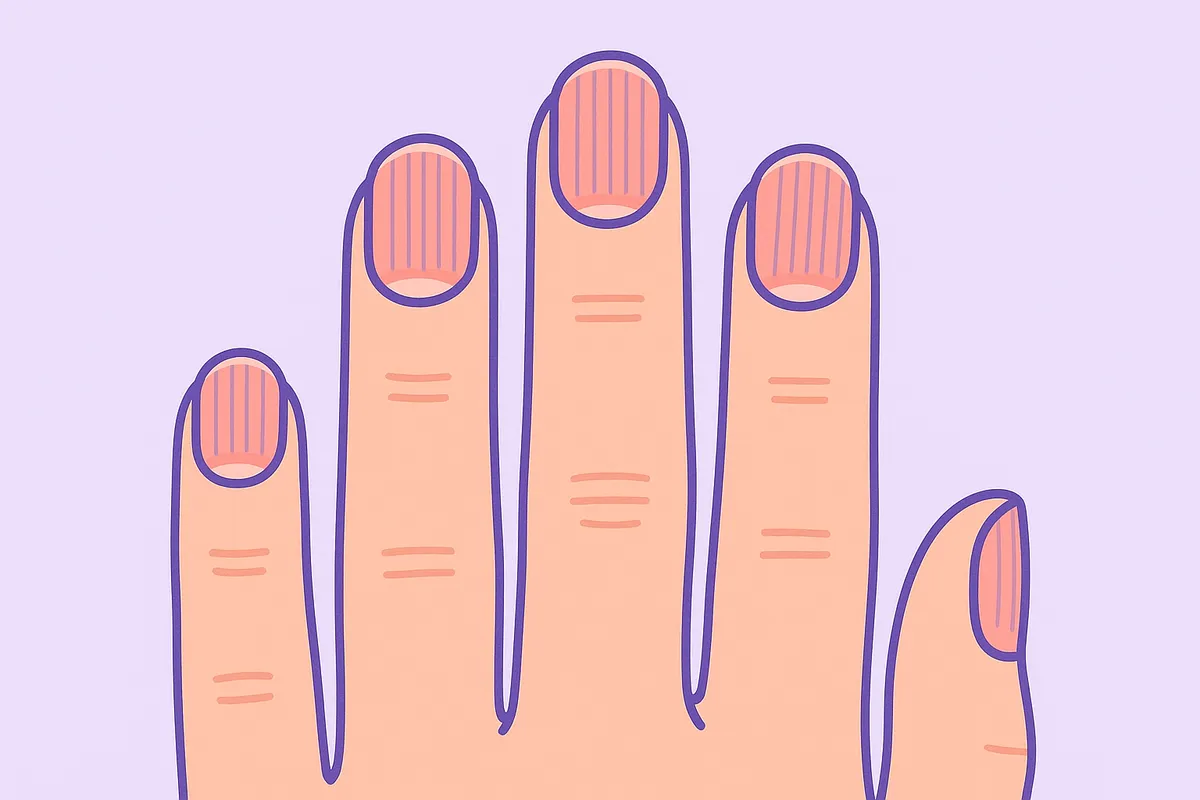
Brittle — dry keratin is less flexible and more prone to cracking
Ridged — dehydration affects the smoothness of nail production
Slow-growing — nail matrix cells need adequate hydration for division
Peeling — dry nail plates delaminate more easily
The nail plate gets its moisture from two sources: the nail bed (from below) and the external environment (from above). Systemic dehydration primarily affects the nail bed supply.
Does Drinking More Water Fix Nail Problems?
The Honest Answer
If you're chronically dehydrated: Yes, increasing water intake can improve nail quality. Chronic mild dehydration is surprisingly common — estimated to affect 75% of Americans.
If you're already well-hydrated: Drinking extra water won't make your nails stronger. There's no "more water = stronger nails" linear relationship. Once your body is adequately hydrated, excess water is simply excreted.
What the Research Shows
There are no clinical trials specifically studying water intake and nail health. This is one of those areas where the mechanism makes biological sense, but the specific evidence is lacking. What we do know:
Adequate hydration is necessary for all cellular functions, including nail matrix cell division
Chronic dehydration reduces blood volume, which reduces nutrient delivery to the nail matrix
The nail plate itself absorbs and loses water based on ambient humidity
How Much Water Do You Actually Need?
The "8 glasses a day" rule has no scientific basis. Actual needs vary based on:
Factor
Effect on Water Needs
Body weight
Larger bodies need more
Activity level
Exercise increases needs significantly
Climate
Heat and dry air increase needs
Diet
High fruit/vegetable intake provides water; high sodium increases needs
Medications
Diuretics, laxatives increase needs
Pregnancy/breastfeeding
Increased needs
A better guideline: Drink enough that your urine is pale yellow (not clear, not dark). This is the simplest reliable hydration indicator.
General targets:
Women: ~2.7 liters (91 oz) total water daily (from all sources)
Men: ~3.7 liters (125 oz) total water daily
About 20% comes from food; the rest from beverages
Wondering if a deficiency is affecting your nails?
Take our 2-minute Nail Health Quiz for a personalized assessment and supplement recommendations.
This is actually more relevant than most people realize:
Cuticle Oil
Applying oil to your cuticles and nail plate creates a moisture barrier that prevents water loss from the nail. Jojoba oil is closest to the nail's natural lipids. Apply 1-2x daily — this has more immediate impact on nail hydration than drinking an extra glass of water.
The Wetting-Drying Cycle Problem
Paradoxically, frequent water exposure HARMS nails. Repeated wetting and drying (dishwashing, handwashing) causes the nail plate to expand and contract, weakening the intercellular bonds. This is why healthcare workers, dish washers, and people who wash hands 20+ times daily often have brittle nails.
Solution: Wear gloves for wet work. Apply cuticle oil after handwashing.
Humidity
Nail hydration is partly environmental. Very low humidity (winter, air conditioning, airplane cabins) dries nails. A humidifier in winter can help — not just for nails, but for skin, sinuses, and overall comfort.
The Complete Nail Hydration Strategy
Stay consistently hydrated — drink to pale yellow urine, don't obsess over ounces
Apply cuticle oil daily — more impactful for nail hydration than extra water
Wear gloves for wet work — protect against the wetting-drying cycle
Moisturize hands — after every handwashing
Use humidifier in dry conditions — winter, AC environments
Mechanical: Over-filing, buffing, artificial nail damage
Don't assume dehydration is the cause without ruling out these more common factors.
This article is for educational purposes only. Persistent nail changes warrant evaluation by a healthcare provider.
Frequently Asked Questions
Does drinking more water really help brittle nails?
Only if you're dehydrated. If your urine is consistently pale yellow, you're adequately hydrated and drinking more won't help your nails. If you're chronically under-hydrated (dark urine, dry mouth, infrequent urination), increasing water intake may improve nail quality over 2-3 months. But if nails are brittle despite good hydration, look at nutrition (iron, biotin, zinc) or external factors first.
Is cuticle oil better than drinking water for nail health?
For immediate nail hydration, yes. Cuticle oil creates a moisture barrier directly on the nail plate, preventing water loss from the surface. Drinking water supports overall hydration from within (nail bed supply), which is important but less targeted. The ideal approach is both: adequate water intake + daily cuticle oil application.
Why do my nails get worse after washing dishes?
The wetting-drying cycle. Repeated water exposure causes nail plates to expand (absorb water) then contract (dry out), weakening the intercellular bonds that hold keratin layers together. Add dish soap (which strips natural oils) and hot water, and you're actively damaging your nails. Always wear gloves for dishwashing and apply cuticle oil afterward.
How long does it take for hydration to improve nail health?
If dehydration was the issue, you may notice less brittleness within 2-4 weeks of consistent hydration, but full improvement takes one nail growth cycle (4-6 months for fingernails). The new nail growing from the matrix will be better hydrated from the start; existing dry nail needs to grow out and be replaced.
The Bottom Line: Water matters for nail health, but it's not the cure-all beauty blogs claim. Stay adequately hydrated (pale yellow urine), apply cuticle oil daily for direct nail hydration, wear gloves for wet work, and don't assume dehydration is the cause if your nails are brittle — check iron, biotin, and zinc first.
This article was medically reviewed for accuracy and completeness. Last updated: January 2026.
Disclaimer:This article is for informational purposes only and does not constitute medical advice. Always consult with a qualified healthcare provider before starting any supplement regimen.
Written by Elena Vasquez & reviewed by Dr. Robert Langford
Not sure which supplement is right for you?
Take our 2-minute Vitamin Finder quiz and get personalized recommendations based on your profile.