Collagen Types Explained: Which Type Is Best for Hair and Nails?
Types I, II, III, V, X — do you need all five? Learn which collagen types actually matter for hair and nail health, bovine vs marine, and how to choose the right supplement.
Walk into a supplement store, and you'll see collagen products advertising Types I, II, III, V, and X. Some claim you need all five types. Others say only one matters. The confusion is real — and it's by design.
Here's a clear, evidence-based breakdown of which collagen types actually matter for hair and nails, and why you probably don't need to overthink it.
Key Takeaways
For hair and nails, you only need Types I and III collagen — not "all 5 types"
Hydrolyzed collagen peptides (2,500-5,000mg) are the correct form — not undenatured collagen (that's for joints)
Bovine collagen has the clinical evidence for nails; marine may work but hasn't been tested in nail trials
"Multi-type collagen" products often spread doses too thin across types rather than providing enough of what works
Always pair collagen with vitamin C (100-200mg) — it's an essential cofactor for collagen synthesis
What Is Collagen?
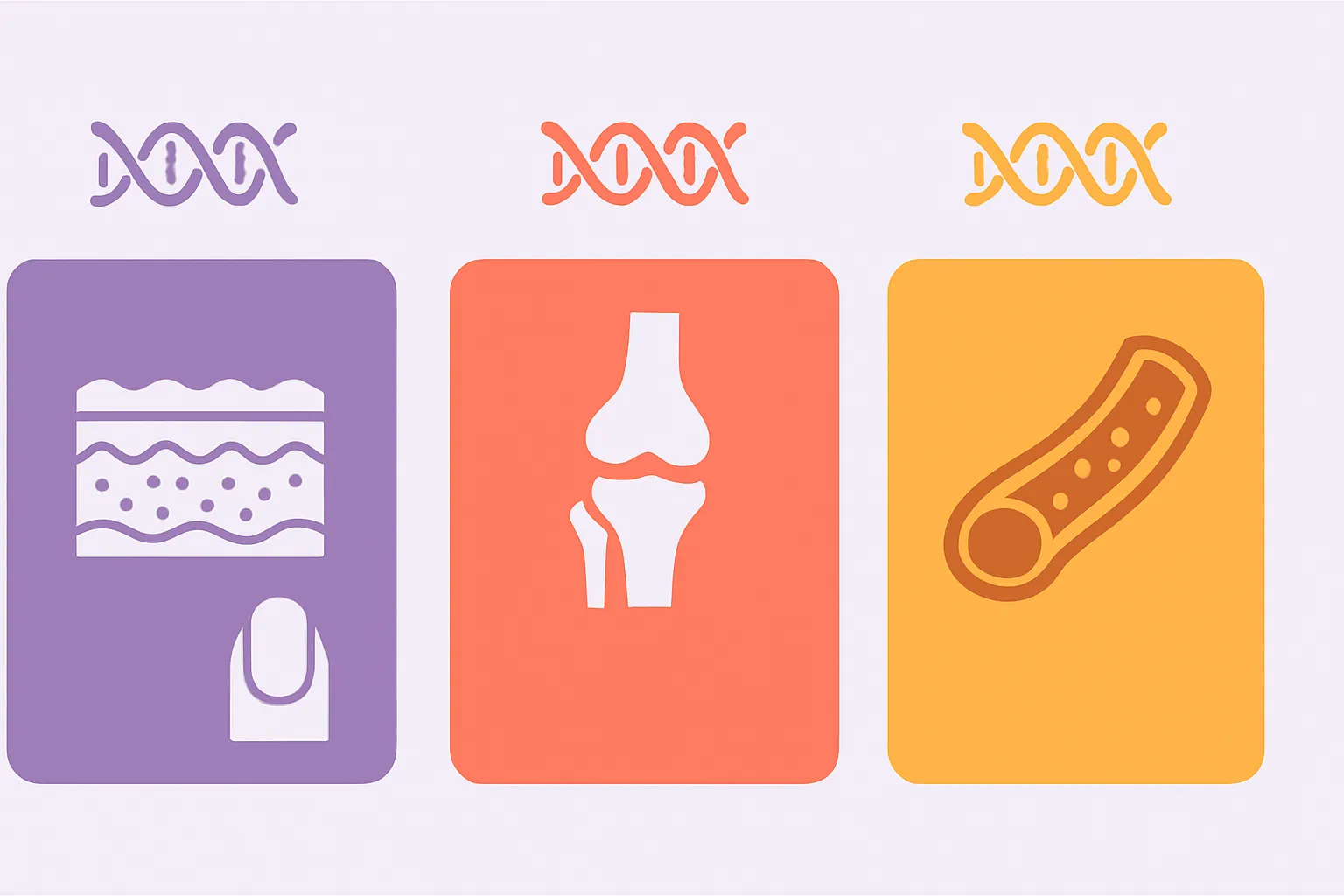
Collagen is the most abundant protein in your body, making up about 30% of total protein. It provides structural support to your skin, bones, tendons, cartilage, blood vessels, and connective tissue throughout your body.
There are at least 28 identified types of collagen, but five make up the vast majority:
The Main Collagen Types
Type I — The Foundation
90% of your body's collagen
Found in: skin, bones, tendons, teeth, ligaments, blood vessels, nail beds
Most relevant for hair, skin, and nail health
Provides tensile strength and structural integrity
Found alongside Type I in: skin, blood vessels, intestines, uterus
Supports the nail bed microvasculature (blood supply to nail matrix)
Usually paired with Type I in supplements
Sources: bovine, porcine
Type V — The Organizer
Found in: cell membranes, hair, placenta
Helps regulate Type I fiber assembly
Minor role — usually comes naturally with Type I sources
Rarely supplemented individually
Type X — The Bone Builder
Found in: growth plate cartilage, endochondral bone
Relevant for bone formation, not hair/nails
Minimal consumer relevance
Which Type Is Best for Hair and Nails?
Types I and III — that's it. Here's why:
The only clinical trial specifically studying collagen for nails used Type I collagen peptides (VERISOL, bovine-derived). The results: 12% faster nail growth, 42% fewer broken nails over 24 weeks.
Type III collagen supports the blood vessels in the nail bed that deliver nutrients to the nail matrix. Since it naturally accompanies Type I in bovine sources, most Type I supplements already contain some Type III.
You do NOT need a "multi-type" collagen for hair and nail benefits. Marketing "all 5 types" supplements are often spreading doses thin across types rather than providing effective amounts of the ones that matter.
Wondering if a deficiency is affecting your nails?
Take our 2-minute Nail Health Quiz for a personalized assessment and supplement recommendations.
Broken down into small peptides (2,000-5,000 daltons)
Easily absorbed in the gut
This is what you want for hair, skin, and nails
Typical dose: 2,500-10,000 mg daily
Can be mixed into any liquid
Undenatured Collagen
Intact collagen protein
Works differently — trains your immune system (for joint health)
Not for hair/nails — this is specifically for joint support (UC-II)
Very low dose: 40mg daily
Don't confuse the two
Bovine vs. Marine Collagen
Factor
Bovine
Marine
Primary types
I and III
Predominantly I
Peptide size
Larger
Smaller (potentially better absorbed)
Sustainability
Cattle industry
Fish byproducts (more sustainable)
Allergens
Rare
Fish allergy risk
Taste/smell
Mild
Can have fishy notes
Price
Generally cheaper
Generally more expensive
Clinical evidence
The nail study used bovine
No nail-specific clinical trials
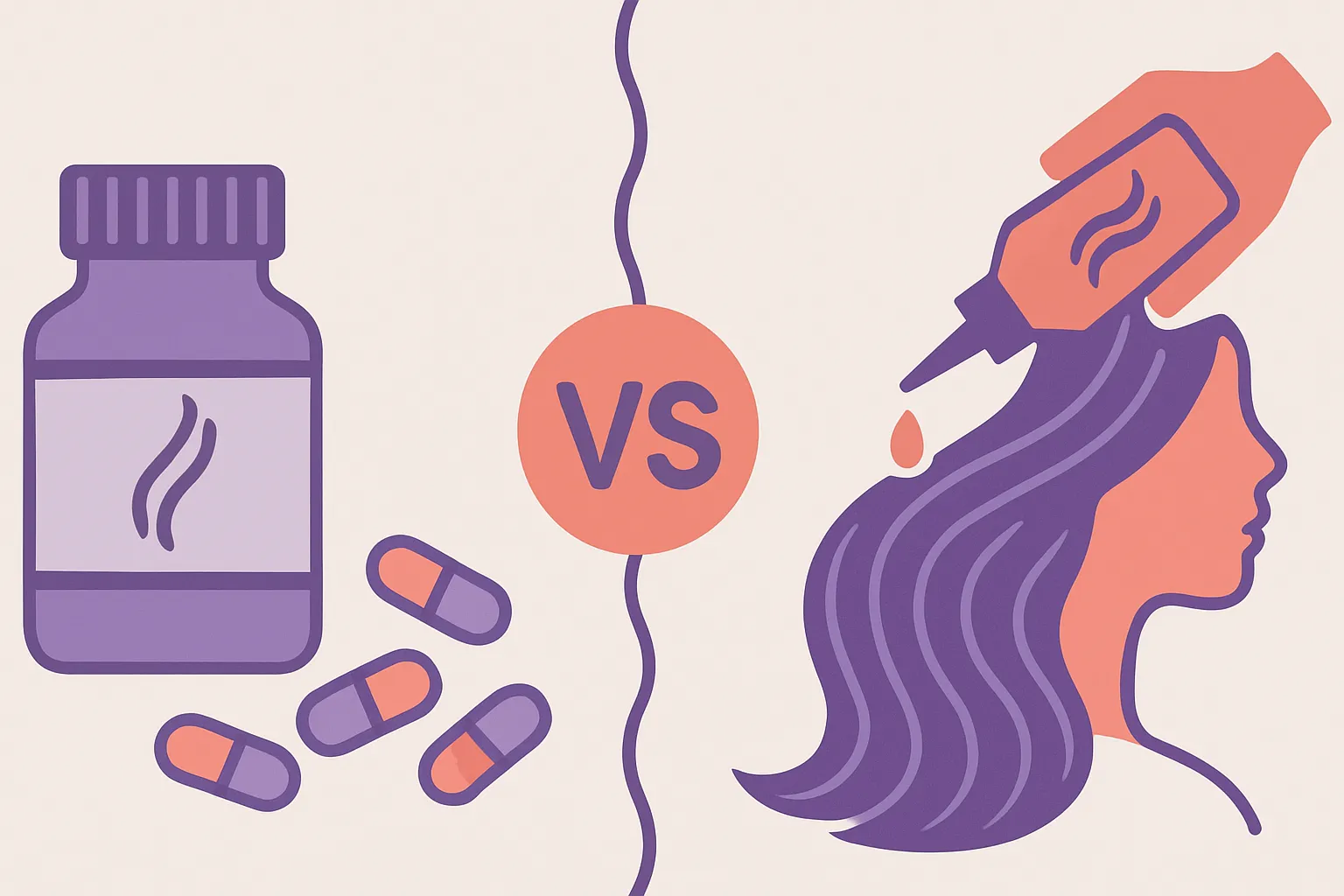
For nails specifically: Bovine has the clinical data behind it. Marine may work similarly but hasn't been tested in nail-specific trials.
How to Choose a Collagen Supplement
Types I and III — from bovine or marine source
Hydrolyzed — not undenatured (unless you want joint support)
2,500-5,000 mg per serving — the clinical trial used 2,500mg
Minimal additives — avoid products loaded with sugar, flavors, fillers
Third-party tested — look for NSF, USP, or independent lab verification
Pair with vitamin C — essential cofactor for collagen synthesis in your body
The Honest Answer
The collagen type that matters most for hair and nails is Type I, hydrolyzed, at 2,500+ mg daily. Whether it comes from cows or fish is a personal preference, not a scientific distinction (for nails). You don't need all five types, and you don't need to spend $60/month on a "premium multi-collagen complex."
This article is for educational purposes only. Consult a healthcare provider before starting any supplement regimen.
Frequently Asked Questions
Do I need a "multi-type" collagen with all 5 types?
No. For hair and nails, Types I and III are what matter. "All 5 types" products split the total dose across types, so you may get only 500mg of Type I instead of the 2,500mg used in clinical trials. A focused Type I/III product at adequate doses outperforms a multi-type product that spreads too thin.
Marine or bovine collagen — which is better for nails?
The only nail-specific clinical trial used bovine collagen peptides (VERISOL brand). Marine collagen has smaller peptides (potentially better absorption) but no nail-specific trials. Both provide Type I collagen. Choose bovine if you want the evidence-backed option; marine if you prefer fish-derived or have environmental concerns.
What's the difference between hydrolyzed and undenatured collagen?
Hydrolyzed collagen (peptides) is broken into small, easily absorbed fragments — this is what you want for hair, skin, and nails. Dose: 2,500-10,000mg daily. Undenatured collagen (UC-II) is intact protein that works via immune training for joint health. Dose: 40mg daily. These are completely different products for different purposes — don't confuse them.
Should I take collagen with vitamin C?
Yes — vitamin C is an essential cofactor for collagen synthesis in your body. Without adequate vitamin C, your body can't effectively use the collagen peptides you consume. Take 100-200mg of vitamin C alongside your collagen, or eat a vitamin C-rich food (bell pepper, citrus, berries) at the same time.
The Bottom Line: For hair and nails, choose Type I hydrolyzed collagen peptides at 2,500-5,000mg daily from bovine or marine sources. Pair with vitamin C. Skip the "all 5 types" marketing — it's a gimmick that dilutes effective doses. Give it 3-6 months and choose a product with third-party testing.
This article was medically reviewed for accuracy and completeness. Last updated: January 2026.
Disclaimer:This article is for informational purposes only and does not constitute medical advice. Always consult with a qualified healthcare provider before starting any supplement regimen.
Written by Elena Vasquez & reviewed by Dr. Marcus Chen
Not sure which supplement is right for you?
Take our 2-minute Vitamin Finder quiz and get personalized recommendations based on your profile.