Toenail Fungus Stages: What Each Stage Looks Like and What to Do
Nail fungus progresses through distinct stages from mild discoloration to total nail destruction. Learn to identify each stage, understand treatment options, and know when to see a doctor.
If you suspect you have toenail fungus, one of the most helpful things you can do is understand where you are in the progression. Early-stage fungus responds to different treatments than advanced cases, and knowing the stage helps you and your doctor choose the right approach.
Here's what each stage looks like, what's happening beneath the surface, and what treatment options are most effective at each point.
Key Takeaways
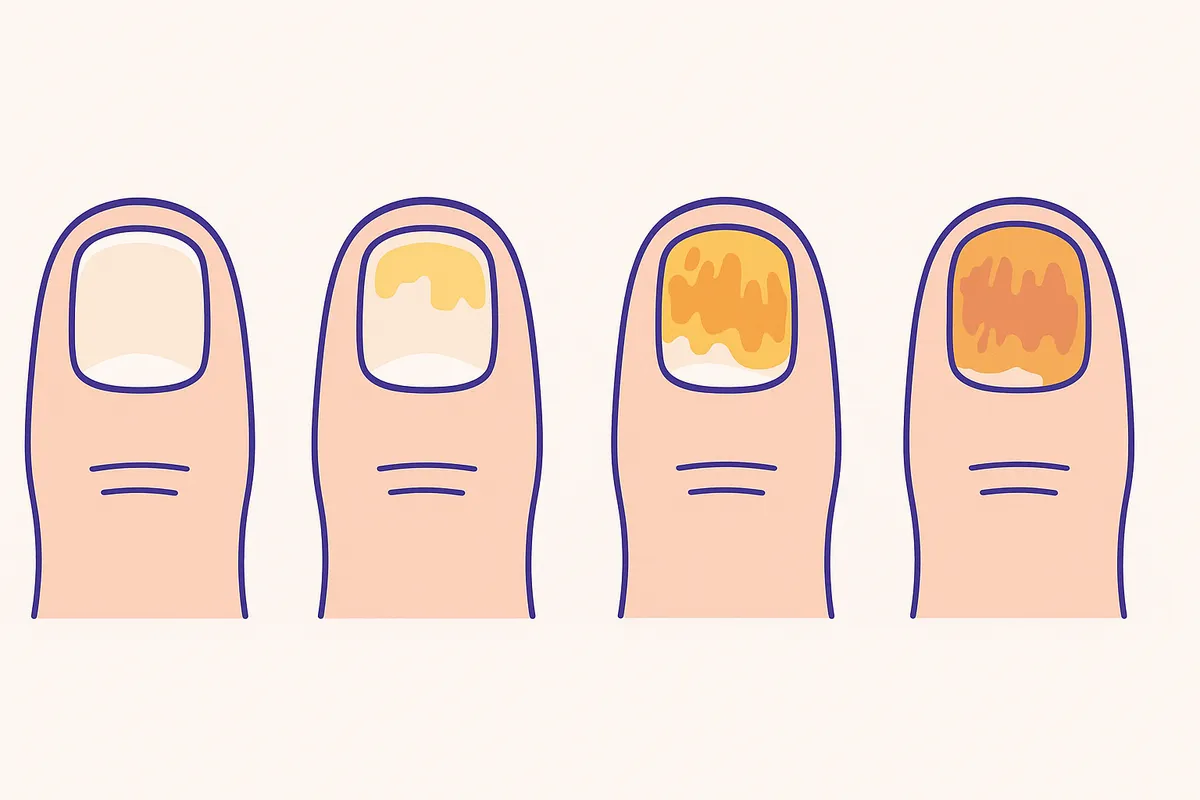
Nail fungus progresses through 4 distinct stages from mild discoloration to total nail destruction
Early-stage fungus (small spot, no thickening) is the easiest to treat — topicals may work
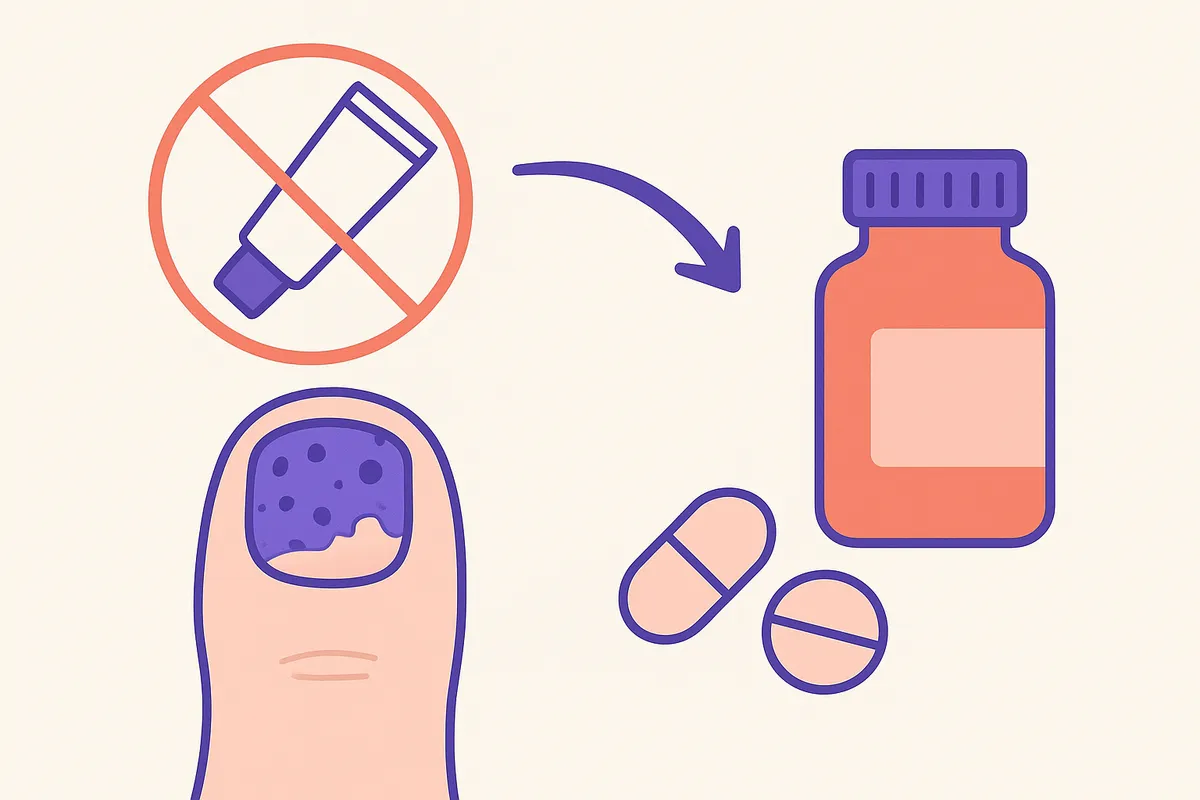
Moderate to severe stages require oral antifungals — topical alone has very low cure rates
Complete nail replacement takes 9-18 months, so treatment is a long-term commitment
Recurrence rate is 20-30% even after successful treatment — prevention matters
Who Should Read This
Anyone who suspects they have toenail fungus and wants to understand what stage they're at, or who wants to know what treatment is appropriate for their level of infection.
How Nail Fungus Progresses
Onychomycosis (the medical term for fungal nail infection) doesn't happen overnight. It follows a predictable progression from subtle changes to significant nail destruction. The fungus typically enters through a small crack or separation at the nail's edge and gradually works its way deeper.
The most common pattern is distal lateral subungual onychomycosis (DLSO), where the infection begins at the tip or side of the nail and progresses toward the cuticle.
Stage 1: Early / Mild
What you see:
Small white or yellowish spots near the tip or edge of the nail
Slight discoloration that may look like a cosmetic issue
Nail texture still mostly normal
No pain or discomfort
What's happening:
The fungus (usually a dermatophyte like Trichophyton rubrum) has colonized the underside of the nail plate at the distal edge. It's feeding on keratin and producing enzymes that slowly break down the nail structure.
Treatment at this stage:
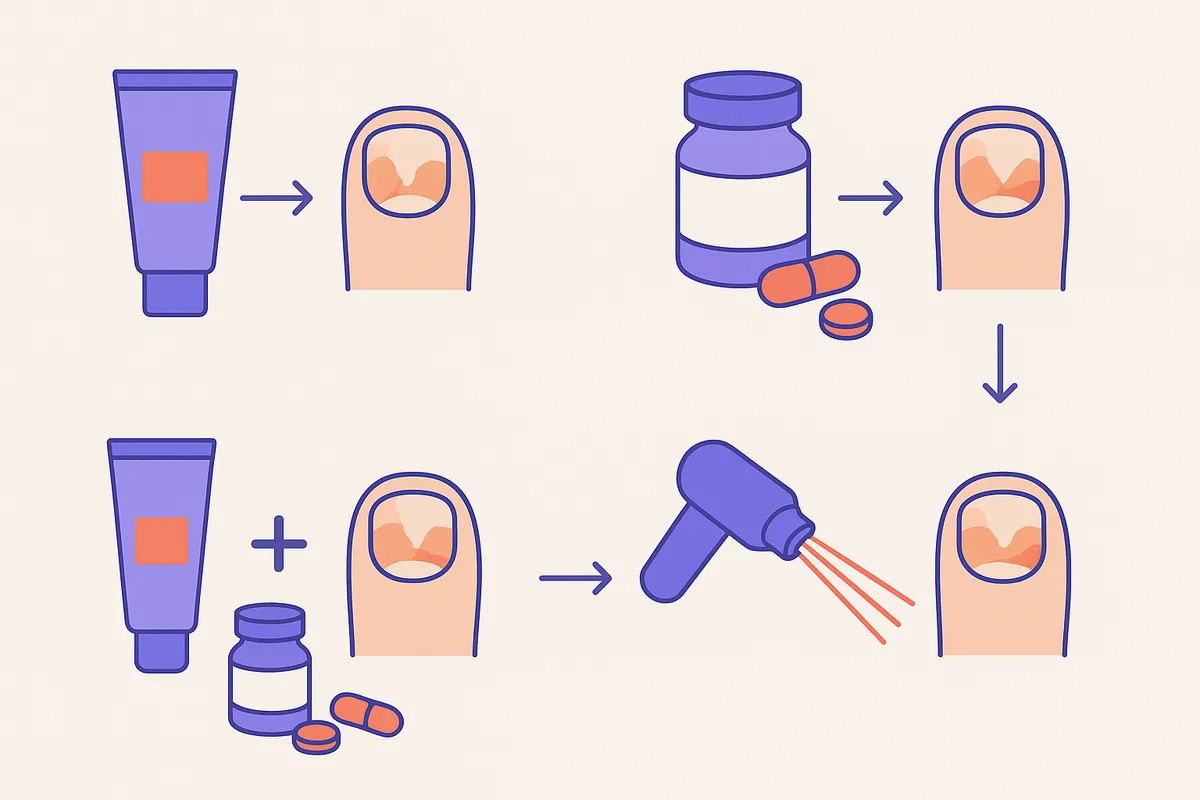
OTC topical antifungals may work at this point — success rates up to 70% with consistent daily application
Prescription topical (efinaconazole/Jublia, tavaborole/Kerydin) for faster results
Timeline: 6-12 months of consistent treatment
This is the best time to treat. If you catch it early, topical therapy alone may be enough.
Wondering if a deficiency is affecting your nails?
Take our 2-minute Nail Health Quiz for a personalized assessment and supplement recommendations.
Discoloration spreading to cover 25-50% of the nail
Nail becoming thicker and harder to trim
Crumbly or chalky texture developing
White or yellow streaks running through the nail
Possible mild discomfort in shoes
What's happening:
The fungus has penetrated deeper into the nail bed and is causing the nail plate to separate from the bed (onycholysis). The nail matrix may be producing abnormally thick, dystrophic keratin in response to the infection.
Treatment at this stage:
Oral antifungals recommended — topical alone has very low cure rates at this point
Oral terbinafine: 250mg daily for 12 weeks, cure rates 38-76%
Combination therapy (oral + topical) gives best results: 50-80%+
Timeline: 9-12 months for complete nail replacement
Stage 3: Severe / Advanced
What you see:
Entire nail discolored (yellow, brown, or greenish-black)
Significantly thickened — may be 2-3x normal thickness
Crumbling, cracking, or breaking apart
Nail separating from the nail bed
Possible odor
Pain when walking or wearing shoes
May have spread to other toenails
What's happening:
The fungus has fully colonized the nail bed and matrix. Secondary bacterial infection may be present. The nail structure is severely compromised, and the infection may be spreading to surrounding skin (athlete's foot) or other nails.
Treatment at this stage:
Oral antifungals are essential — topical alone will not work
Combination therapy strongly recommended
Nail debridement (professional trimming/thinning) improves drug penetration
Consider nail avulsion (partial or complete removal) in extreme cases
Timeline: 12-18 months, and recurrence is common (20-30%)
Stage 4: Total Dystrophic Onychomycosis
What you see:
Nail is completely destroyed — thick, crumbled, deformed
May appear as just a thickened mass of debris on the nail bed
Multiple nails typically affected
Walking may be painful
What's happening:
The nail matrix itself is damaged. Even with successful antifungal treatment, the new nail may grow in abnormally. This stage often represents years of untreated infection.
Treatment at this stage:
Aggressive oral antifungal therapy with extended courses
Surgical nail avulsion may be necessary
Monitor for secondary infections — especially important for diabetic patients
Full cure may not be achievable; goal shifts to management and prevention
When to See a Doctor
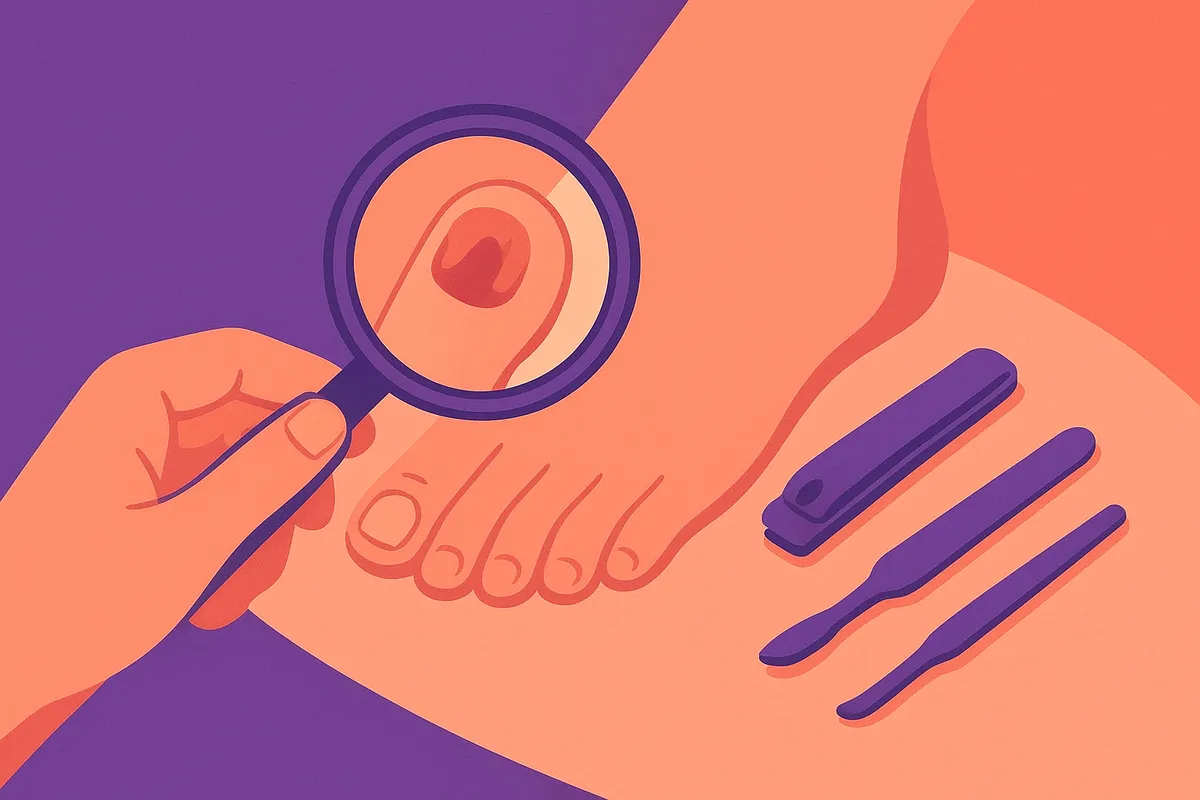
Don't wait for advanced stages. See a podiatrist or dermatologist if:
The discoloration is spreading beyond a small spot
Your nail is thickening or changing shape
You have diabetes, peripheral vascular disease, or immune compromise
OTC treatment hasn't shown improvement in 3 months
You're experiencing pain
Prevention After Treatment
Fungal nail infections recur in 20-30% of cases. Reduce your risk:
Keep feet dry — change socks daily, use moisture-wicking materials
Wear shower shoes in gyms, pools, and locker rooms
Treat athlete's foot promptly — it's often the source of nail reinfection
Disinfect nail clippers and files
Replace old shoes that may harbor fungal spores
Consider antifungal powder in shoes
This article is for educational purposes only. Prescription treatments require evaluation by a healthcare provider.
Frequently Asked Questions
How do I know what stage my toenail fungus is?
Mild: small white/yellow spot, less than 25% of nail, no thickening. Moderate: discoloration covering 25-75%, some thickening, crumbly texture. Severe: entire nail affected, significantly thickened, crumbling, possibly separating from nail bed. Total dystrophic: nail completely destroyed.
Can early-stage fungus heal on its own?
No. Nail fungus does not resolve spontaneously — it only progresses without treatment. However, very early-stage infections respond much better to treatment (up to 70% cure with consistent topical use) compared to advanced stages.
How long does it take to cure toenail fungus?
Even with effective oral treatment (12 weeks of terbinafine), the nail takes 9-18 months to fully grow out and replace the infected portion. Patience is essential — you're growing a new nail, not just killing the fungus.
The Bottom Line: The earlier you treat nail fungus, the better the outcome. Don't wait for it to worsen — a small spot today could be a destroyed nail in 2 years. See a podiatrist or dermatologist for anything beyond a minor spot, and commit to the full treatment timeline.
This article was medically reviewed for accuracy and completeness. Last updated: January 2026.
Disclaimer:This article is for informational purposes only and does not constitute medical advice. Always consult with a qualified healthcare provider before starting any supplement regimen.
Written by Dr. Priya Sharma & reviewed by Dr. Daniel Ortega
Not sure which supplement is right for you?
Take our 2-minute Vitamin Finder quiz and get personalized recommendations based on your profile.