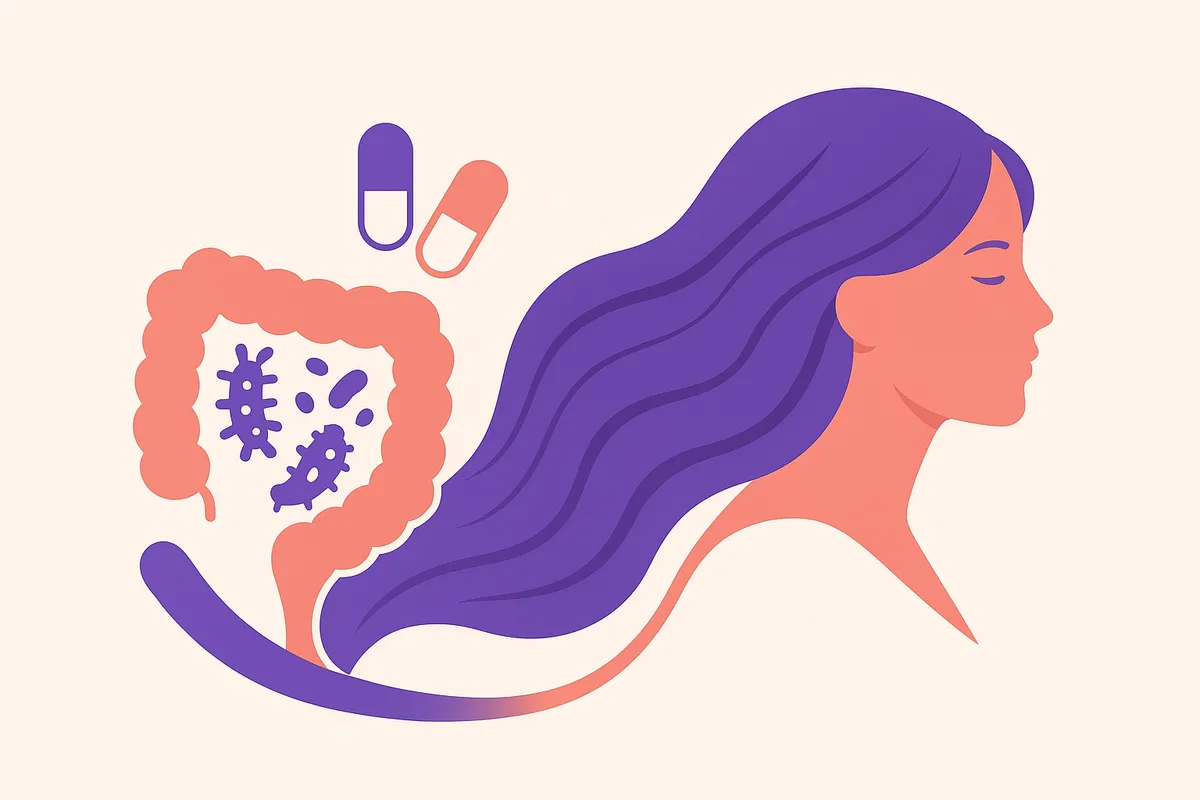

The gut-hair connection is one of the most fascinating emerging areas in dermatology. While the research is still young, a growing body of evidence suggests that your gut microbiome influences hair growth, hair loss, and even the speed of graying.
Here's what we know so far, what the limitations are, and whether a probiotic supplement might actually help your hair.
Key Takeaways
- The gut-hair axis is real but the clinical evidence in humans is still limited
- Animal studies show specific probiotics (L. reuteri) promote thicker fur and faster hair growth
- Gut dysbiosis is documented in alopecia areata patients — altered microbiome composition
- Probiotics are most likely to help if you have gut issues, autoimmune conditions, or post-antibiotic dysbiosis
- Fermented foods (kefir, kimchi, yogurt) provide probiotics plus prebiotic fiber — better than most supplements
The Gut-Skin-Hair Axis
Your gut microbiome — the trillions of bacteria, fungi, and other microorganisms in your digestive tract — communicates with your skin and hair follicles through several pathways:
Immune Modulation
About 70% of your immune system resides in your gut. Dysbiosis (imbalanced gut bacteria) can trigger systemic inflammation that affects hair follicles. In autoimmune hair loss (alopecia areata), this gut-immune connection is particularly relevant.
Nutrient Absorption
Your gut bacteria synthesize B vitamins (including biotin) and vitamin K, and influence the absorption of iron, zinc, and other nutrients critical for hair health. Poor gut health = poor nutrient absorption = potential hair and nail effects.
Hormonal Influence
Gut bacteria influence estrogen metabolism through the "estrobolome" — the collection of bacteria that metabolize estrogens. This may affect hormonal hair loss patterns.
Short-Chain Fatty Acids (SCFAs)
Beneficial gut bacteria produce SCFAs (butyrate, propionate, acetate) that reduce systemic inflammation and support the integrity of the intestinal barrier. When this barrier is compromised ("leaky gut"), inflammatory molecules can circulate and potentially affect hair follicle cycling.
What the Research Shows
Animal Studies (Promising)
Studies in mice have shown that specific probiotic strains (particularly Lactobacillus reuteri) can promote thicker fur, faster hair growth, and even reverse age-related hair thinning. These mice showed increased anagen (growth phase) follicles and elevated anti-inflammatory cytokines.
Human Studies (Very Limited)
Human evidence is sparse. A few small clinical trials have explored probiotics for skin conditions (atopic dermatitis, acne) with some positive results, but hair-specific clinical trials are extremely limited. Most human evidence is observational — people with gut conditions (IBD, celiac) often experience hair loss that improves when the gut condition is treated.
The Alopecia Areata Connection
Several studies have found altered gut microbiome composition in alopecia areata patients, with reduced microbial diversity and changes in specific bacterial populations. This suggests a role for gut health in autoimmune hair loss, but we don't yet know if correcting dysbiosis with probiotics improves hair outcomes.
Should You Take Probiotics for Hair?
The honest answer: probably not specifically for hair — but possibly for overall health that includes hair benefits.
Probiotics are most likely to help if:
- You have documented gut issues (IBS, IBD, post-antibiotic dysbiosis)
- You have autoimmune conditions (including alopecia areata)
- Your diet is low in fiber and fermented foods
- You've recently taken antibiotics
Probiotics are unlikely to help if:
- Your gut health is good
- Your hair loss is due to a specific nutrient deficiency (fix that instead)
- You're expecting dramatic hair regrowth from probiotics alone