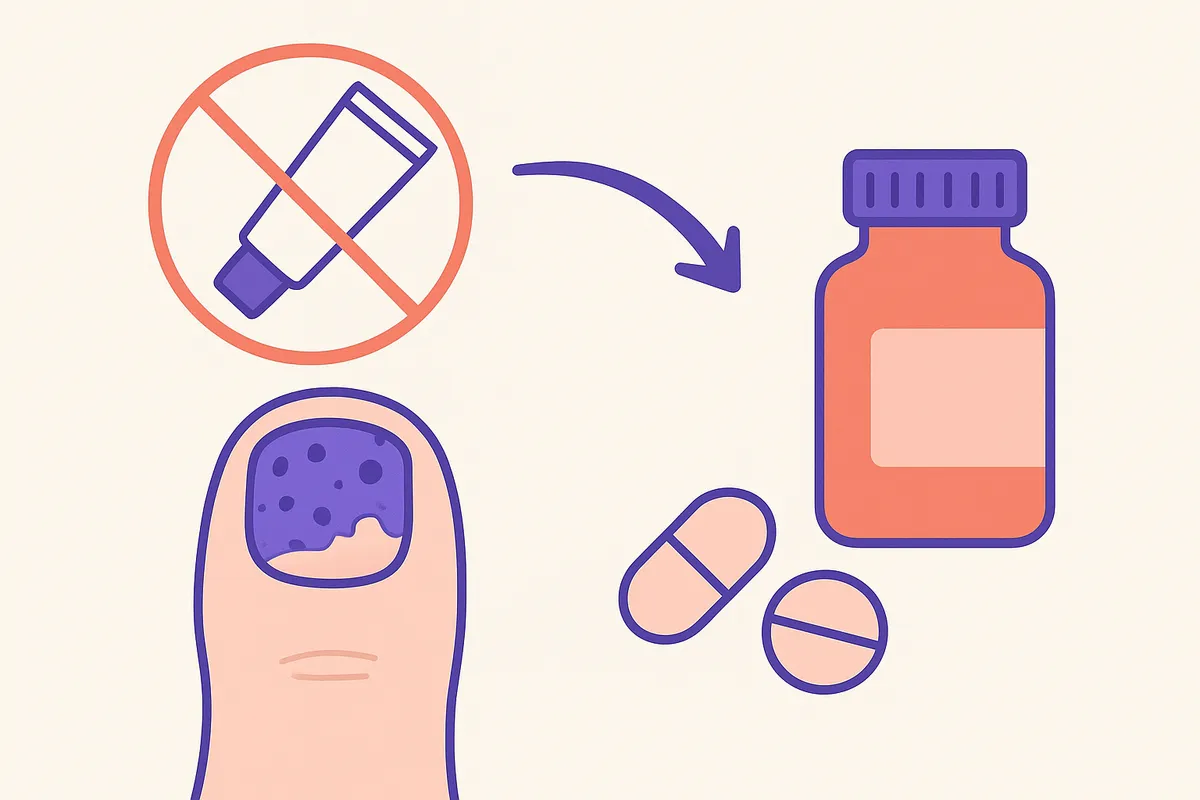


Why Your Topical Nail Fungus Treatment Stopped Working
Treatments

Why Your Topical Nail Fungus Treatment Stopped Working

Topical antifungals have cure rates under 20% for nail fungus. Understand why they fail, when oral medications are necessary, and how combination therapy dramatically improves outcomes.

You've been applying that antifungal cream or lacquer to your toenail religiously for months. Maybe it looked a little better at first. But now? The fungus is still there. Maybe it's even spreading.

You're not alone, and it's not your fault. Topical antifungal treatments for nail fungus have some of the lowest cure rates in dermatology — and there are clear, well-researched reasons why.

Key Takeaways

  • OTC topical antifungals have cure rates of just 5-10% for established nail fungus
  • The nail plate is too dense for most topical agents to penetrate effectively
  • Oral terbinafine achieves 38-76% cure rates — significantly more effective
  • Combination therapy (oral + topical) gives the best results at 50-80%+
  • The longer you wait, the harder it is to treat — early intervention matters

Who Should Read This

Anyone currently using a topical antifungal without improvement, people debating whether to see a doctor about nail fungus, or those who've been told "just use cream" and want to understand why that advice often fails.

Why Topical Treatments Fail

The Nail Plate Barrier

This is the fundamental problem. Your nail plate is a dense, layered structure of hardened keratin — essentially biological armor designed to protect the nail bed. Research shows that achieving sufficient drug penetration through this barrier is the primary obstacle to topical treatment success [2].

The nail plate is 100-150 cell layers thick. Most topical antifungals simply cannot reach the fungal organisms living between the nail bed and the nail plate in high enough concentrations to kill them. It's like trying to treat a lung infection by rubbing cream on your chest — the drug can't get where it needs to go.

The Numbers Don't Lie

The cure rate data is sobering [1, 3]:

Treatment Type Complete Cure Rate Time Required
OTC topical (clotrimazole, tolnaftate) 5-10% 12+ months
Rx topical (ciclopirox lacquer) 5-17% 48 weeks
Rx topical (efinaconazole/Jublia) 15-18% 48 weeks
Oral terbinafine (Lamisil) 38-76% 12 weeks
Combination (oral + topical) 50-80%+ 12 weeks + ongoing topical

That's not a typo. OTC antifungal creams have single-digit cure rates for established nail fungus. Even the best prescription topical (efinaconazole) achieves less than 20% complete cure.

Treatment Duration and Compliance

Topical treatments require application for at least 48 weeks — nearly a full year — with perfect daily compliance. Many require filing the nail surface before each application. Most people don't maintain that level of consistency, further reducing already-low efficacy.

Biofilm Formation

As fungal infections progress, organisms form biofilms — protective communities encased in a polysaccharide matrix that shields them from antifungal agents. Mature biofilms on the nail bed are extremely resistant to topical treatment and contribute to treatment failure and recurrence.

When Oral Medication Is Necessary

For moderate to severe onychomycosis (fungus affecting more than 25% of the nail, multiple nails, or causing nail thickening), oral antifungals are the evidence-based standard of care [5, 6].

Oral Terbinafine (Lamisil)

The most commonly prescribed and most effective single-agent treatment:

  • How it works: Absorbed into bloodstream, delivered to nail matrix, incorporated into new nail growth. The drug accumulates in the nail and remains active for months after the treatment course ends.
  • Duration: 12 weeks for toenails (6 weeks for fingernails)
  • Cure rate: 38-76% depending on severity [4]
  • Side effects: GI upset (10%), taste disturbance (3%), headache, rash. Rare: hepatotoxicity (requires liver function monitoring before and during treatment)
  • Drug interactions: Few — terbinafine is well-tolerated with most medications

Oral Itraconazole (Sporanox)

An alternative for patients who can't take terbinafine:

  • Pulse dosing: 200mg twice daily for 1 week per month, repeated 3-4 cycles
  • Cure rate: 30-50%
  • Advantage: Covers more fungal species (yeasts, molds) and has pulse-dosing option
  • Caution: Significant drug interactions (CYP3A4 inhibitor) — check with your pharmacist
Wondering if a deficiency is affecting your nails?

Take our 2-minute Nail Health Quiz for a personalized assessment and supplement recommendations.

Take the Quiz

The Case for Combination Therapy

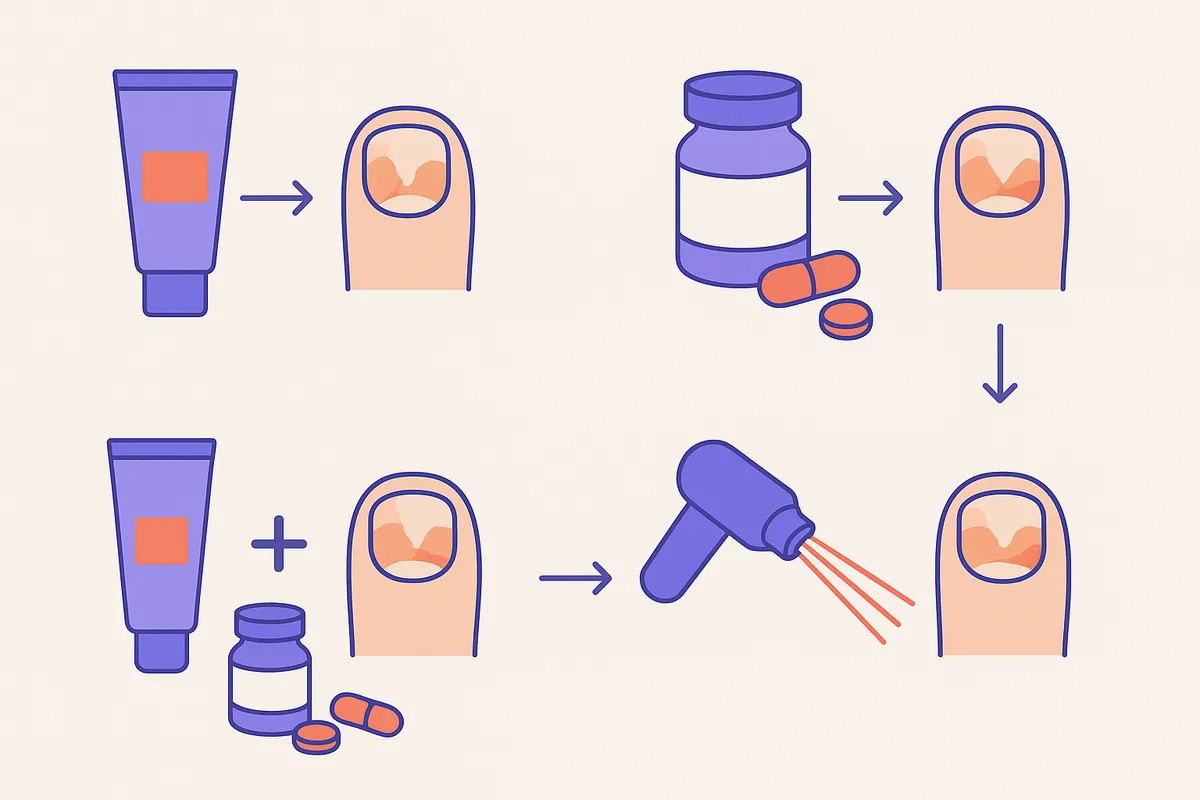
The highest cure rates come from combining oral and topical agents [3]. The logic is straightforward: oral medication attacks the fungus from below (through the bloodstream to the nail matrix), while topical agents work from above (through the nail surface).

In vitro studies show synergistic antifungal effects when terbinafine and efinaconazole are combined, with effective activity against 44% of tested strains [6]. Clinical data support cure rates of 50-80%+ with combination approaches.

What About Laser Treatment?

Laser therapy for nail fungus is FDA-cleared for "temporary improvement in nail appearance" — note the careful wording. It's not cleared as a cure. Evidence is mixed, treatments are expensive ($500-$1,500, not covered by insurance), and there are no head-to-head trials against oral antifungals. It may be a useful adjunct but shouldn't replace oral medications for moderate-to-severe cases.

When to Stop Waiting and See a Doctor

  • Fungus has spread beyond a small spot on one nail
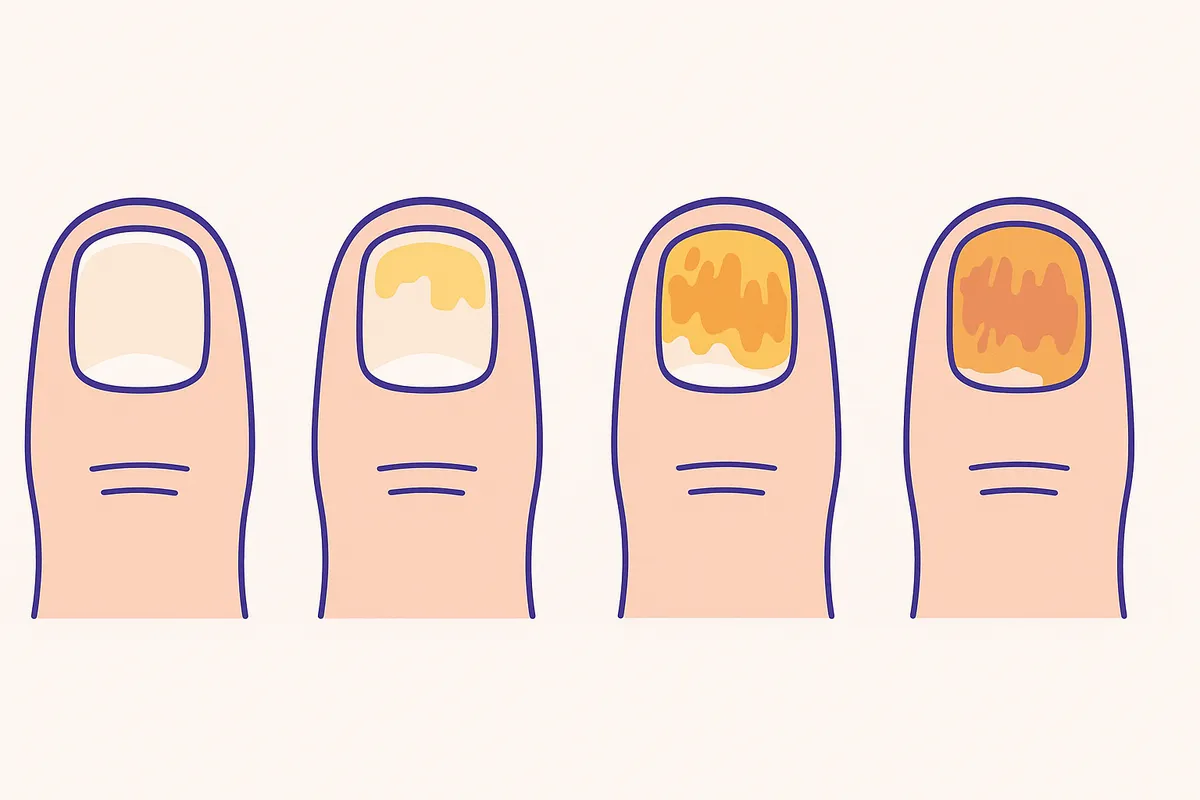
  • The nail is thickening, crumbling, or changing color
  • OTC treatment hasn't improved the nail after 3 months
  • You have diabetes or immune compromise (higher infection and complication risk)
  • You're experiencing pain or difficulty wearing shoes
  • The infection has spread to other nails or surrounding skin

Frequently Asked Questions

Why did my doctor recommend cream if it doesn't work? Some doctors prescribe topical agents for very mild, early-stage infections (small discoloration, no thickening) where cure rates are better (up to 70% for very early superficial cases). The problem arises when topicals are used for established, moderate-to-severe infections where they're ineffective.

Is oral terbinafine safe? For most patients, yes. The most common side effects are GI-related and temporary. Liver toxicity is rare (estimated 1 in 50,000-120,000) but requires monitoring. Your doctor will check liver function before starting and may recheck during treatment. Terbinafine is one of the most-prescribed antifungals worldwide with a strong safety record.

How do I know if my fungus is "mild" vs "moderate"? Mild: less than 25% of one nail affected, no thickening, one nail only. Moderate: 25-75% affected, some thickening, may involve 2-3 nails. Severe: >75% affected, significant thickening/crumbling, multiple nails, pain.

Will the fungus come back after treatment? Recurrence rates are 20-30% even after successful oral treatment. Prevention is critical: treat any athlete's foot promptly, keep feet dry, disinfect shoes, wear shower shoes in public facilities, and monitor for early signs of reinfection.

The Bottom Line: If your topical antifungal isn't working after 3 months, it probably won't. The nail plate is simply too dense for most topical agents to penetrate effectively. Oral terbinafine (38-76% cure rate) or combination therapy (50-80%+) are significantly more effective. See a podiatrist or dermatologist — the sooner you treat properly, the better the outcome.


This article was medically reviewed for accuracy and completeness. Last updated: January 2026.

Sources & References

  1. ONYCHOMYCOSIS: A Review of New and Emerging Topical and Device-based Treatments — Journal of Clinical and Aesthetic Dermatology (2019)
  2. Assessment of the nail penetration of antifungal agents — Journal of Fungi (2020)
  3. A Paradigm Shift in the Treatment and Management of Onychomycosis — Journal of Fungi (2021)
  4. Clinical comparison of Terbinafine efficacy in onychomycotic toenails — Journal of Dermatological Treatment (2015)
  5. Onychomycosis nailed — Canadian Family Physician (2014)
  6. Onychomycosis: Rapid Evidence Review — American Family Physician (2021)

Disclaimer:This article is for informational purposes only and does not constitute medical advice. Always consult with a qualified healthcare provider before starting any supplement regimen.

Written by Dr. Priya Sharma & reviewed by Dr. Daniel Ortega

Not sure which supplement is right for you?

Take our 2-minute Vitamin Finder quiz and get personalized recommendations based on your profile.

Take the Quiz →