The Complete Guide to Nail Fungus Treatment: From OTC to Prescription
Every evidence-based treatment for nail fungus compared: OTC topicals, prescription medications, laser therapy, and combination approaches — with cure rates, costs, and recommendations.
Nail fungus (onychomycosis) affects approximately 10% of the general population and up to 50% of adults over 70. It's stubborn, slow to treat, and has frustratingly high recurrence rates. But with the right treatment strategy, most cases can be cured or significantly improved.
This guide covers every evidence-based treatment option — from OTC products to prescription medications to emerging therapies — so you can have an informed conversation with your doctor about what's right for your case.
Key Takeaways
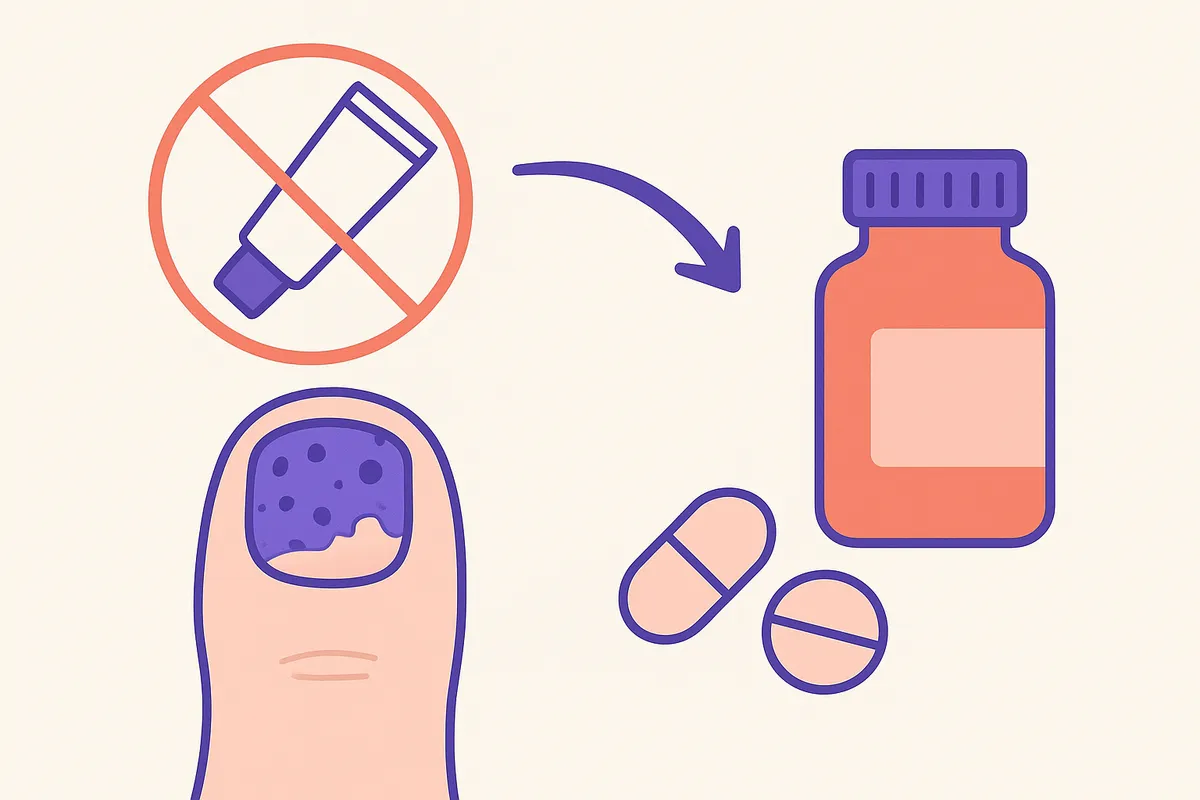
Oral terbinafine (250mg daily for 12 weeks) is the gold standard with 38-76% cure rates — far exceeding any topical
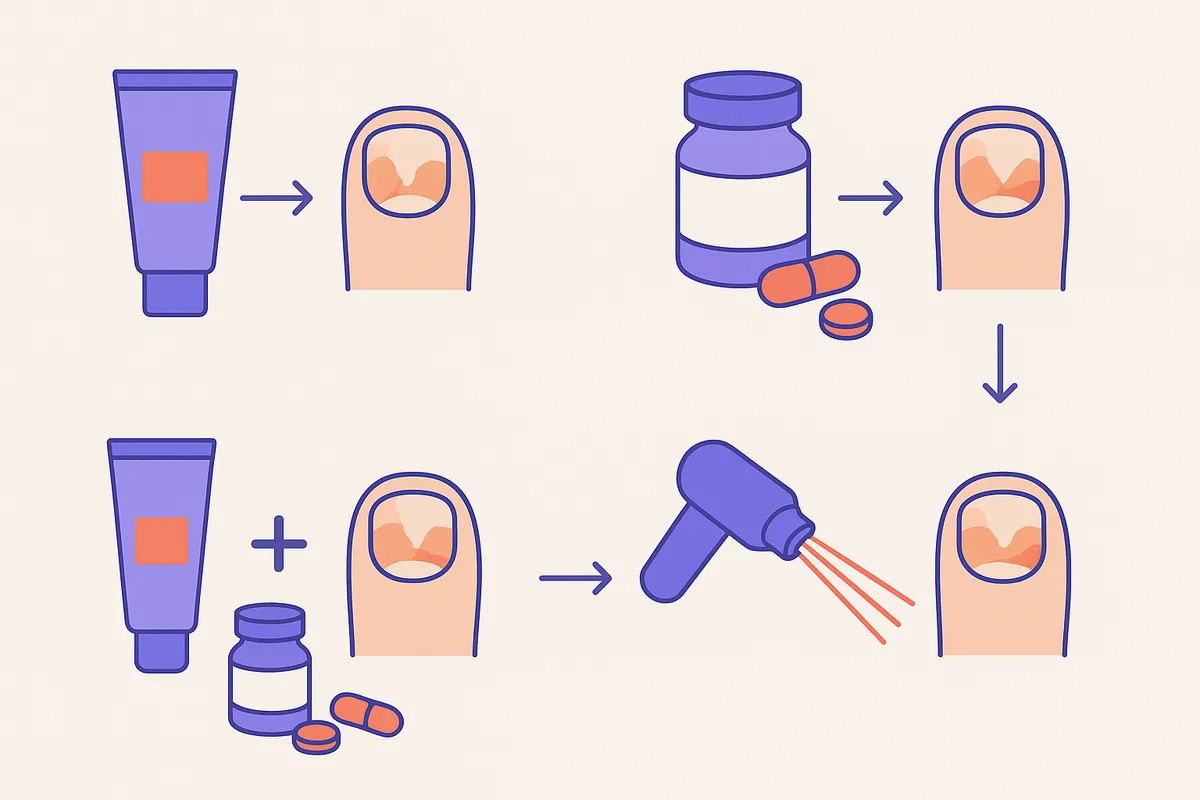
Combination therapy (oral + topical) achieves the highest cure rates at 50-80%+
OTC topical treatments cure only 5-10% of established infections — the nail plate blocks penetration
Treatment takes 9-18 months for complete nail replacement, regardless of which treatment you use
Recurrence rate is 20-30% even after successful cure — ongoing prevention is essential
Understanding Your Infection
Before choosing a treatment, you need to understand what you're dealing with:
Types of Nail Fungus
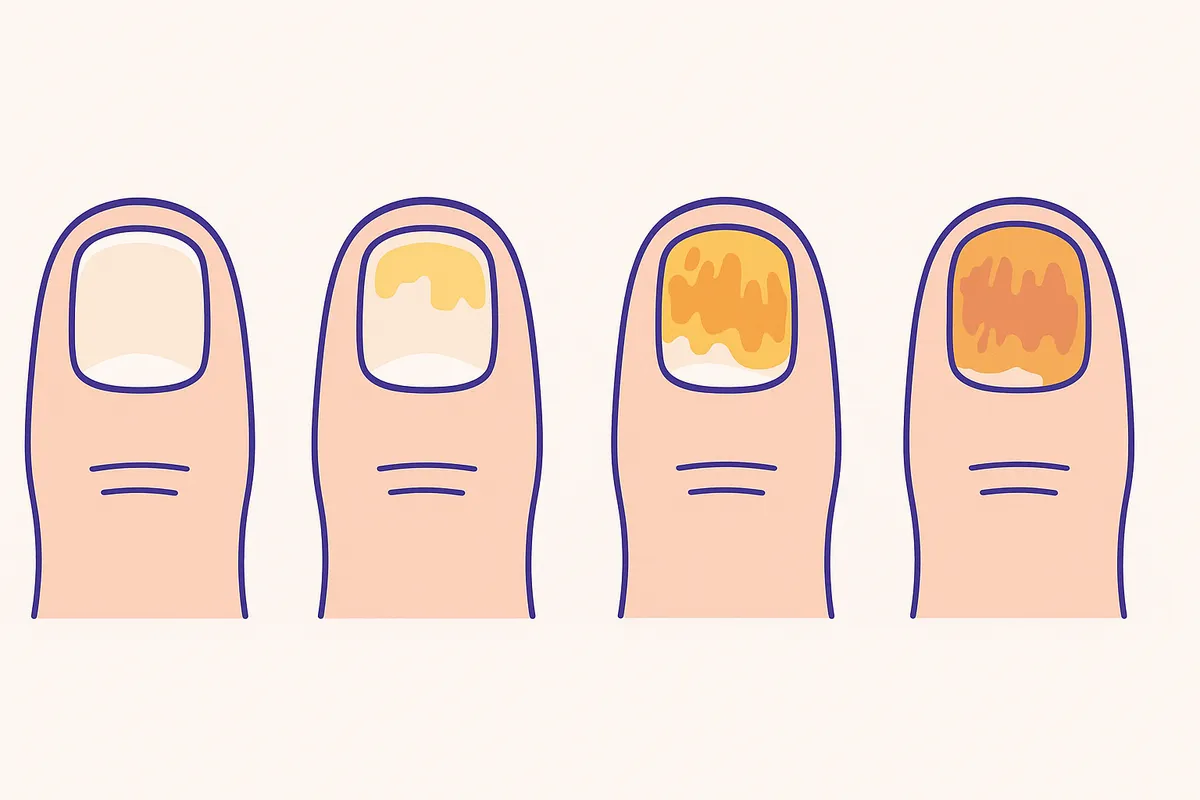
Distal lateral subungual (DLSO) — most common (90%+); starts at the tip/side of nail
Proximal subungual (PSO) — starts at the cuticle; more common in immunocompromised patients
White superficial (WSO) — white patches on the nail surface; easiest to treat
Total dystrophic (TDO) — entire nail destroyed; most difficult to treat
Severity Assessment
Your treatment choice should match your severity:
Severity
Signs
Best Treatment Approach
Mild
<25% nail involved, 1-2 nails, no thickening
Topical alone may work
Moderate
25-75% nail involved, mild thickening
Oral antifungal recommended
Severe
>75% involved, significant thickening, multiple nails
OTC topical treatments have cure rates of 5-10% for established nail fungus. The nail plate is simply too dense for most OTC formulations to penetrate in sufficient concentrations. They may help with very early, superficial infections — but for anything beyond a small spot, they're unlikely to work.
Best use case: Prevention after successful treatment, or very early superficial white onychomycosis.
Prescription Topical Treatments
Efinaconazole 10% (Jublia)
Mechanism: Triazole antifungal with better nail penetration than older agents
Proper nail care — trim straight across, don't share clippers
Monitor for early signs — catch recurrence at Stage 1, not Stage 3
Special Populations
Diabetic Patients
Higher infection rates and complication risk
Nail fungus can be a portal for bacterial infection
Oral terbinafine is generally safe but requires monitoring
Don't self-treat — see a podiatrist
Immunocompromised Patients
May need longer treatment courses
Higher recurrence rates
Drug interactions are critical to check (especially with itraconazole)
Older Adults
Most common affected population
Reduced nail growth means longer treatment needed
Kidney and liver function affect medication choice
Quality of life impact is often underestimated
This article is for educational purposes only. Prescription medications require evaluation by a healthcare provider. Never self-treat with oral antifungals.
Frequently Asked Questions
What's the most effective nail fungus treatment?
Oral terbinafine (250mg daily for 12 weeks) is the gold standard with 38-76% cure rates. Combination therapy (oral terbinafine + topical efinaconazole) achieves the highest rates at 50-80%+. By comparison, OTC topicals cure only 5-10%. The treatment choice should match your infection severity — mild cases may respond to prescription topicals alone, but moderate to severe cases need oral medication.
How long does nail fungus treatment actually take?
Even with the most effective treatment, complete nail replacement takes 9-18 months for toenails (they grow only 1.6mm/month) and 4-6 months for fingernails. The medication kills the fungus relatively quickly (weeks), but you're waiting for an entirely new, healthy nail to grow from the matrix to the tip. Patience is non-negotiable.
Can nail fungus come back after successful treatment?
Yes — recurrence rates are 20-30% even after confirmed mycological cure. The fungus doesn't come back from inside the nail; you get reinfected from the environment (contaminated shoes, gym floors, shower stalls). Prevention is lifelong: continue topical antifungal for 2-3 months after cure, disinfect shoes, treat athlete's foot promptly, and wear shower shoes in public areas.
Is laser treatment for nail fungus worth the cost?
Probably not as a standalone treatment. FDA clearance is for "temporary improvement in nail appearance" — not cure. Clinical evidence is mixed, no head-to-head trials against oral antifungals exist, and it costs $500-$1,500 out of pocket. It may work as an adjunct to oral/topical therapy for stubborn cases, but shouldn't replace proven medications.
The Bottom Line: Match your treatment to your infection severity. Mild cases: try prescription topicals. Moderate to severe: oral terbinafine is the gold standard. For the best results, combine oral and topical treatments. Plan for 9-18 months of patience, get liver function tests before starting oral medications, and commit to lifelong prevention — because recurrence is common.
This article was medically reviewed for accuracy and completeness. Last updated: January 2026.
Disclaimer:This article is for informational purposes only and does not constitute medical advice. Always consult with a qualified healthcare provider before starting any supplement regimen.
Written by Dr. Priya Sharma & reviewed by Dr. Daniel Ortega
Not sure which supplement is right for you?
Take our 2-minute Vitamin Finder quiz and get personalized recommendations based on your profile.