Vitamin D and Nail Health: What Low Levels Do to Your Nails
42% of US adults are vitamin D insufficient. Learn how deficiency affects your nails and hair follicles, optimal levels to target, and the right supplementation strategy.
Vitamin D is best known for bone health, but its influence extends far beyond your skeleton. Your hair follicles, nail matrix, and skin cells all have vitamin D receptors — and when levels drop, these tissues are often among the first to show it.
With an estimated 42% of US adults insufficient in vitamin D, this is one of the most common and most fixable nutritional factors affecting nail and hair health.
Key Takeaways
42% of US adults are vitamin D insufficient — it's one of the most common deficiencies
Patients with alopecia areata have 3.89x higher odds of vitamin D deficiency
Nail involvement in psoriasis and alopecia correlates with significantly lower vitamin D levels
Target serum 25(OH)D of 40-60 ng/mL for optimal hair and nail health
Choose D3 (cholecalciferol), take with fat, and recheck levels after 8-12 weeks
How Vitamin D Affects Nails and Hair
Hair Follicle Cycling
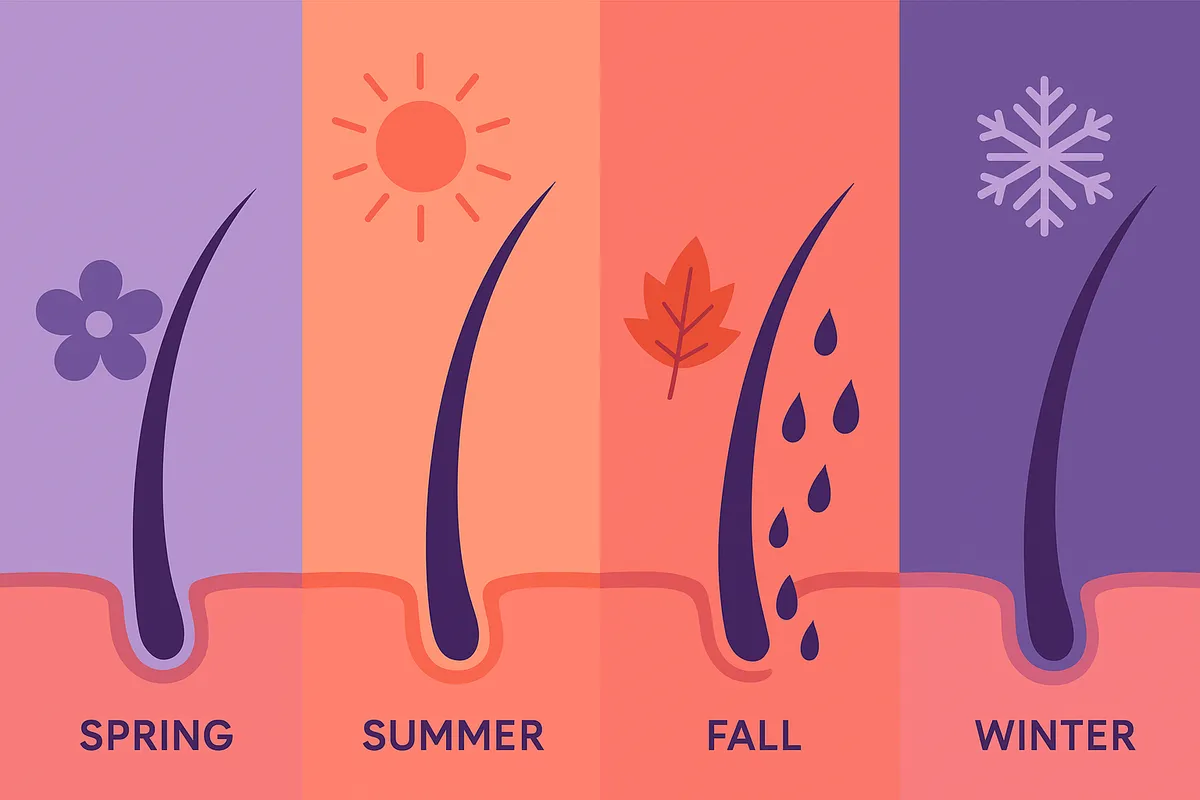
Vitamin D receptors (VDR) are expressed in hair follicle keratinocytes and are essential for normal hair cycling. VDR activation stimulates the anagen (growth) phase and supports keratinocyte differentiation. Without adequate vitamin D signaling, follicles can prematurely enter the catagen and telogen phases — leading to shedding.
Nail Matrix Function
The nail matrix — where new nail cells are produced — contains vitamin D receptors. While research on vitamin D's direct effect on nails is less extensive than for hair, studies show that patients with nail involvement in conditions like psoriasis and alopecia areata have significantly lower vitamin D levels (17.7 ng/mL vs 23.5 ng/mL).
Immune Regulation
Vitamin D modulates the immune system around hair follicles. In autoimmune hair loss (alopecia areata), vitamin D deficiency is associated with more severe disease, longer duration, and higher relapse risk.
Signs Your Vitamin D Might Be Low
Beyond nail and hair changes, watch for:
Persistent fatigue
Bone pain or muscle weakness
Frequent infections
Mood changes (especially seasonal)
Slow wound healing
Who's at Risk?
Northern latitudes — limited UV exposure October through March
Dark skin — melanin reduces vitamin D synthesis by up to 99%
Indoor workers — minimal sun exposure
Older adults — skin produces less vitamin D with age
Obese individuals — vitamin D is sequestered in fat tissue
People who cover skin — for religious or cultural reasons
Breastfed infants — breast milk is low in vitamin D
Wondering if a deficiency is affecting your nails?
Take our 2-minute Nail Health Quiz for a personalized assessment and supplement recommendations.
A systematic review found patients with alopecia areata had 3.89x higher odds of vitamin D deficiency compared to controls. Approximately 74% of alopecia areata patients were vitamin D deficient. Supplementation led to complete hair regrowth in about 27% of deficient patients.
Telogen Effluvium
Over 50% of women with telogen effluvium had vitamin D insufficiency. Correction of deficiency contributed to reduced shedding.
Nail Psoriasis
Patients with nail involvement had significantly lower vitamin D levels, and topical vitamin D analogues (calcipotriol) are an established treatment for nail psoriasis.
Optimal Levels and Dosing
Vitamin D Level
Status
Recommendation
<20 ng/mL
Deficient
Aggressive supplementation (prescription dose may be needed)
20-30 ng/mL
Insufficient
Supplement 2,000-4,000 IU daily
30-50 ng/mL
Adequate
Maintenance 1,000-2,000 IU daily
40-60 ng/mL
Optimal
Target range for hair/nail health
>100 ng/mL
Potentially toxic
Reduce supplementation
Choose vitamin D3 (cholecalciferol), not D2 (ergocalciferol) — D3 is 2-3x more effective at raising blood levels.
Take with fat — vitamin D is fat-soluble. Absorption improves significantly when taken with a meal containing fat.
Testing
A simple blood test for 25-hydroxyvitamin D tells you your status. Request it at your next checkup, especially if you have hair or nail concerns. Recheck 8-12 weeks after starting supplementation.
This article is for educational purposes only. Consult a healthcare provider before starting vitamin D supplementation, especially at doses above 2,000 IU daily.
Frequently Asked Questions
Can vitamin D deficiency cause my nails to break?
Vitamin D receptors are present in the nail matrix, and deficiency is associated with thinner, more brittle nails. Studies show patients with nail involvement in conditions like psoriasis have significantly lower vitamin D levels (17.7 vs 23.5 ng/mL). While vitamin D alone may not dramatically strengthen nails, correcting a deficiency removes one contributing factor.
How much vitamin D should I take?
It depends on your current level. For mild insufficiency (20-30 ng/mL): 2,000 IU daily. For deficiency (<20 ng/mL): 4,000-5,000 IU daily, or your doctor may prescribe a weekly high-dose. For maintenance once optimal: 1,000-2,000 IU daily. Always take with a fat-containing meal for absorption.
D2 vs D3 — does it matter?
Yes. Vitamin D3 (cholecalciferol) raises blood levels 2-3x more effectively than D2 (ergocalciferol). D3 is also the form your skin naturally produces from sunlight. Unless your doctor specifically prescribes D2, choose D3.
Can I get enough vitamin D from food?
Very difficult. Few foods contain meaningful amounts — fatty fish (salmon: ~600 IU per serving), fortified milk (~100 IU per cup), and egg yolks (~40 IU each) are the main sources. You'd need to eat salmon daily to approach 2,000 IU from diet alone. Supplementation is practical for most people, especially in northern latitudes.
The Bottom Line: Vitamin D deficiency is extremely common and affects both hair follicle cycling and nail matrix function. Get a simple 25(OH)D blood test, aim for 40-60 ng/mL, supplement with D3 taken with fat, and recheck in 8-12 weeks. It's one of the cheapest and most impactful interventions for overall health — hair and nails included.
This article was medically reviewed for accuracy and completeness. Last updated: January 2026.
Disclaimer:This article is for informational purposes only and does not constitute medical advice. Always consult with a qualified healthcare provider before starting any supplement regimen.
Written by Rachel Kim & reviewed by Dr. James Whitfield
Not sure which supplement is right for you?
Take our 2-minute Vitamin Finder quiz and get personalized recommendations based on your profile.