When to Take Your Supplements: The Complete Timing Guide
Iron in the morning, calcium in the evening, never together — supplement timing affects absorption by up to 300%. Get the evidence-based daily schedule for maximum benefit.
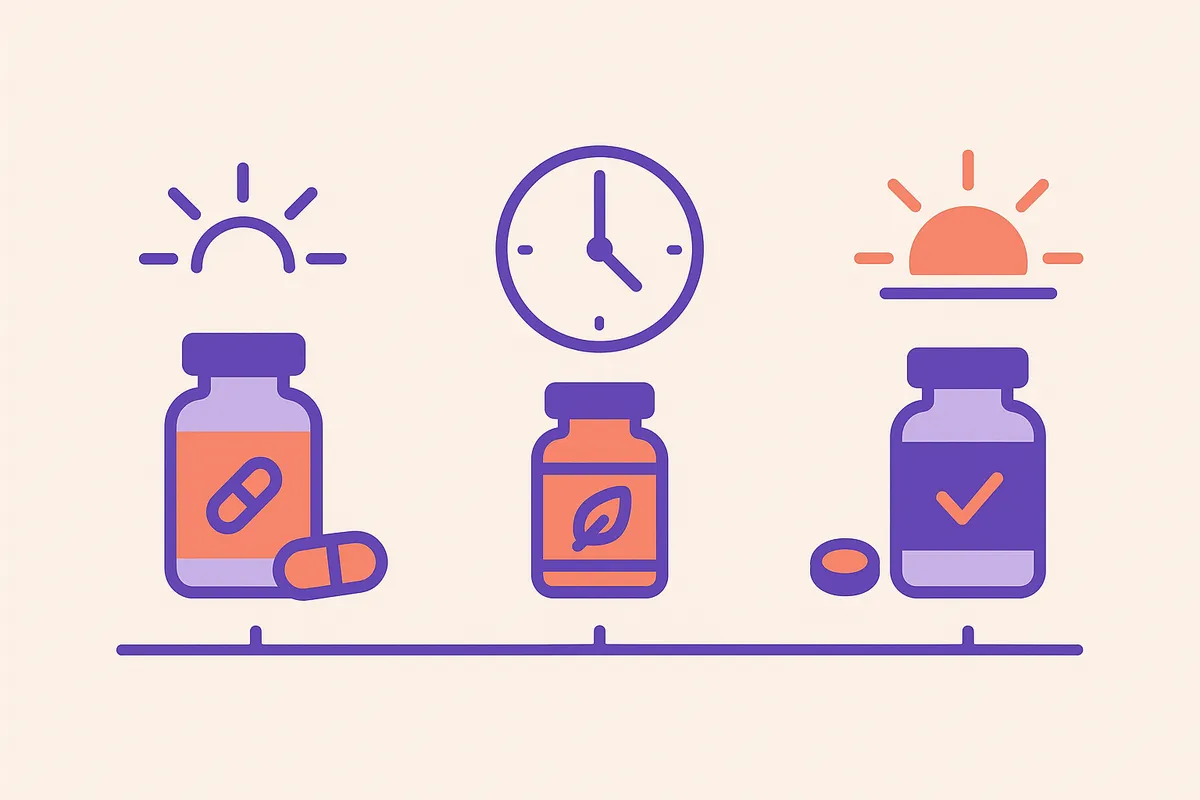
You've chosen the right supplements. You've got the right doses. But are you taking them at the right time? Timing can significantly affect absorption, efficacy, and side effects.
Here's the evidence-based guide to when to take each supplement for maximum benefit.
Key Takeaways
Iron absorbs up to 3x better on an empty stomach — take first thing in the morning with vitamin C
Calcium and iron should NEVER be taken together — calcium inhibits iron absorption by up to 50%
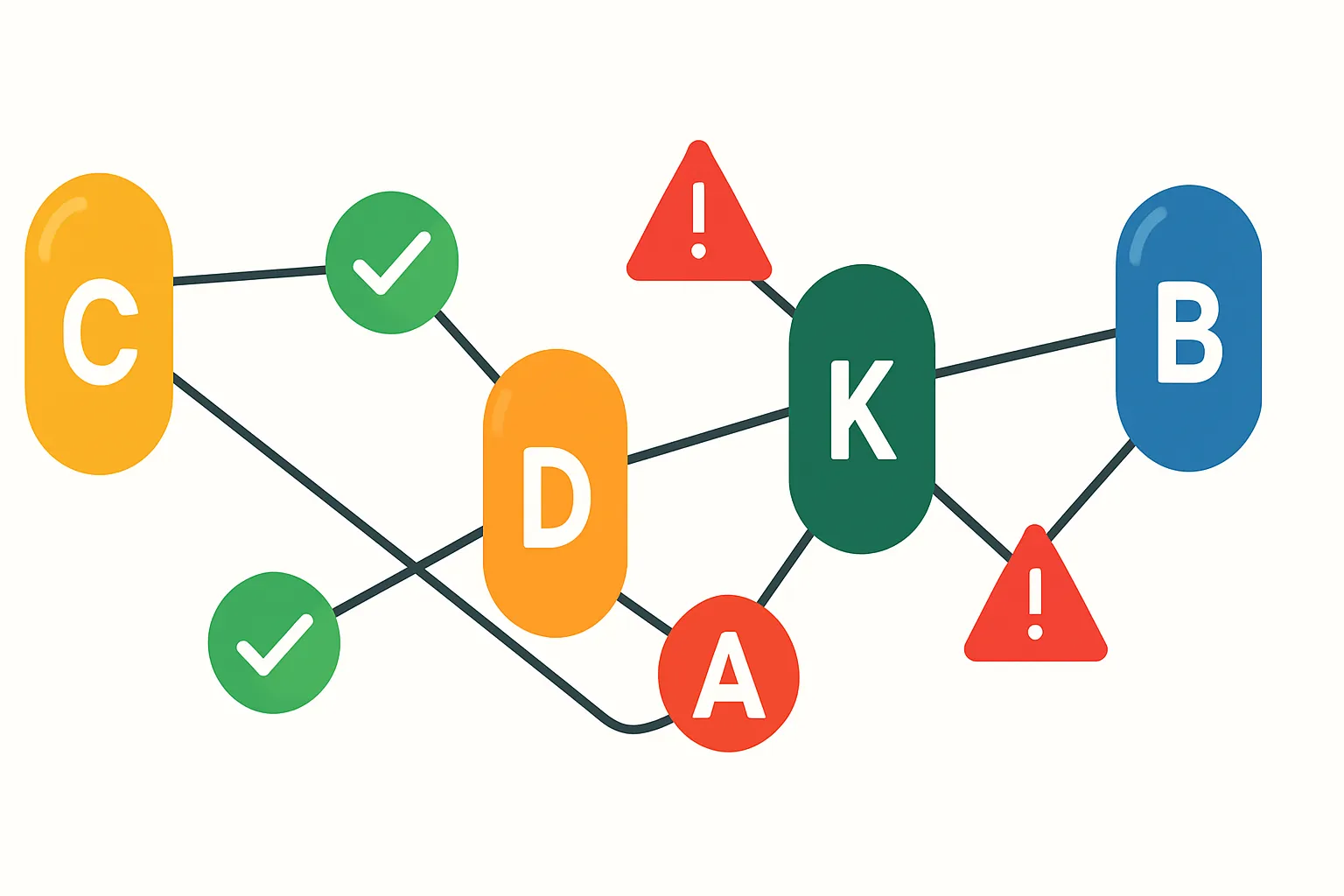
Fat-soluble vitamins (A, D, E, K) absorb poorly without dietary fat — always take with a meal
Magnesium glycinate before bed supports sleep; magnesium oxide is a laxative (wrong form for bedtime)
Consistency matters more than perfect timing — daily adherence beats an overly complicated schedule
Why Timing Matters
Supplement timing affects three things:
Absorption — some nutrients compete for the same transporters
Efficacy — certain nutrients are used at specific times in your body's circadian cycle
Tolerance — timing can reduce nausea, GI upset, and other side effects
The Morning Protocol
Iron
Best taken: First thing in the morning, 30-60 minutes before breakfast
Why: Empty stomach maximizes absorption (up to 3x better). Morning cortisol supports iron metabolism
Pair with: 100-200mg vitamin C (glass of orange juice works)
Avoid with: Coffee, tea, dairy, calcium — wait 1 hour
B-Complex / Biotin
Best taken: Morning with breakfast
Why: B vitamins support energy metabolism — taking them at night may disrupt sleep for some people
Pair with: Food (reduces nausea)
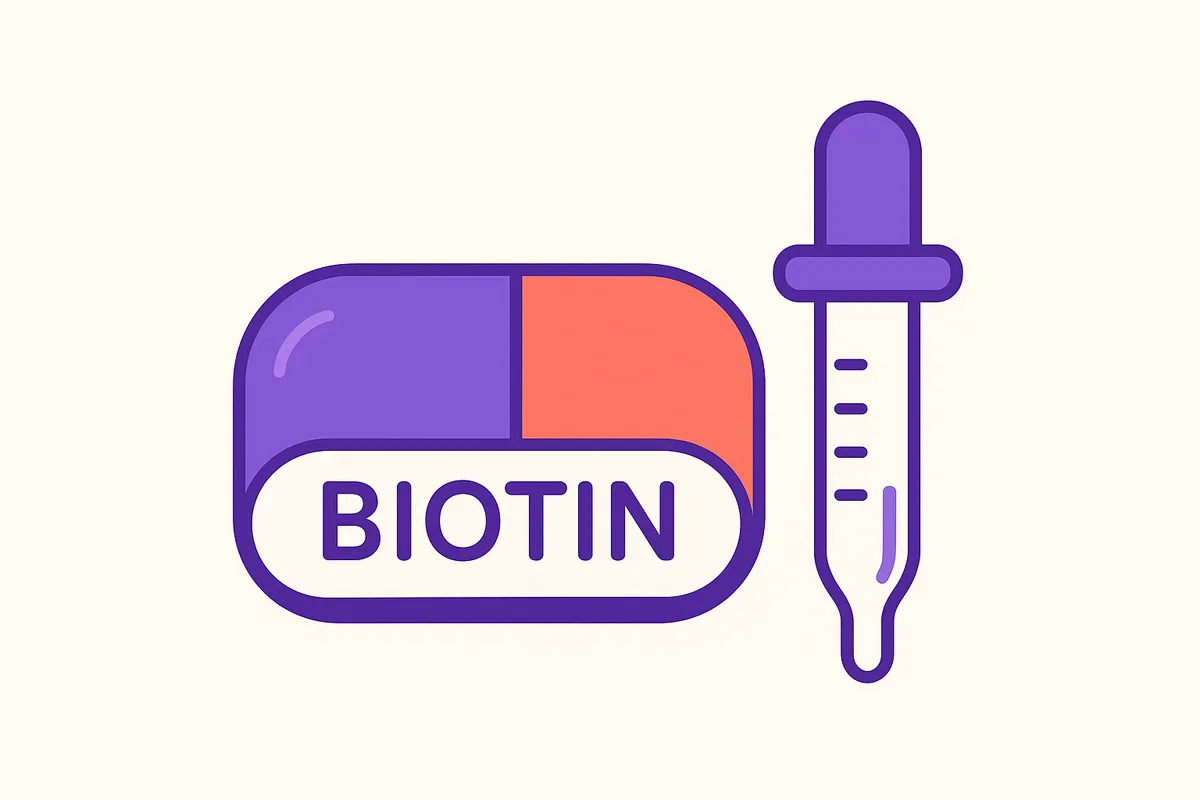
Note: If taking high-dose biotin, this is the only supplement requiring a 48-72 hour stop before blood work
Vitamin C
Best taken: Morning, divided doses (morning + afternoon)
Why: Water-soluble, excreted quickly — splitting the dose maintains more consistent levels
Pair with: Iron (if supplementing iron)
The Afternoon / With Lunch
Zinc
Best taken: Midday with food
Why: Zinc on an empty stomach causes nausea in many people. Taking with food slightly reduces absorption but dramatically improves tolerance
Avoid with: Iron and calcium (separate by 2 hours)
Collagen Peptides
Best taken: Any time, but many people prefer midday
Why: No strict timing requirement — collagen is simply protein (amino acids)
Pair with: Vitamin C (supports collagen synthesis)
Tip: Mix into coffee, smoothie, or water. Taste is neutral in most formulations
Wondering if a deficiency is affecting your nails?
Take our 2-minute Nail Health Quiz for a personalized assessment and supplement recommendations.
Best taken: With your largest meal (often dinner)
Why: Fat-soluble — needs dietary fat for absorption. Some research suggests evening dosing aligns with natural vitamin D metabolism
Pair with: A meal containing fat (olive oil, avocado, nuts)
Note: Some people report sleep disruption with vitamin D — if this happens, switch to morning
Calcium
Best taken: Evening, with dinner
Why: Separated from iron and zinc (which you took earlier). Calcium may support sleep (calming effect)
Pair with: Vitamin D (enhances absorption)
Avoid with: Iron, zinc, thyroid medication
Magnesium
Best taken: Before bed
Why: Magnesium glycinate has mild calming and sleep-promoting effects. Supports muscle relaxation and may reduce nighttime leg cramps
Form matters: Glycinate or threonate for sleep; citrate for bowel regularity
Omega-3 (Fish Oil)
Best taken: With dinner
Why: Fat-soluble — absorbs best with a meal. Evening dosing reduces daytime fishy burps
Tip: Store in the freezer to further reduce GI side effects
The Complete Daily Schedule
Time
Supplements
Notes
7:00 AM (empty stomach)
Iron + Vitamin C
30 min before breakfast
7:30 AM (breakfast)
B-Complex / Biotin
With food
12:30 PM (lunch)
Zinc, Collagen + Vitamin C
With food
6:30 PM (dinner)
Vitamin D, Calcium, Omega-3
With fat-containing meal
9:30 PM (before bed)
Magnesium
Supports sleep
Common Mistakes
Taking everything at once — nutrients compete for absorption
Iron with coffee — tannins reduce absorption by 50-90%
Calcium with iron — calcium inhibits iron absorption by up to 50%
Fat-soluble vitamins without fat — dramatically reduced absorption
Biotin before blood work — causes false lab results
Magnesium oxide before bed — it's a laxative, not a sleep aid (use glycinate instead)
Simplification Options
If this schedule feels overwhelming:
Minimum separation: Just keep iron and calcium 2 hours apart
Two-split approach: Morning (iron, B vitamins, zinc with breakfast) + Evening (vitamin D, calcium, omega-3 with dinner)
The easy version: Take everything with food, just separate iron from calcium
Consistency matters more than perfect timing. Taking your supplements daily at roughly the same time — even if the timing isn't optimal — is better than skipping doses because the schedule is too complicated.
This article is for educational purposes only. Consult your pharmacist for supplement timing with prescription medications.
Frequently Asked Questions
Does supplement timing really make that much difference?
For most supplements, the difference is modest — 10-30% variation in absorption. The one exception: iron. Taking iron on an empty stomach with vitamin C vs. taking it with calcium and coffee can mean a 3-5x difference in absorption. If you only optimize one thing, make it iron timing. For everything else, consistency matters more than precision.
What's the simplest effective schedule?
Two-split approach: Morning (iron + vitamin C on empty stomach, then B vitamins with breakfast) and Evening (vitamin D, calcium, omega-3 with dinner, magnesium at bedtime). This covers all the critical separations without being overwhelming. If even that's too much, just keep iron and calcium 2 hours apart.
Can I take all my supplements with breakfast?
You can, but you'll lose absorption on several fronts: iron absorbs poorly with food (especially calcium-containing foods), fat-soluble vitamins need a fatty meal (breakfast is often low-fat), and taking zinc with iron reduces absorption of both. The minimum adjustment: take iron separately, 30 minutes before breakfast.
Should I take supplements on an empty stomach or with food?
It depends on the supplement. Iron: empty stomach (3x better absorption). Zinc: with food (prevents nausea). Fat-soluble vitamins (D, A, E, K): with a fatty meal. B vitamins: with food (reduces nausea). Collagen and biotin: doesn't matter. Magnesium glycinate: with or without food, but bedtime works best for sleep benefit.
The Bottom Line: The critical timing rules: iron on an empty stomach with vitamin C (morning), separated from calcium by 2+ hours, fat-soluble vitamins with a fatty meal, and magnesium glycinate at bedtime. Consistency matters more than perfect timing — don't let an overcomplicated schedule prevent you from taking your supplements at all.
This article was medically reviewed for accuracy and completeness. Last updated: January 2026.
Disclaimer:This article is for informational purposes only and does not constitute medical advice. Always consult with a qualified healthcare provider before starting any supplement regimen.
Written by Dr. James Whitfield & reviewed by Dr. Marcus Chen
Not sure which supplement is right for you?
Take our 2-minute Vitamin Finder quiz and get personalized recommendations based on your profile.